
What is Consensus?
Consensus is an AI‑powered search engine for scientific and academic research. It searches only peer‑reviewed studies and scholarly publications; never blogs, news sites, or general‑knowledge pages. That makes it an ideal tool for researchers, students, and anyone conducting literature reviews or who needs evidence‑backed answers. Learn more about how Consensus works here.
What Does Consensus Search Over?
Our corpus includes over 220 million scientific documents across all domains of science —primarily peer-reviewed journal articles, along with some conference papers and preprints.
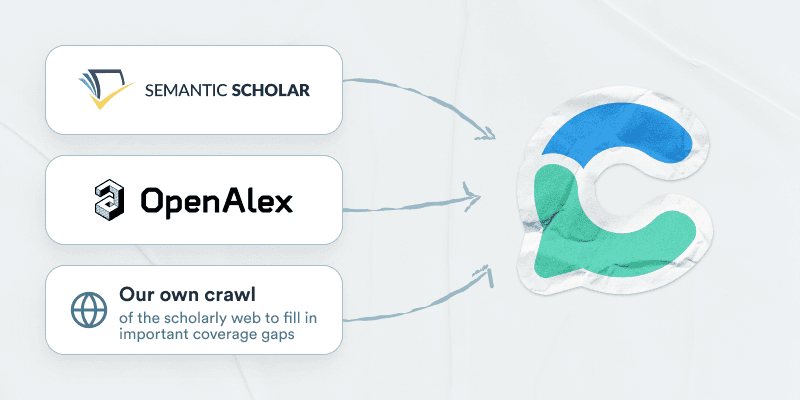
We’ve built this corpus by aggregating data from four major sources:
Semantic Scholar
OpenAlex
Our own crawl of the scholarly web to fill in important coverage gaps
Direct partnerships with academic publishers for full-text access. Today, Consensus has partnerships with 6 of the 12 largest publishers including Wiley, T&F, Sage, APA, AAAS and more.
By aggregating documents across these sources, Consensus covers nearly all of the highest-impact journals and the entirety of PubMed. Think of Consensus as an AI-native alternative to Google Scholar in terms of our coverage.
Consensus Searching Basics
To get the best results, understand two key things about how Consensus works:
Consensus is a search engine, not a chatbot.
Consensus only searches scientific and academic research papers.
That means Consensus works best when your requests are focused on topics found in peer-reviewed literature or scholarly studies. Unlike a chatbot, Consensus doesn’t just generate text, it finds and summarizes relevant scientific papers. Consensus is not built for general knowledge queries (e.g. “What’s the capital of Germany?”), it’s built to help you conduct real research, faster.
Getting Started Searching
There is no single “right” way to search in Consensus. We have built Consensus to be flexible to different user queries, ranging from Boolean searches to messy natural language prompts. Whether you’re hunting for a specific article or exploring a broad question, Consensus adapts to your needs.
Examples of simple searches in Consensus:
Keywords
Open‑ended topics:
Exact paper / author search:
Boolean searches
Simple research questions:
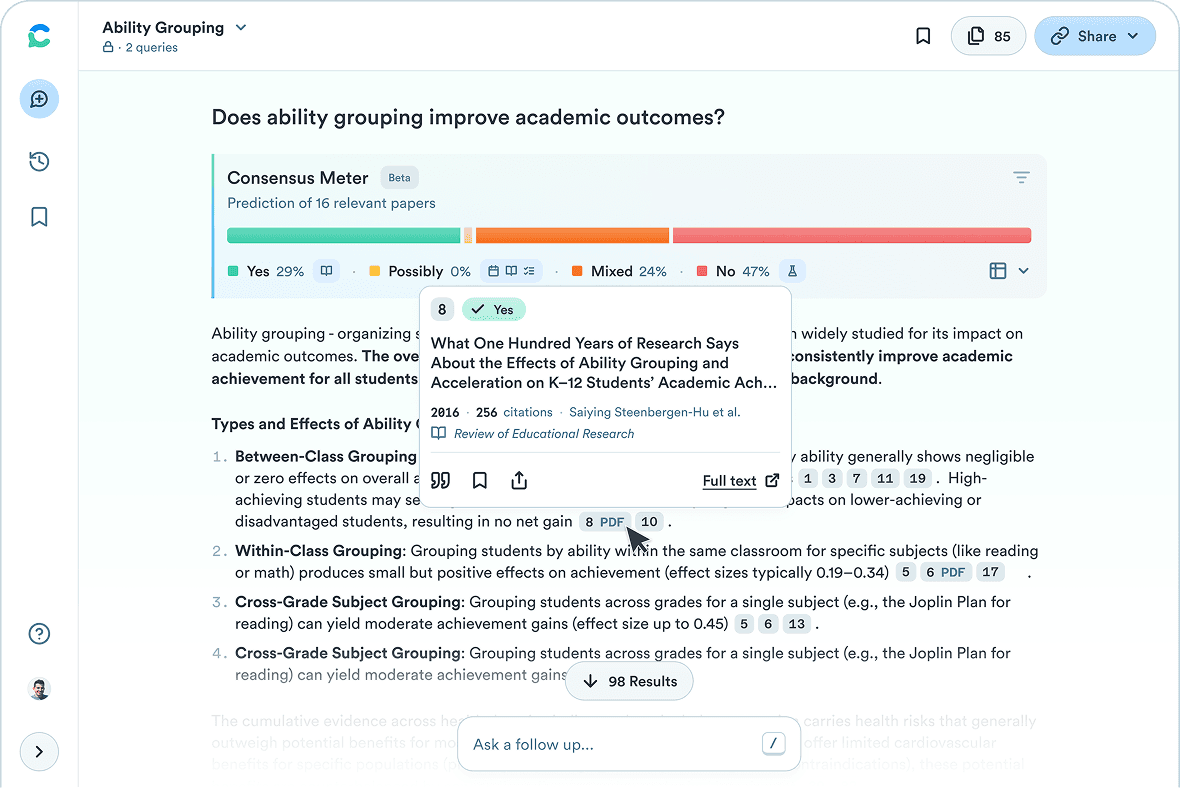
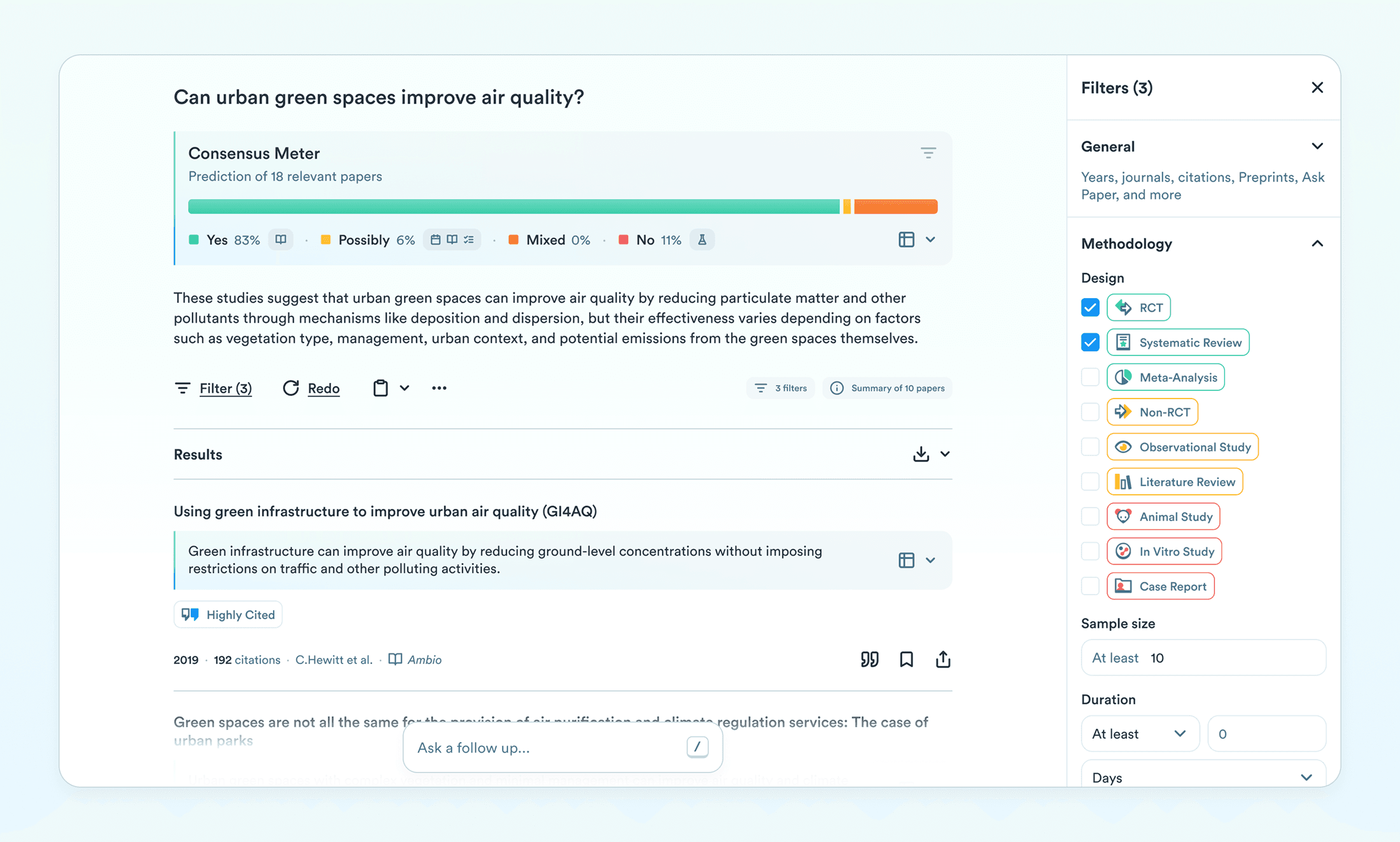
Yes/No questions (activates the Consensus Meter):
Advanced search techniques:
Search filters – Narrow by publication date, study type, sample size, journal quartile, and more.
Multi-concept queries – Combine multiple facets or comparisons.
Format‑specific commands – Ask for bullet‑point summaries, pros/cons lists, or side‑by‑side tables to shape the output.
Multi-step tool-use – Ask Consensus to execute a complex task like finding similar papers or papers cited by a particular paper
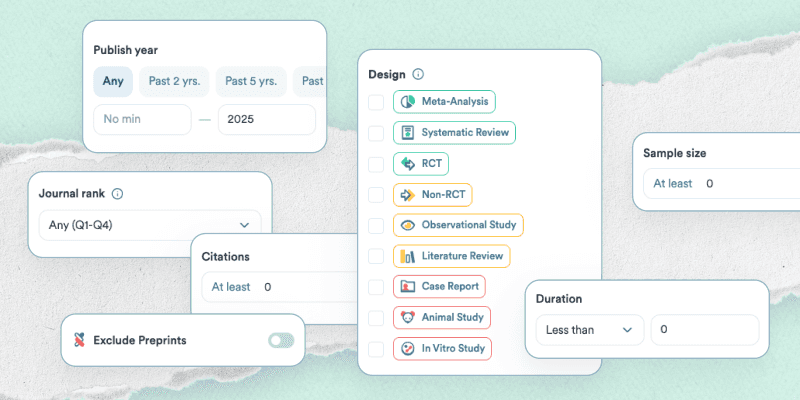
Use filters in Consensus to refine your search by study type, journal quality, publication year, and more—helping you surface high-quality, relevant evidence faster.
Consensus puts high‑quality evidence at your fingertips.
Start with a clear research question, leverage filters, and use yes/no formatting to instantly see where the science stands - then dive deeper into the studies surfaced.