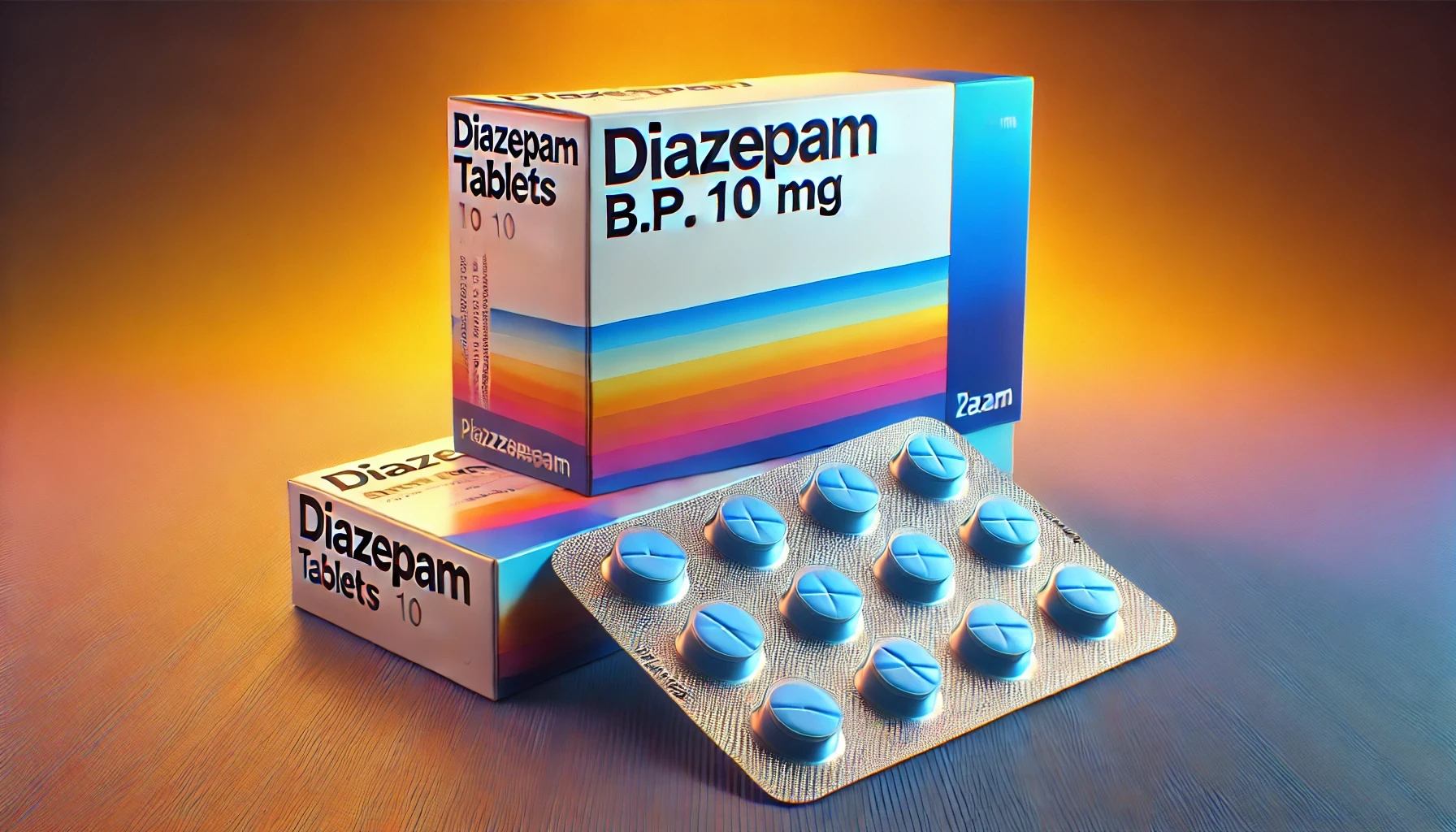
What is Diazepam?
This post was written with Consensus AI Academic Search Engine - please read our Disclaimer at the end of this article. Diazepam, commonly known by its brand name Valium, is a benzodiazepine drug that has been widely used since its introduction in the 1960s. It is renowned for its efficacy in treating a variety of central nervous system (CNS) disorders, including anxiety, epilepsy, and muscle spasms. This article provides a comprehensive overview of diazepam, covering its history, pharmacology, clinical applications, and potential risks.
History and Development
Diazepam was developed during the psychopharmacological revolution of the 1950s and quickly became one of the most successful drugs in its class. It set the standard for pharmacotherapy due to its potency, rapid onset of action, and safety profile1.
Pharmacology
Diazepam belongs to the benzodiazepine family, which primarily acts by binding to and enhancing gamma-aminobutyric acid (GABA) receptors in the brain. This action results in its anxiolytic, anticonvulsant, muscle relaxant, and sedative properties5. The drug's pharmacokinetics, including its absorption, distribution, metabolism, and excretion, have been extensively studied. Notably, its plasma half-life increases with age, but its clearance remains relatively constant, indicating that dosage adjustments based on age alone are generally unnecessary9.
Clinical Applications of Diazepam
Diazepam is used to treat a wide range of conditions:
Anxiety Disorders: It is effective in reducing anxiety and agitation.
Epilepsy: Diazepam is used for the acute management of seizures and status epilepticus2.
Muscle Spasms: It provides relief from muscle spasms and spasticity.
Alcohol Withdrawal: The drug is also used to manage symptoms of alcohol withdrawal syndrome5.
Recent Advances
Recent research has focused on various aspects of diazepam, including its mechanism of action, pharmacokinetics, and new formulations. For instance, diazepam nasal spray has been developed for rapid, non-invasive administration in patients with epilepsy, showing a favorable safety profile7. Additionally, studies have explored the drug's effects on neurotransmitter systems, revealing dose- and time-dependent alterations in serotonergic, dopaminergic, and adrenergic systems5. Learn more with Consensus: [button icon="🍻" text="Is diazepam effective in treating alcohol withdrawal syndrome?"][/button] [button icon="⚛️" text="Does the plasma half-life of diazepam increase with age?"][/button]
Adverse Effects and Risks of Diazepam
While diazepam is generally safe when used as prescribed, it has several potential adverse effects:
Amnesia: Diazepam can cause anterograde amnesia, impairing the ability to form new memories shortly after administration3 4. Dependence and Withdrawal: Long-term use can lead to physical dependence and withdrawal symptoms upon discontinuation1. Mutagenic Potential: Some studies have suggested that diazepam may have mutagenic and genotoxic effects, raising concerns about its long-term safety8. Impaired Motor Skills: The drug can impair motor skills, such as lateral position control in driving, posing a risk for accidents10. Learn more with Consensus: [button icon="🌌" text="What are the adverse effects of diazepam?"][/button]
How has Diazepam Improved Patient Outcomes?
Anxiety and Neurotic Disorders Diazepam shows significant improvement in anxiety symptoms during the first week of treatment compared to placebo, but this effect diminishes over time1 3. Self-rated anxiety and insomnia are significantly improved with diazepam treatment4 5. Improvement in anxiety symptoms is directly proportional to plasma concentrations of diazepam and its metabolite, N-desmethyldiazepam7. Acute Stroke Diazepam treatment in acute stroke patients shows a trend towards better outcomes, particularly in cardioembolic infarct patients, but the overall data does not confirm a significant benefit for the primary hypothesis2. Status Epilepticus Non-intravenous midazolam is found to be more effective than diazepam in terminating seizures in status epilepticus, with similar safety profiles9. Cardiac Arrest Diazepam does not significantly improve neurological outcomes following out-of-hospital cardiac arrest8. Agoraphobia Diazepam reduces discomfort during group exposure therapy for agoraphobia but does not significantly enhance treatment outcomes6. Learn more with Consensus: [button icon="💆♂️" text="How has diazepam improved patient outcomes?"][/button] [button icon="😳" text="Does diazepam significantly improve self-rated anxiety and insomnia symptoms?"][/button]
Diazepam Mechanisms of Action
GABAergic Mechanism Diazepam enhances the effect of gamma-aminobutyric acid (GABA) at GABA_A receptors, leading to increased inhibitory neurotransmission in the central nervous system5 6 8 10. It acts on GABA_A receptors via two distinct mechanisms, involving different receptor subunits and concentration ranges5. Neurotransmitter Modulation Diazepam reduces extracellular levels of glutamate and dopamine in the hippocampus during seizures, which contributes to its anticonvulsant effects3. It decreases dopamine release in the nucleus accumbens, counteracting the effects of stimulants like amphetamine7. Cardioprotective Effects Diazepam exhibits cardioprotective properties by inhibiting inflammatory pathways (CCR2, TNF-α, IL-1β, IL-6), reducing oxidative stress, and preventing apoptosis in myocardial ischemia-reperfusion injury1. Muscle Relaxation The myorelaxant action of diazepam is primarily mediated by alpha2 GABA_A receptors, with some contribution from alpha3 GABA_A receptors at higher doses6. It also inhibits the contractility of smooth muscles, such as the detrusor muscle, by interfering with calcium influx, independent of GABA receptor activation9. Social and Behavioral Effects Diazepam enhances social dominance and mitochondrial function in the nucleus accumbens by activating dopamine D1 receptors, which may be linked to its anxiolytic effects4. Learn more with Consensus: [button icon="🚘" text="What is diazepam mechanism of action?"][/button]
Common Complaints Associated with Diazepam Use
Withdrawal Symptoms and Rebound Anxiety Diazepam can cause withdrawal symptoms and rebound anxiety even after moderate doses and short-term use1 7. Misuse and Abuse There is a significant issue with the misuse and abuse of diazepam, particularly among addiction-prone individuals, often leading to physical dependency2. Common Side Effects Common side effects include drowsiness, fatigue, ataxia, and local reactions such as venous thrombosis or phlebitis at the injection site3. Paradoxical Reactions Paradoxical reactions such as hallucinations, delirium, increased anxiety, and hyperexcitable states can occur, sometimes even after short-term use3. Respiratory and Cardiovascular Depression Diazepam can cause significant respiratory or cardiovascular depression, particularly in vulnerable populations such as the elderly or those with compromised health3. Asthmatic Reactions There have been reports of asthmatic reactions due to immediate hypersensitivity to diazepam5. Psychiatric Symptoms High doses of diazepam can lead to psychiatric symptoms such as tremulousness, insomnia, depression, and suicidal ideation, even in individuals without prior psychiatric disorders6. Learn more with Consensus: [button icon="😱" text="Can diazepam cause rebound anxiety after short-term use?"][/button] [button icon="👨🏻🦳" text="Is respiratory depression a potential risk for elderly individuals taking diazepam?"][/button]
Disclaimer
The content presented in this blog is generated by Consensus, an AI-powered academic search engine, and is based on publicly available scientific literature. While every effort is made to provide accurate, up-to-date, and well-researched information, the content is intended for informational and educational purposes only. It does not constitute medical advice, diagnosis, or treatment. Always consult a qualified healthcare professional before making any decisions regarding medical conditions, treatments, or medications. The AI system's analysis may not cover all perspectives, emerging research, or individual cases, and it is not a substitute for professional expertise. Neither the blog publisher nor the developers of the AI-powered search engine are responsible for any actions taken based on the information provided in this content. Use of this information is at your own risk. Citations to the original scientific studies are included for reference, but these studies should be reviewed in full and interpreted with the guidance of a healthcare or research professional. If you are experiencing a medical emergency, please seek immediate attention from a healthcare provider.