What Is Promethazine HCL? Brand Name: Phenergan
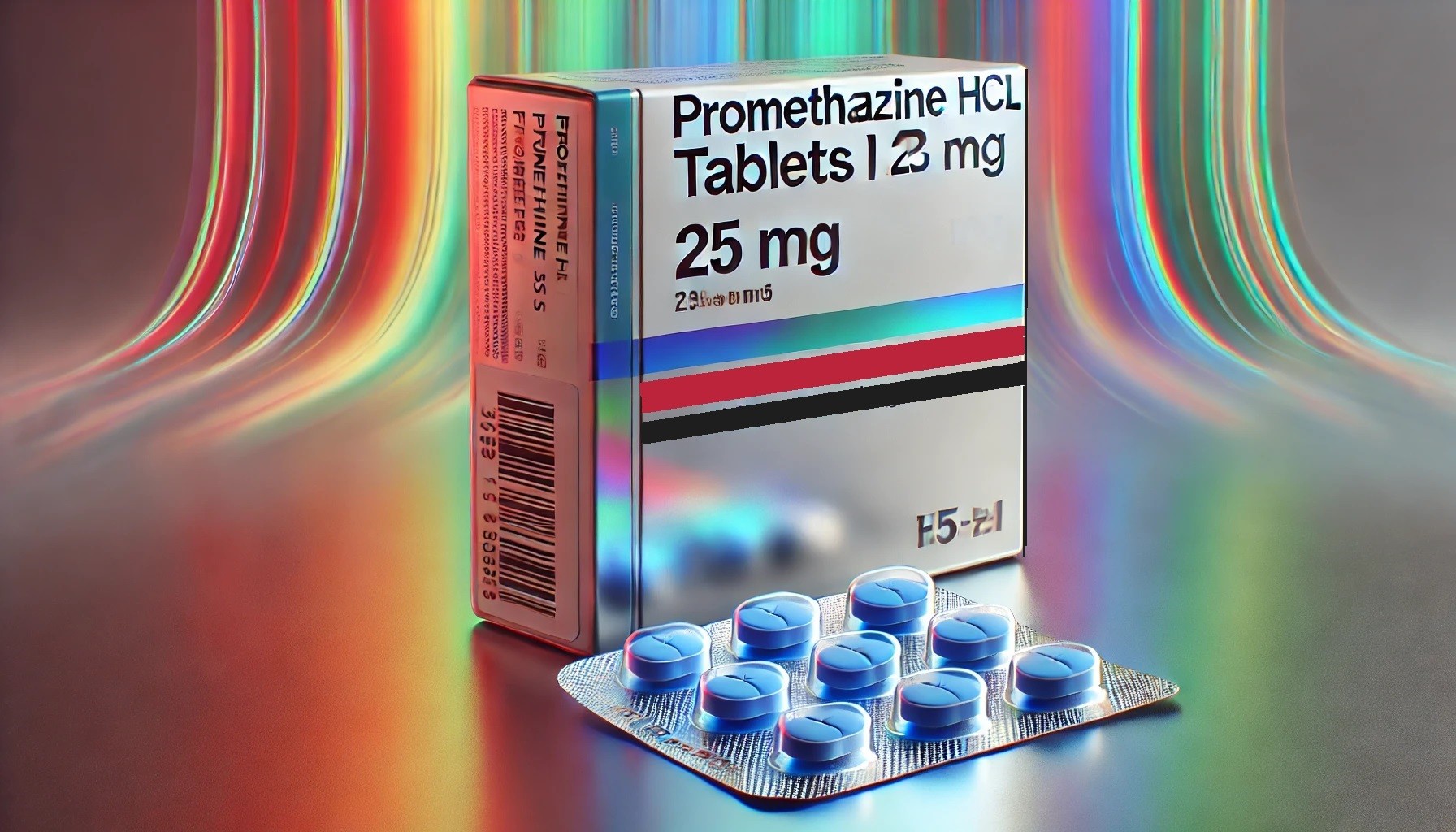
What is Promethazine HCL?
This post was written with Consensus AI Academic Search Engine - please read our Disclaimer at the end of this article. Promethazine hydrochloride (HCl) is a first-generation antihistamine of the phenothiazine family. It is widely used for its antiemetic, sedative, and anticholinergic properties. This article explores the various aspects of Promethazine HCl, including its chemical properties, medical applications, and recent research findings.
Chemical Properties
Promethazine HCl is a phenothiazine derivative that reacts with various reagents to form colored complexes, which can be used for its spectrophotometric determination. For instance, it reacts with potassium persulphate to form a pinkish-red complex with maximum absorbance at 515 nm, which obeys Beer's Law from 0.001 to 0.125 mg/mL1. Another method involves oxidative coupling with m-amino benzoic acid in the presence of N-bromosuccinimide, producing an intense green color with maximum absorbance at 592 nm5.
Medical Applications of Promethazine HCL
Antiemetic and Sedative
Promethazine HCl is primarily used to treat nausea, vomiting, and motion sickness. It is also employed as a sedative in preoperative settings. The drug's efficacy in these roles is attributed to its ability to block histamine H1 receptors and its anticholinergic properties4.
Immunosuppressant
Recent studies have shown that Promethazine HCl has immunosuppressive effects. It significantly reduces the primary and secondary immune responses to bovine serum albumin and bovine γ-globulin. Additionally, it reduces tuberculin hypersensitivity when administered before and during the development of the hypersensitive state2.
Bone Health
Promethazine HCl has also been investigated for its potential benefits in bone health. A study on postmenopausal women suggested that the drug might retard or reverse bone loss, a finding that aligns with earlier research conducted on mice8.
Pharmaceutical Formulations of Promethazine HCL
Fast Dissolving Sublingual Films
To improve the bioavailability of Promethazine HCl, researchers have developed fast-dissolving sublingual films. These films are formulated using pullulan and propylene glycol, and they ensure complete taste masking with the help of hydroxypropyl β-cyclodextrin, aspartame, and grapefruit flavor. The films show 100% drug release within 7.5 minutes and 70% absorption within 10 minutes in vivo4.
Orodispersible Tablets
Another innovative formulation is the orodispersible tablet, which aims to provide a rapid onset of action. These tablets are prepared using various superdisintegrants like crospovidone and croscarmellose sodium, ensuring quick disintegration and absorption10.
Analytical Methods
Several spectrophotometric methods have been developed for the determination of Promethazine HCl in pharmaceutical formulations. These methods are based on the drug's reaction with different reagents to form colored complexes. For example, one method uses chromium trioxide in an acidic medium to oxidize Promethazine HCl, resulting in a product with maximum absorption at 515 nm6. Another method involves the use of cadmium iodide as a precipitating reagent in a continuous flow injection analysis system, providing high sensitivity and accuracy9. Learn more with Consensus: [button icon="🤢" text="Is Promethazine HCL effective in treating nausea and vomiting?"][/button] [button icon="🙋" text="Can Promethazine HCL help with bone loss in postmenopausal women?"][/button]
Adverse Effects of Promethazine HCL
Misuse and Abuse Potential Promethazine has a significant potential for misuse and abuse, particularly among adolescents. Reports indicate increasing levels of misuse, abuse, and dependence over time, with a high number of fatalities associated with drug toxicity and abuse, often in combination with opioids2. Common Adverse Effects Promethazine is associated with several common adverse effects, including drowsiness, dizziness, and dystonia. These side effects were reported more frequently compared to metoclopramide in patients treated for hyperemesis gravidarum3. Serious Adverse Effects There were no unexpected or serious adverse events reported in a study evaluating the combination of promethazine with hydrocodone and acetaminophen for the prevention of opioid-induced nausea and vomiting1. Immunosuppressive Effects Promethazine-HCl has been shown to significantly reduce humoral antibody synthesis and delayed hypersensitivity, indicating its potential immunosuppressive effects4. Learn more with Consensus: [button icon="🥴" text="Can Promethazine HCL cause drowsiness and dizziness?"][/button] [button icon="💊" text="Is Promethazine HCL linked to misuse or abuse?"][/button]
How has Promethazine HCL Improved Patient Outcomes?
Hyperemesis Gravidarum Treatment Promethazine and metoclopramide have similar therapeutic effects in reducing vomiting episodes and improving well-being in patients hospitalized for hyperemesis gravidarum. However, promethazine is associated with more adverse effects such as drowsiness, dizziness, and dystonia1. Neuroprotection in Acute Ischemic Stroke A study is investigating the safety, feasibility, and preliminary efficacy of using a combination of chlorpromazine and promethazine (C+P) as a neuroprotection strategy in acute ischemic stroke patients. This combination aims to improve functional outcomes and reduce infarction volume2. Erythroblastosis Treatment Promethazine hydrochloride has been shown to significantly decrease perinatal mortality and the need for exchange transfusions in patients with Rh erythroblastosis, without significant toxicity3. Psychiatric Disorders Promethazine hydrochloride has been effective in improving symptoms in psychiatric patients, with varying degrees of improvement observed. The treatment was well-tolerated with minimal side effects, primarily pain at the injection site4. Rapid Tranquillisation in Psychiatric Emergencies In emergency psychiatric settings, the combination of haloperidol and promethazine (HP) is as effective as the triple therapy of haloperidol, promethazine, and chlorpromazine (HPC) for rapid tranquillisation. The simpler HP regimen is preferred due to fewer adverse effects and similar efficacy5. Learn more with Consensus: [button icon="💆🏻♀️" text="How has Promethazine HCL improved patient outcomes?"][/button]
Promethazine HCL Mechanisms of Action
Immunosuppressive Effects: Promethazine HCL significantly reduces both primary and secondary immune responses to antigens such as bovine serum albumin and bovine γ globulin. It also reduces delayed hypersensitivity reactions, indicating its role as an immunosuppressant1. Inhibition of Osteoclastic Activity: Promethazine HCL dose-dependently inhibits bone resorption by osteoclasts, suggesting a direct inhibitory effect on osteoclast activity. This mechanism is likely responsible for its beneficial effects on osteopenia2. Effects on Leukocyte Function: Promethazine HCL inhibits several leukocyte functions, including phagocytosis-induced increases in oxygen consumption and hexose monophosphate shunt activity. It also inhibits the iodination of zymosan particles and bacterial killing, indicating a specific effect on leukocyte metabolism3. Learn more with Consensus: [button icon="🗜️" text="What is Promethazine HCL mechanism of action?"][/button]
Common Complaints Associated with Promethazine HCL Use
Drowsiness and Sedation Promethazine is associated with higher rates of drowsiness compared to other medications like prochlorperazine1 4. Tissue Toxicity Intravenous administration of promethazine can lead to severe tissue toxicity, including local necrosis, gangrene, and chronic pain, sometimes necessitating amputation3. Misuse and Abuse: There is a significant issue with the misuse and abuse of promethazine, particularly among adolescents. This misuse is often associated with drug-related fatalities, especially when combined with opioids2. Effectiveness Compared to Alternatives While effective, promethazine is generally less effective and slower in providing relief for headaches and nausea compared to prochlorperazine. It also results in more complaints of sleepiness1 4. Learn more with Consensus: [button icon="☢️" text="Can intravenous Promethazine HCL lead to severe tissue toxicity and necrosis?"][/button] [button icon="👩🏻💼" text="Is Promethazine HCL frequently misused, especially by adolescents?"][/button]
Disclaimer
The content presented in this blog is generated by Consensus, an AI-powered academic search engine, and is based on publicly available scientific literature. While every effort is made to provide accurate, up-to-date, and well-researched information, the content is intended for informational and educational purposes only. It does not constitute medical advice, diagnosis, or treatment. Always consult a qualified healthcare professional before making any decisions regarding medical conditions, treatments, or medications. The AI system's analysis may not cover all perspectives, emerging research, or individual cases, and it is not a substitute for professional expertise. Neither the blog publisher nor the developers of the AI-powered search engine are responsible for any actions taken based on the information provided in this content. Use of this information is at your own risk. Citations to the original scientific studies are included for reference, but these studies should be reviewed in full and interpreted with the guidance of a healthcare or research professional. If you are experiencing a medical emergency, please seek immediate attention from a healthcare provider.
Start searching for free in Consensus!
Consensus searches through 220M+ peer reviewed research papers and provides you the best insights from them. Helping you find better papers, faster.

Sign Up