Check out this answer from Consensus:
It is indeed possible to create artificial emotions, as evidenced by systems like ARTEMIS and various studies on HRI. These artificial emotions can significantly enhance the functionality and effectiveness of autonomous agents and robots. However, ethical considerations must guide the development and implementation of these technologies to ensure they are used responsibly.
The concept of artificial emotions has intrigued researchers for decades, particularly in the fields of robotics and artificial intelligence. The ability to endow machines with emotions could revolutionize human-robot interaction (HRI), making robots more intuitive and effective in various tasks. This article explores the feasibility of creating artificial emotions, drawing on recent research findings.
Mechanisms for Creating Artificial Emotions
One of the pioneering systems in this domain is ARTEMIS, a control system designed for autonomous robots and software agents. ARTEMIS can generate human-like artificial emotions during interactions with the environment. The system captures these emotions and stores them in an Agent Knowledge Graph, which is then used to adapt decision-making and planning processes. Initial experiments with a user assistant based on ARTEMIS have shown that artificial emotions can enhance the performance of autonomous agents in complex, dynamic environments1.
Artificial Emotions in Human-Robot Interaction
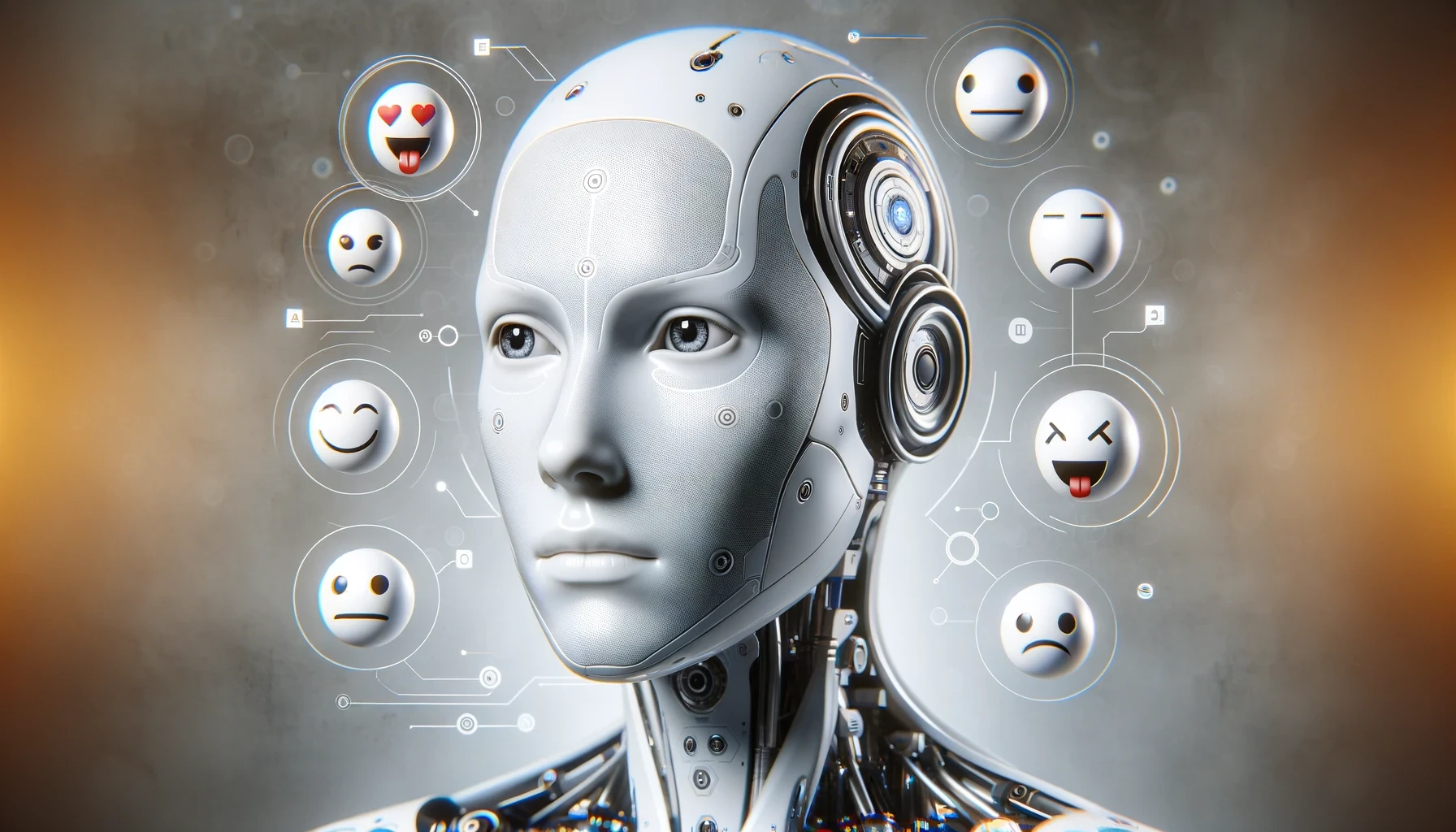
Artificial emotions can also play a crucial role in facilitating social coordination in HRI. Research has demonstrated that even simple movements of a non-humanoid robot can convey emotional meaning to human observers. These artificial emotions can serve as task-relevant coordination devices, helping to synchronize actions between humans and robots. The studies indicate that people can easily recognize emotions with high arousal and negative valence, suggesting that artificial emotions can be effectively used to improve the efficacy of joint human-robot activities2.
Applications and Ethical Considerations
The potential applications of artificial emotions are vast, ranging from user assistants to collaborative robots in industrial settings. However, the ethical implications of creating artificial emotions must be carefully considered. Ensuring that these emotions are designed responsibly is crucial to avoid misleading users or creating unrealistic expectations about the capabilities of robots.
Is it possible to create artificial emotions?
Emmanuel Hadoux has answered Likely An expert from University College London in Artificial Intelligence, Computer Science
I think it depends on how you define emotions there. Even in psychology, there is no consensus amongst the experts.
Some will say that emotions are discrete (https://en.wikipedia.org/wiki/Discrete_emotion_theory),
Some that they are characterized by two or three dimensions and depending on where you are in this space, you will most likely show one kind of emotion (http://testrain.info/download/Russell1980.pdf),
And some others that they do not exist and they are the mere interpretation (internal and from other people) of the physical reaction one shows when facing a particular situation (for instance when fleeing from a bear, people will interpret it as fear when what you are really doing is fleeing),
And many more others.
In the context of robotic applications, I think this is really the third point that is the most relevant: behaviours are/will be given to the robots such as we, as human, interpret them as an emotion.
What we also don't know is how exactly the emotions arise from a situation and how they modify the behaviour. So even if we can teach a robot how to have a behaviour expressing an emotion, it will still be hard to teach them when to express the right emotion, at the right moment and act in consequences. So I guess we can have robotic emotions but they may be perceived as weird or misplaced by humans.