
Related articles
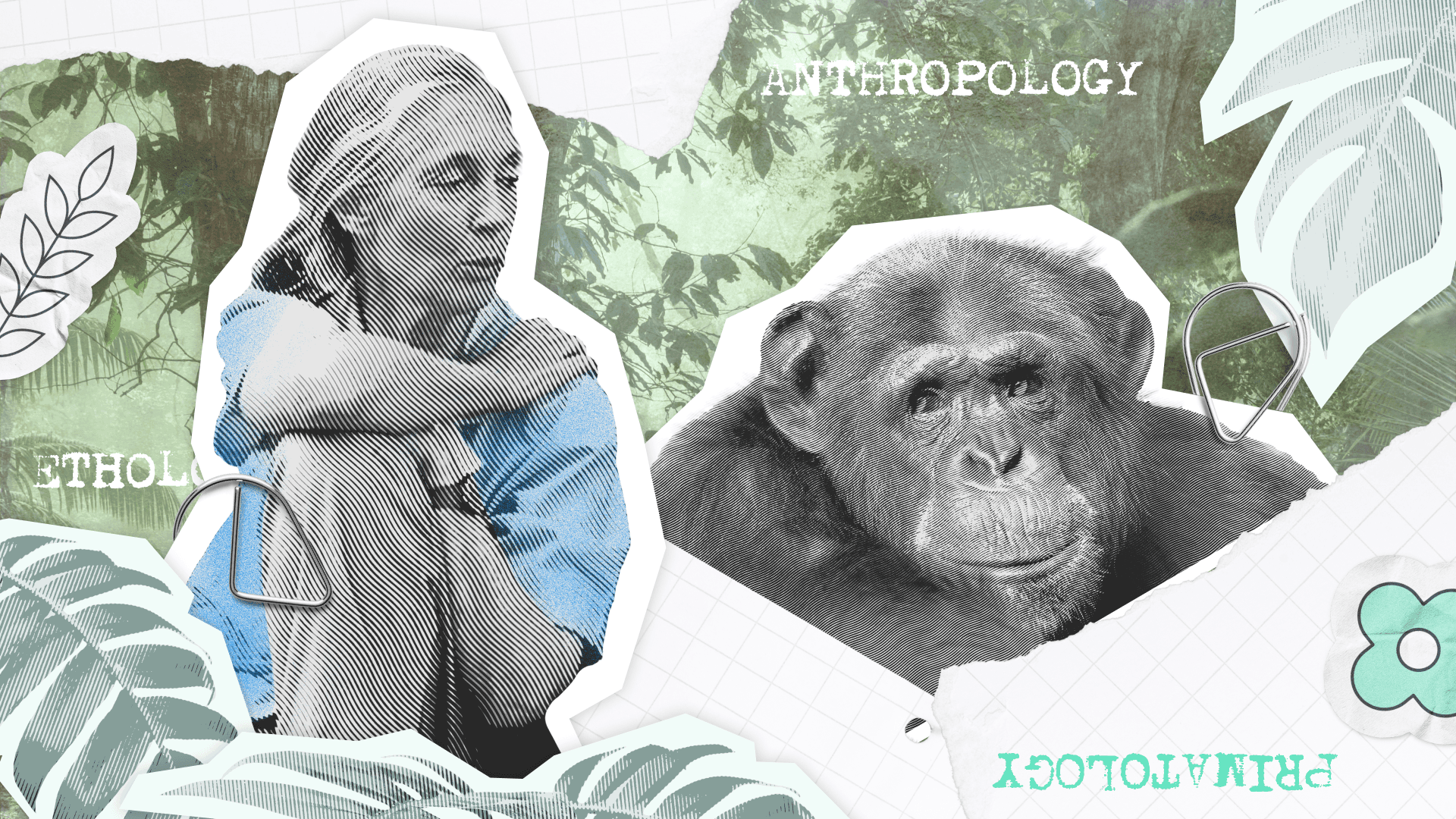
Remembering Jane Goodall
In 1960, a 26-year-old woman with no formal scientific training walked into the forests of Gombe, Tanzania, to begin what would become one of the most consequential field studies in history. At the time, women were rarely seen in remote research posts, and the very idea of sending someone without a university degree into the field was almost unheard of. But Jane Goodall’s path had never followed convention. Unable to afford college, she enrolled in secretarial school and supported herself as a waitress, saving every spare penny for a ticket to Africa. Africa, to her, was not just a place on a map; it was the landscape of her imagination, inspired by childhood stories of Tarzan and Dr. Dolittle, and by a lifelong fascination with animals that she nurtured in her garden and at the London Zoo.Her chance finally came when she accepted a friend’s invitation to visit Kenya. There, she encountered the renowned anthropologist and paleontologist Louis Leakey at the Coryndon Museum in Nairobi. Leakey, always searching for fresh perspectives on human origins, was struck by Goodall’s deep curiosity and her careful, almost intuitive observations of the natural world. Unlike many trained scientists of the era, she did not carry academic preconceptions; she carried notebooks, patience, and an openness to see animals as they truly were. Leakey believed that studying chimpanzees in the wild could shed light on the evolutionary origins of human behavior, and he recognized in Goodall the observer he needed to launch what would become the first long-term, close-range study of wild chimpanzees at Gombe. With little more than binoculars, a notebook, and the courage to venture into unfamiliar forests, Goodall traveled to the shores of Lake Tanganyika to begin her study of chimpanzees at Gombe Stream.Goodall approached chimpanzees not as specimens to be catalogued but as individuals with relationships, emotions, and histories. This lens of empathy allowed her to observe and describe their behavior with unprecedented depth and nuance. Over six decades of meticulous observation, she documented chimpanzees fashioning tools to fish for termites, hunting and sharing meat, and navigating complex social lives filled with cooperation, conflict, and maternal bonds that shaped development. She introduced the world to individuals like David Greybeard, the first chimpanzee to trust her; Flo, the nurturing matriarch; and Mike, the clever male who rose to power through ingenuity rather than brute force. Each finding was more than a data point; it was a revelation that redefined anthropology, psychology, and biology. She later reflected on these discoveries in her essay Learning from the Chimpanzees: A Message Humans Can Understand, where she argued that their behaviors offered profound lessons about our own species.Leakey, recognizing both the rigor and significance of her work, sent her to Cambridge in 1962 to pursue a doctorate. In 1965, she became the first individuals to receive a PhD from Cambridge without having first earned an undergraduate degree. Her genius extended beyond discovery to action. After her pioneering discoveries at Gombe, Goodall gradually shifted from full-time fieldwork to global advocacy. She founded the Jane Goodall Institute in 1977 to support ongoing research at Gombe and to expand conservation programs across Africa. Recognizing that scientific knowledge alone could not safeguard chimpanzees, she became an outspoken voice for habitat protection, community-centered conservation, and ethical treatment of animals. In 1991, she launched Roots & Shoots, a youth leadership program that now spans more than 60 countries, empowering young people to engage with environmental, humanitarian, and conservation issues in their own communities. Through books, lectures, and tireless travel, she transformed her role from scientist to stateswoman of the environment, demonstrating that evidence and empathy could not only deepen understanding but also inspire action.
Does Tylenol Cause Autism? A Look at the Evidence

How to Improve Focus & Attention, Based on The Science
How to Improve Focus and Attention: Mechanisms of ActionThis post was written with Consensus AI Academic Search Engine. Improving focus and attention is crucial in today's fast-paced world. Various mechanisms and techniques have been identified that can significantly enhance these cognitive functions. This article explores different strategies, backed by scientific evidence, to help you improve your focus and attention effectively.Understanding Attention NetworksAttention involves various networks in the brain that coordinate to enhance how we focus and respond to tasks. Researchers Posner, Rothbart, and Tang (2015) describe two main training approaches: network training, which involves repeated tasks to stimulate specific brain networks, and state training, which includes exercises like meditation to alter brain states. Network training can be done through activities like video games or specialized computer exercises, whereas state training includes mindfulness and meditation techniques, both known to reduce stress and improve executive attention (Posner, Rothbart, & Tang, 2015).