In order to mitigate the global impacts of climate change, we need to dramatically reduce our carbon emissions, or even better – stop emitting completely. Many countries have recognised the need to switch from fossil fuels to renewable or ‘green’ energy in order to do this. Whilst most of us are in homes that are powered from a mixture of sources from coal to wind, is it feasible that one day everything will be solely from renewable energy sources? We asked 22 experts in renewable energy, engineering and energy systems ‘Is having 100% renewable energy for a country feasible?’ 15 answered likely, here is what we found out. This consensus is based on 22 experts answers from this question: Is having 100% renewable energy for a country feasible?
What is renewable energy?
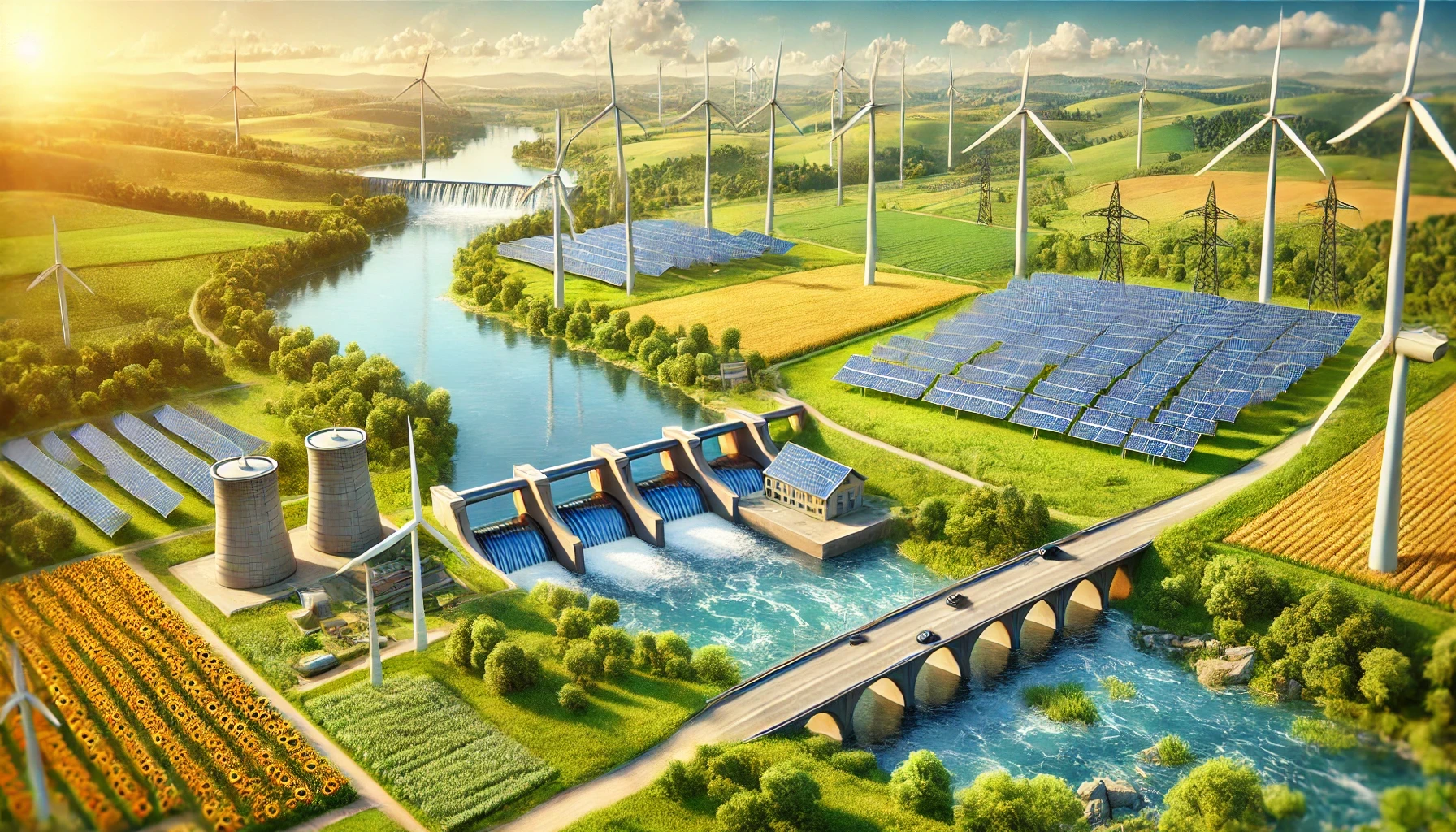
Renewable energy is energy that can be quickly replenished. Oil and coal take millions of years to be made, so aren't renewable. Nuclear power uses uranium, also non-renewable. But anything sourced by shorter-term forces in nature like the sun, moon or rain are renewable.
Geothermal, solar, hydro, wind, tidal and biomass are all forms of renewable energy as they will not run out in the near future. The capacity for renewable energy is enormous: “The Earth receives 23000 TW of solar energy, while the global energy consumption is 16 TW. Therefore, [100% renewable energy] could be possible even if we capture only 0.07% of the solar energy" says Professor Xiao Yu Wu, an energy expert from MIT.
Learn more with Consensus AI Academic Search Engine:
[button icon="♻️" text="What is renewable energy and how does it differ from non-renewable energy?"][/button]
[button icon="⚡" text="Is renewable energy considered energy that can be quickly replenished?"][/button]
Technically, is 100% renewable energy feasible?
Iceland power near 100% of its electricity from renewable energy, using their abundant geothermal and hydro supplies. Renewable energy can also dominate electricity needs for more populous countries too. About 80% of Brazil's electricity needs for its 209million people come from renewable sources, biomass and hydro mostly. On average, however, renewables power ~29% of electricity around the world. So can renewables reach 100% for populous countries? In 2017, Professor Mark Jacobson and colleagues from Stanford University published a scientific paper outlining a roadmap for 139 countries to transition to 100% renewable energy. Prof Jacobson, an expert in renewable energy and climatology, describes how this paper, along with many other studies, make up a “body of work, carried out by over 85 authors and 35 peer-reviewers, [which] is further supported by an additional 30 peer-reviewed studies that find it is possible to match demand with supply with 100% or near-100% renewable energy systems.” Such studies are based on models which predict future scenarios and test different power systems to see if they are able satisfy energy demands. As with any kind of modelling, it can be challenging to estimate all of the parameters correctly. Dr Mark Delucchi, an expert in energy systems and economics from California University, highlights some of these complexities, “the question of feasibility boils down to a few basic kinds of issues: how we model demand-side behaviour in the face of radically different energy systems; how we quantify the costs and performance of existing or near-future energy technologies; and how we handle impacts that are not easily quantified in dollars (e.g., risks of nuclear power)”. Other experts disagree with the idea that renewables could reach 100% for most countries. Benjamin Heard, from the University of Adelaide, with colleagues published a paper reviewing the feasibility of 100% renewable electricity systems. He argues that there is a heavy reliance on hydro and biomass sources - while most countries don't have access to these, so would be reliant on sources like solar, wind, and storage. In those circumstances, it's highly unlikely for renewables to power 100% of the electricity supply he says.
Learn more with Consensus AI Academic Search Engine:
[button icon="⚙️" text="What are the technical challenges associated with achieving 100% renewable energy?"][/button]
[button icon="🥶" text="Does Iceland generate nearly 100% of its electricity from renewable energy sources?"][/button]
[button icon="🌎" text="How have some countries successfully implemented high percentages of renewable energy in their power supply?"][/button]
[button icon="🙌" text="Are there successful examples of countries that already use nearly 100% renewable energy for electricity?"][/button]
What are the challenges with 100% renewable energy?
Some experts highlighted concerns about reliability. “Every once in a while, you see energy shortages in renewables production. This is because the wind and solar just have low production days in energy…If you miss a day of production in renewables you have to fire up the gas generators to fill in the demand” saysDr Eugene Preston, an expert in renewable energy from the Institute of Electrical and Electronics Engineers in the USA. Battery and energy storage solutions are one option to help with this in the future. Yet it seems the barriers to moving towards 100% renewable energy are more economic and political some experts say.“Feasible in terms of what? If it's feasibility in terms of technology, it seems likely... If it's feasibility in terms of the necessary policy, financing, and institutional drivers, it is less likely, unless current political, economic, and institutional/governance systems are adequately perturbed” says Professor Laurence Delina, an expert in renewable energy from Boston University. Takeaway: Despite some debate, most experts agreed that 100% renewable energy was technically feasible. Is it economically or politically feasible - that's a very different question.
Learn more with Consensus AI Academic Search Engine:
[button icon="🚩" text="What are the economic and political challenges to achieving 100% renewable energy?"][/button]
[button icon="🕵️♂️" text="Do some experts believe that 100% renewable energy is technically feasible but economically and politically challenging?"][/button]