
What's Changed in Consensus? (Summer '26)

A rundown of the most notable updates to the Consensus product from May to August 2026
Summer's ending and school's starting back up, which makes this a good moment to stop and reflect on how Consensus has grown.
A lot has changed in four months, and all of it comes straight from what users ask us for: a smarter research agent for complex tasks, an expanded corpus with more scholarly sources and differentiated access, a faster way to examine the evidence of a search, and better managing the papers you discover with Consensus.
All of this change is in service of the same mission: helping you understand and create good science.
1. The Consensus Research Agent
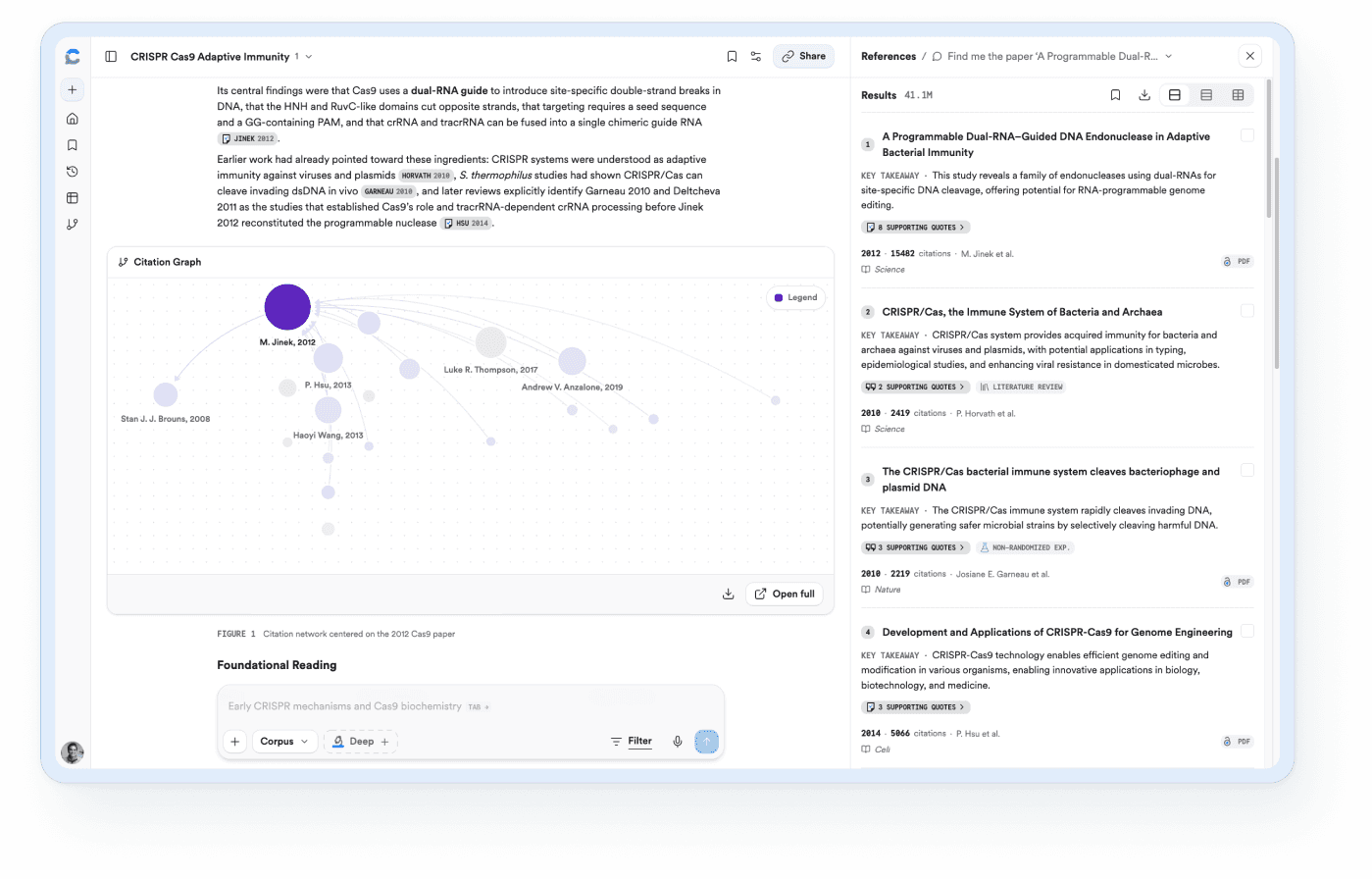
Consensus isn't just a search engine anymore. It's a workspace that can plan and execute multi-step research tasks with tools.
AI reset what people expect from a search product. Most real research questions aren't one query. Instead they're a sequence of steps, some reasoning, and a few different tools and tabs open.
Multi-step tool use (semantic search, paper search, DOI look-up, citation graph traversal and more), not just a single search
Full trace of every step the agent takes and why
Built for the messy questions you'd otherwise spend an afternoon on across multiple searches, tools and tabs
A request like this one now runs end to end in Consensus, in a single pass:
2. A much bigger corpus, and more full-text access
We struck new publisher partnerships and did a lot of work crawling and indexing the rest of the scholarly web, bringing our corpus from 250M documents to now over 400M scholarly sources.
Partnerships with 7 of the 10 largest academic publishers: APA, AAAS, Wiley, Sage, OUP, Taylor & Francis, and more.
Product access to paywalled content via publisher partnerships, so your search isn't limited to abstracts and what's open access
Significant improvements and coverage across non-journal document types including scholarly books, pre-prints and conference proceedings
Comprehensiveness is the single most important feature of an academic discovery tool and we are on a non-stop mission to build the best index of academic content in the world.
3. Citation Grounding
AI summaries speed up paper screening. But it raises questions: is this the whole story and is it accurate?
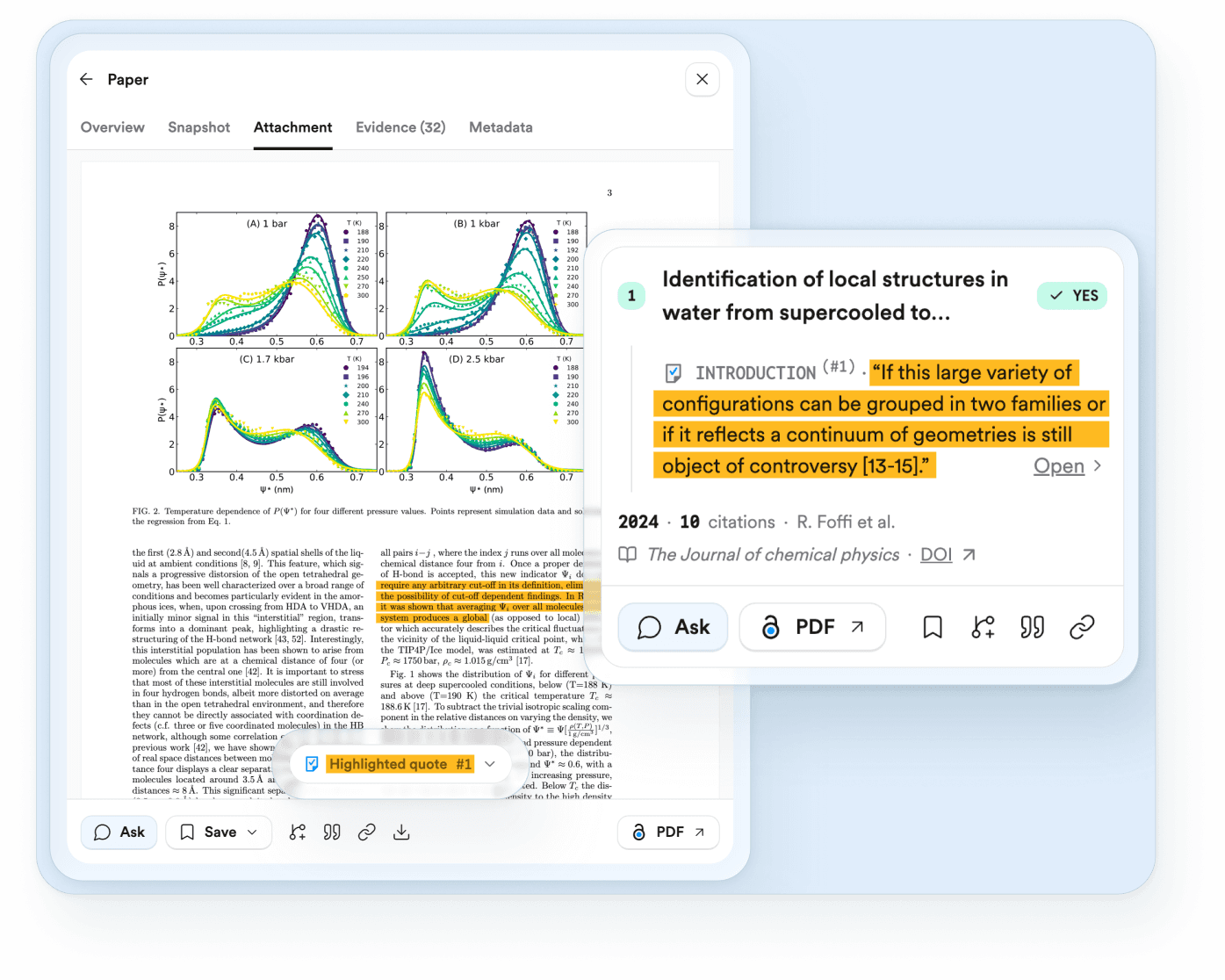
Citation Grounding answers those questions. Every citation in every AI summary we generate is now mapped to an exact quote from the paper. Hover over any AI citation and you see the sentence it came from, word for word, from either the full-text or abstract. Nothing is paraphrased into existence, and you never have to take the summary's word for it.
We now show the exact quote we pulled for every AI citation we generate
We show the section header that quote came from, and highlight it directly in the PDF when we have one
We make the model show its work, which has pushed our summary accuracy up across the board
You screen papers faster, spend your time on the ones that matter, and never have to take our word for an answer.
4. Consensus Library updates
We want Consensus to be where you do your best academic work, not just where you find the papers. The Consensus Library is a big part of that shift, and we've spent the last few months improving it into the first real AI-powered reference manager for researchers.
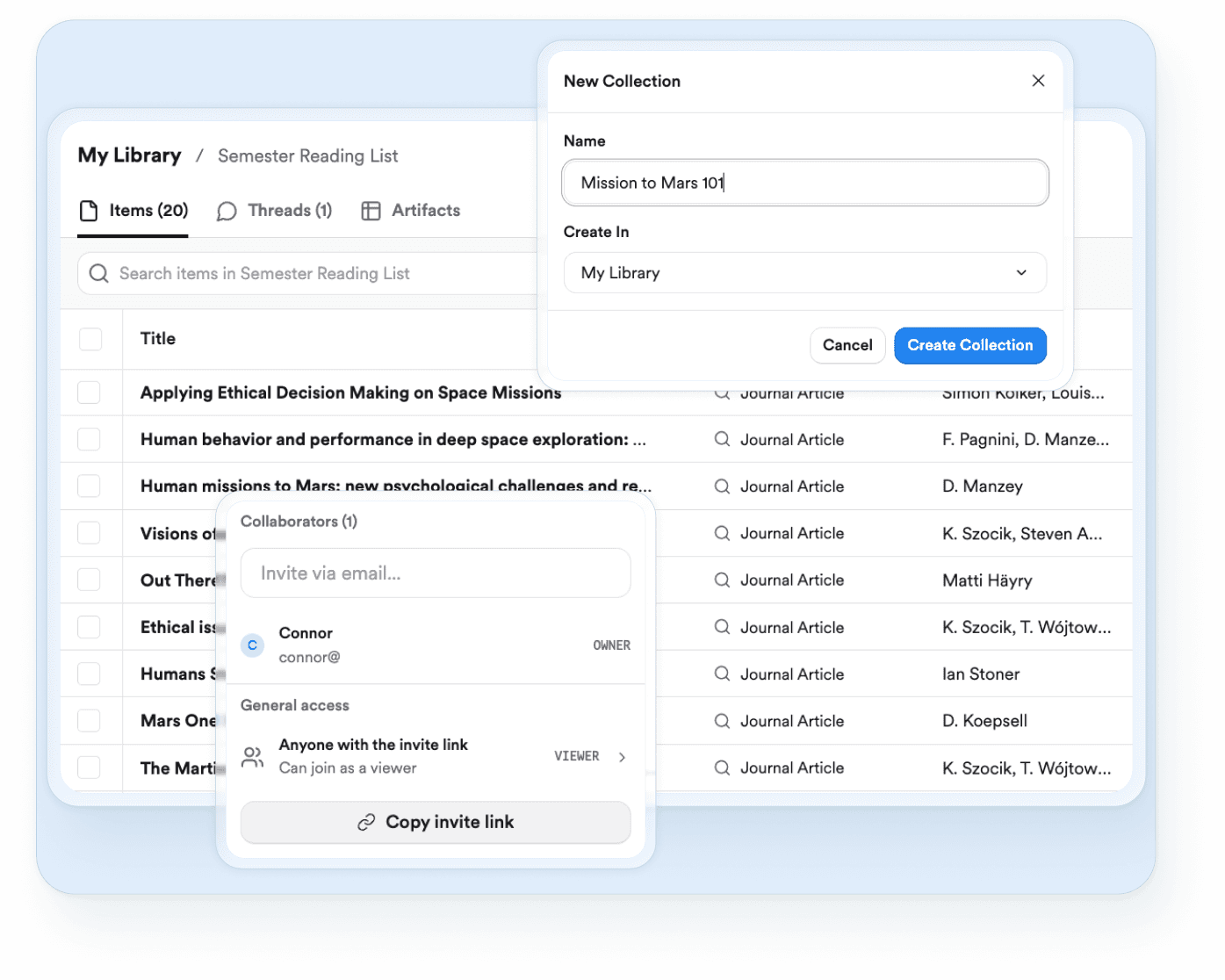
We expanded uploads beyond papers, so you can bring grants, manuscripts, book chapters, and other document types straight into your Library
We wired the Library directly into the Research Agent, so it can run complex analysis across everything you've saved
We made libraries shared, so a colleague can add and remove their own papers in a collection you're building together
Your library stops being a folder of PDFs you meant to read and becomes the thing you actually work out of, with your collaborators in on it from the very beginning.
5. Self-serve API and MCP
Our API and MCP has spent the last few months in closed beta with large pharma teams building internal tools, AI biology startups, and materials science R&D groups. That's done. The Consensus API and MCP are now live for all users, and anyone can sign up and start building today.
We opened up the same academic search that powers Consensus, so you can call it from your own systems: plain-language search, full-text querying through our publisher partnerships, and study metadata like DOI, study design, and journal rank on every paid plan
We built in the filters research actually needs, including controlled studies, minimum journal rank, minimum citation count, country of study, and open access
We put keys, calls, and remaining allowance in one dashboard, so you know what your software is doing before your users do
Every Consensus plan comes with free API and MCP requests, and you pay per request past that. We think it's the most performant scientific search API in the world. Get started today.
Lots of updates, lots to come
Consensus is becoming where the research happens, not just where it starts. An agent that handles the multi-step work, a bigger index so nothing's missing, grounded citations so you can trust what comes back, and a Library you can actually work out of.
More improvements and updates like these are on the way this Fall that we cannot wait to share. More papers, more access and more of the best tools to do better research. And the roadmap comes directly from what we hear from researchers, students, and faculty like you. So if Consensus doesn't do something you need it to do, tell us, and we’ll do what we can to help you understand and do good science.