
Can Sunscreen Save the Monarchs?
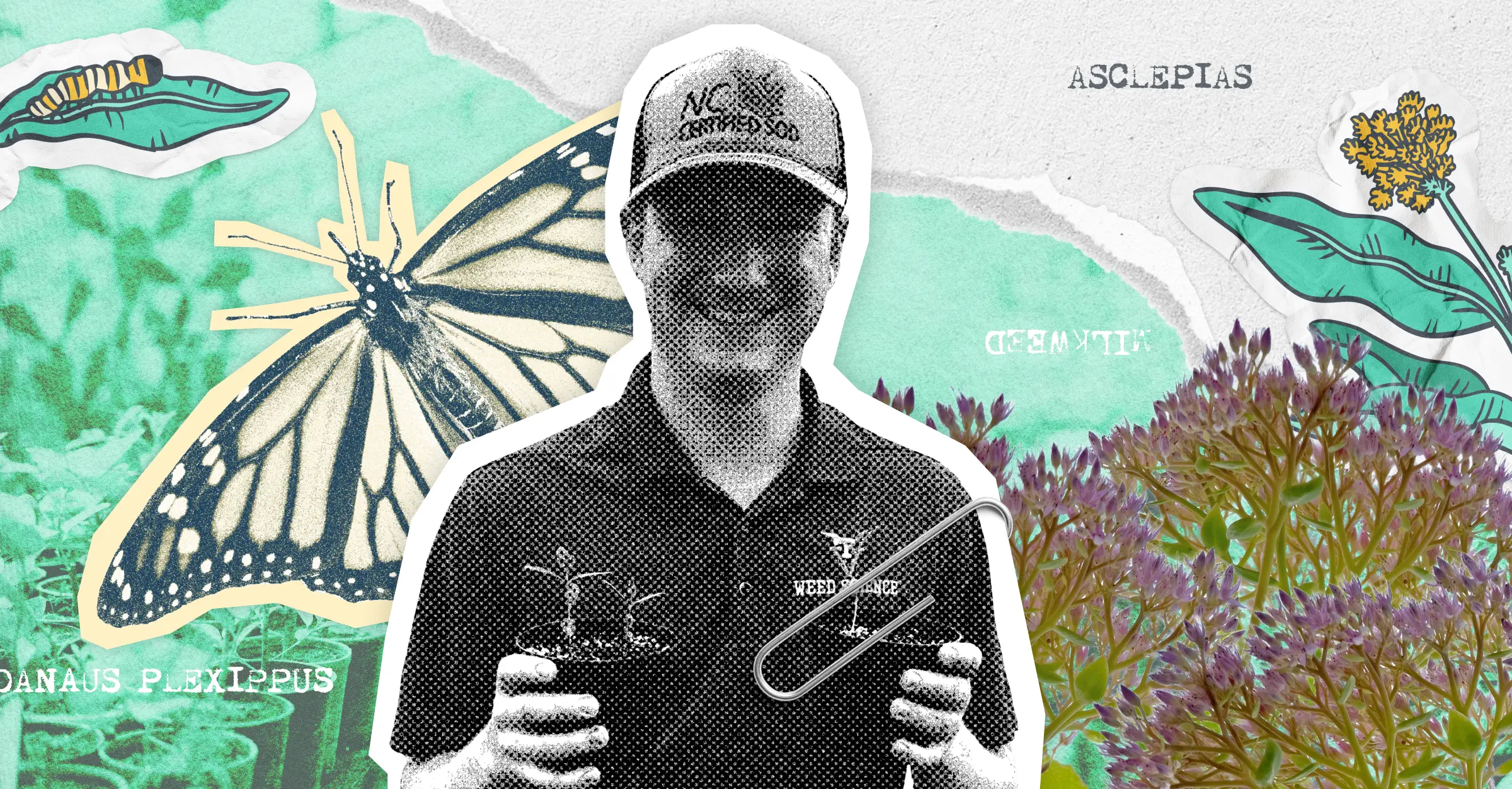
TL;DR: As monarch butterfly populations decline across North America, researcher Samuel Crawford is testing an unconventional idea: altering how monarchs visually perceive milkweed so they avoid plants contaminated by pesticide drift. His work represents a small but hopeful step toward protecting one of the world’s most iconic migrations.
The Monarch’s Fragile Path
In the vast agricultural corridor stretching from Mexico to Canada, monarch butterflies follow one of the most iconic migratory paths in the natural world. Today, that journey is increasingly fragile. Habitat loss, industrial farming, and pesticide drift have reshaped the landscape, leaving monarch populations under pressure.
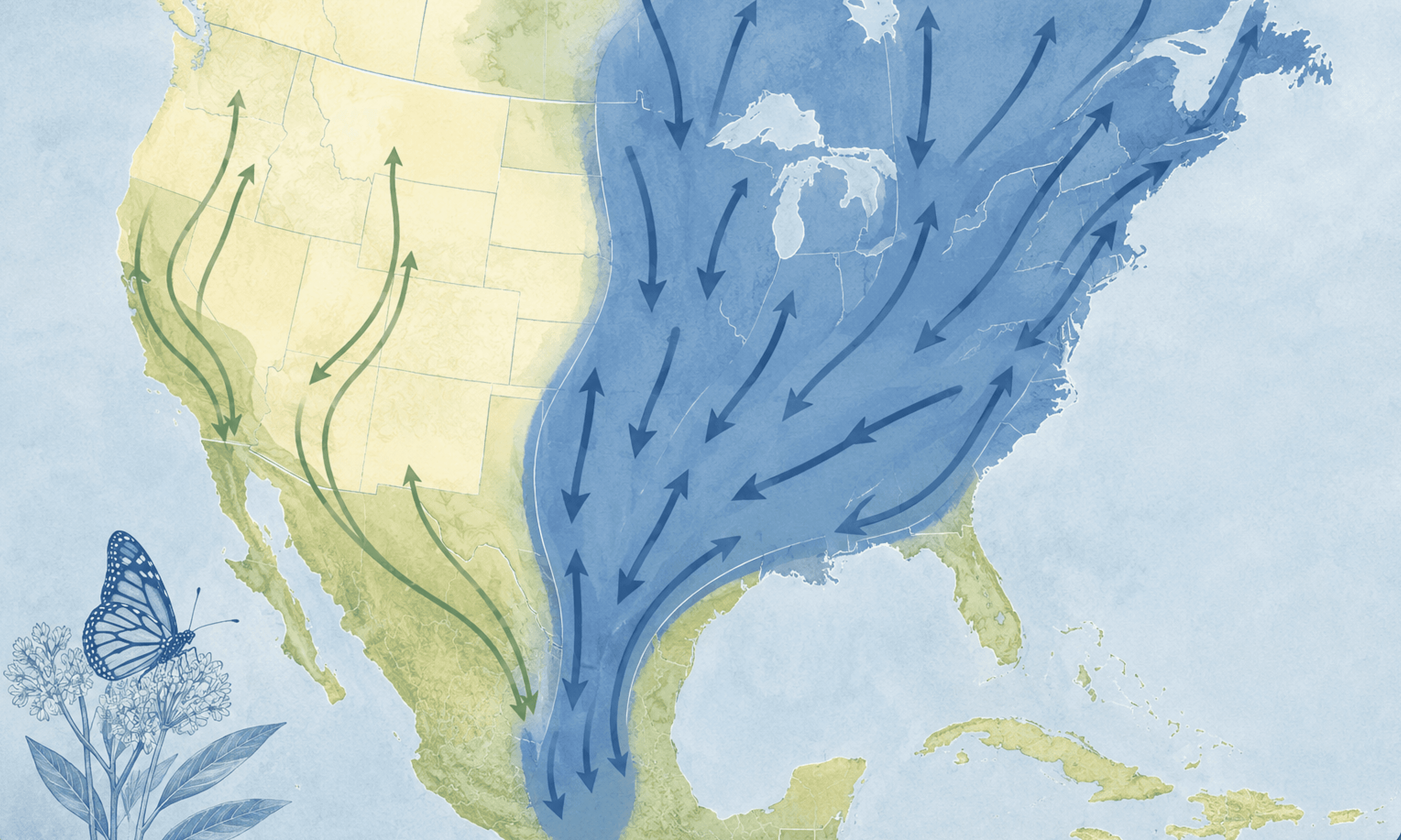
Milkweed is essential to the monarch lifecycle, but across the central United States, where monarch migration overlaps with intensive agriculture, milkweed has declined sharply (up to 95% in some areas), and pesticide drift continues to contaminate what remains. Research has found that monarchs do not recognize or avoid contaminated milkweed. They still lay eggs on treated plants, and many of the emerging larvae die after eating them.
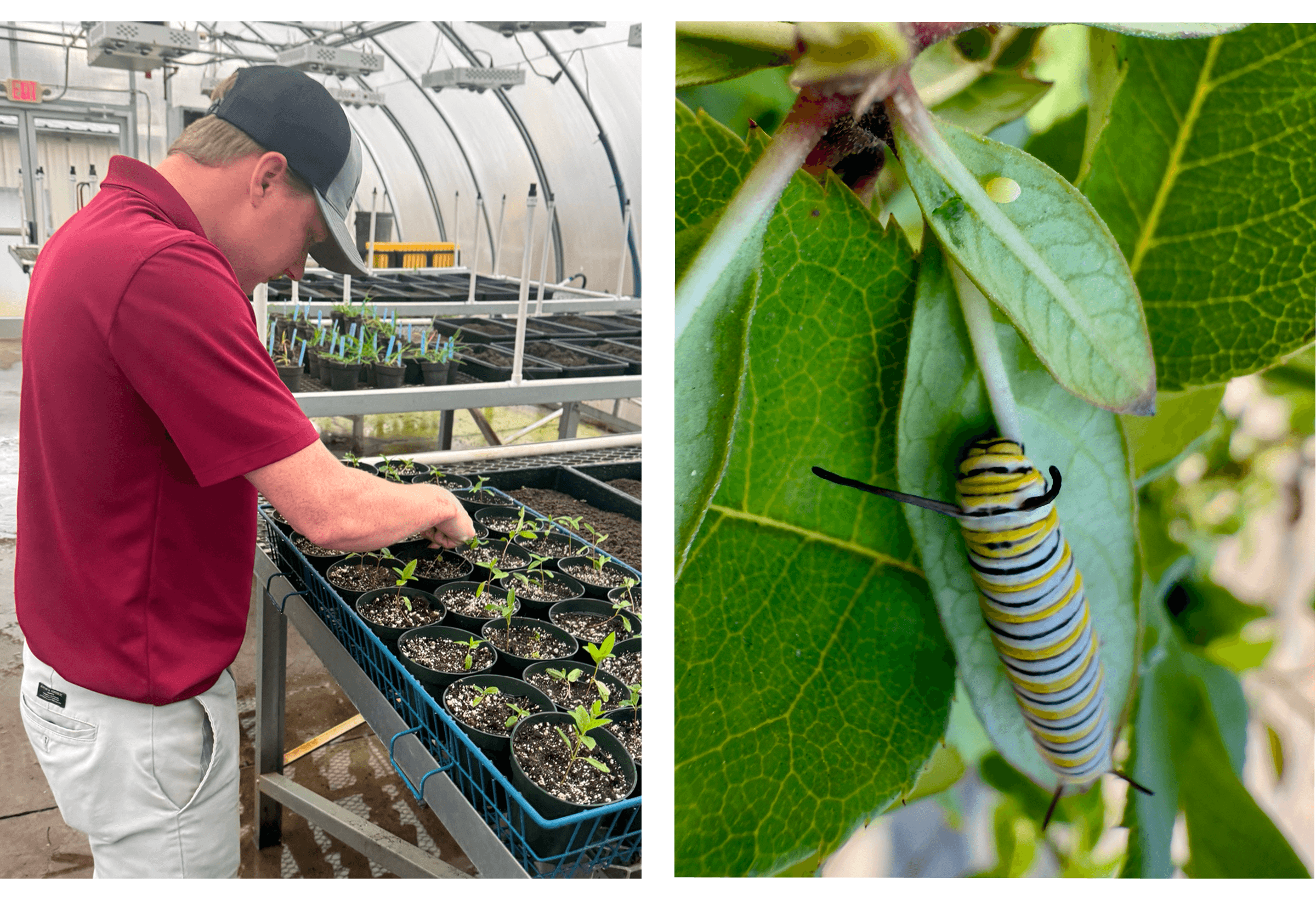
Against this backdrop, Samuel Crawford, a PhD student at Virginia Tech, is asking a practical question: Can we change how monarchs see milkweed so they avoid plants exposed to insecticide drift? Under the guidance of his advisor, Dr. Shawn Askew, he began testing UV-altering compounds, previously studied for pollinator effects, to see whether shifting a plant’s UV signature could make a contaminated milkweed plant look unhealthy, even when it appears normal to humans.
Seeing What Monarchs See
Crawford explains that monarchs rely primarily on visual cues to identify suitable plants, particularly in the ultraviolet spectrum. From above, they scan landscapes for milkweed patches based on how leaves reflect light, using smell as a secondary signal. This insight opens up a new possibility. If contaminated plants could be made to look unhealthy or unappealing at the level of UV reflectance, monarchs might choose to lay their eggs elsewhere. By applying UV blocking or UV altering compounds to milkweed exposed to pesticide drift, Sam thinks it may be possible to reduce or distort the plant’s UV reflectance. To the human eye, the leaf appears unchanged. To a monarch, it may look entirely different.
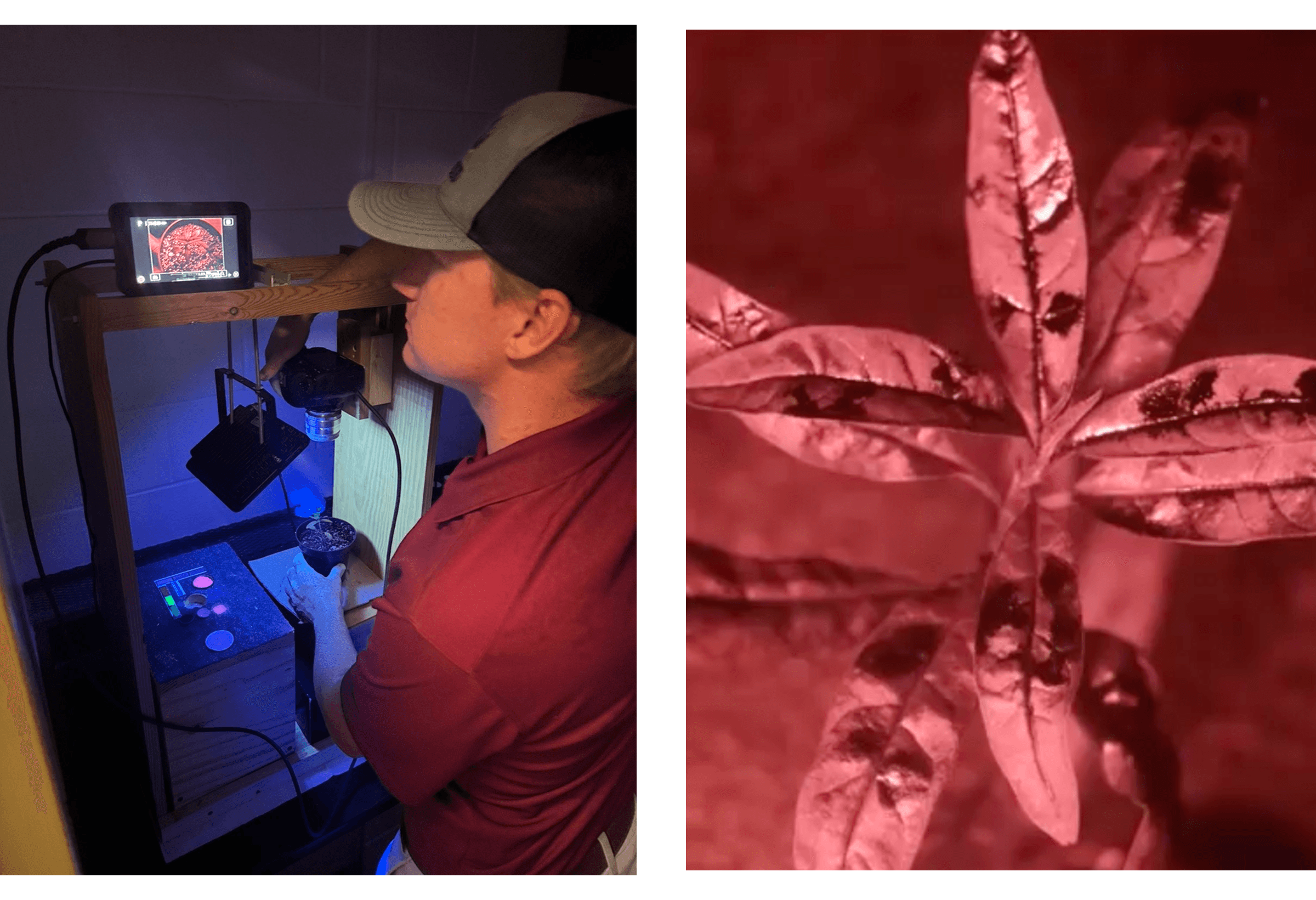
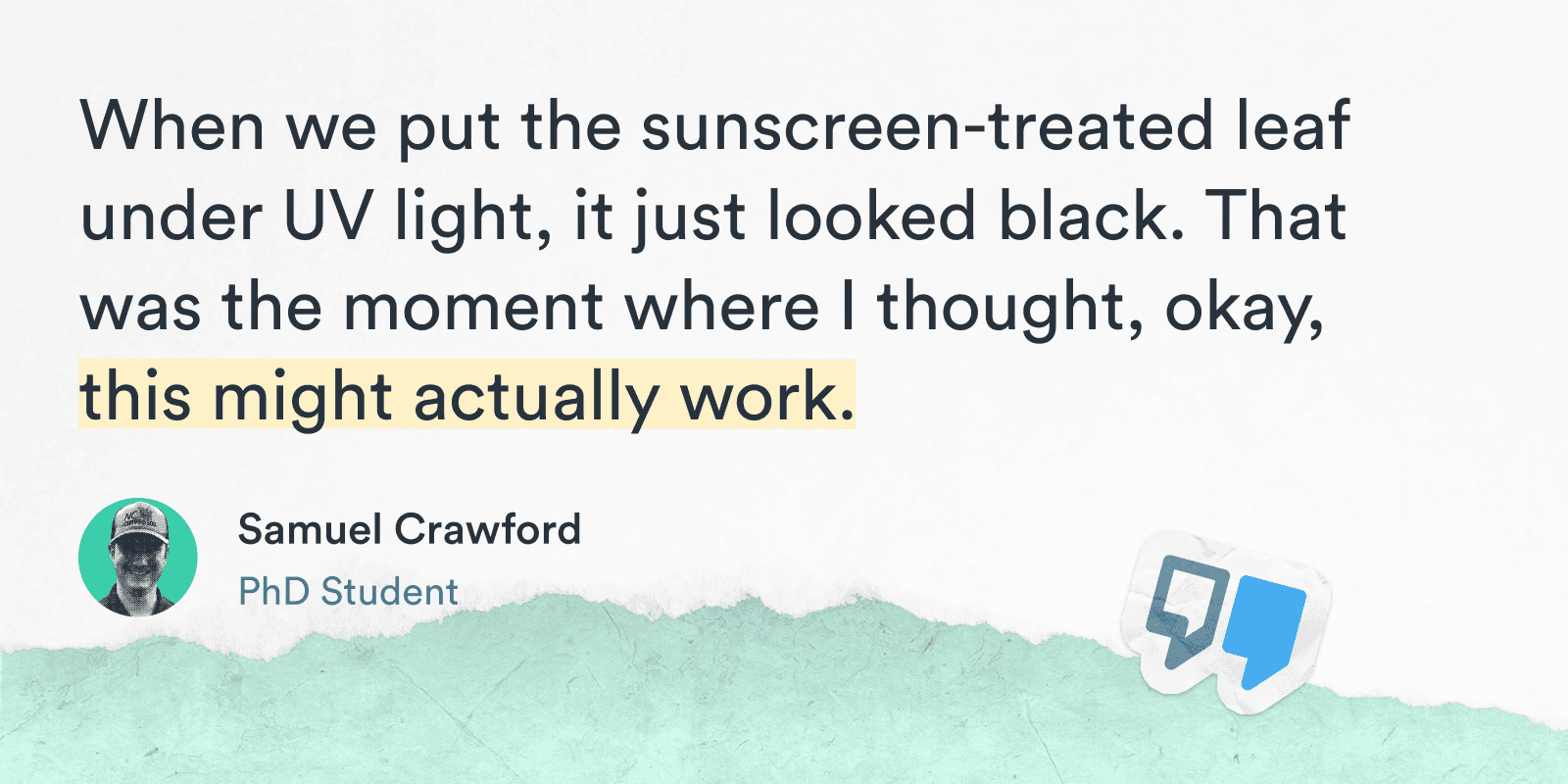
In early experiments, even common sunscreen dramatically reduced UV reflectance on leaves, rendering them almost completely dark under UV imaging. As Crawford describes it, humans would not be able to tell the difference between a treated and untreated leaf, but to a butterfly, the treated plant might appear unhealthy or even invisible.
What makes this line of research particularly compelling is that it does not attempt to eliminate pesticide use, which is deeply embedded in modern agriculture. Instead, it works within existing systems and looks for ways to reduce unintended harm. Crawford envisions a future where UV altering compounds could be incorporated directly into insecticide formulations. In that scenario, crops would still be protected, but adjacent milkweed would be less likely to attract egg laying monarchs. It is a subtle shift, but one that could meaningfully reduce larval mortality.
At the same time, Crawford is realistic about the scope of his work. He does not expect to produce a market ready solution during his PhD. Success, as he sees it, is about establishing a foundation that others can build on. Academic research often operates in increments, with each study contributing a small piece to a much larger puzzle. He reflects that you are not expecting big changes right away. You are contributing a small step in the right direction.
A Small Step in a Much Larger System
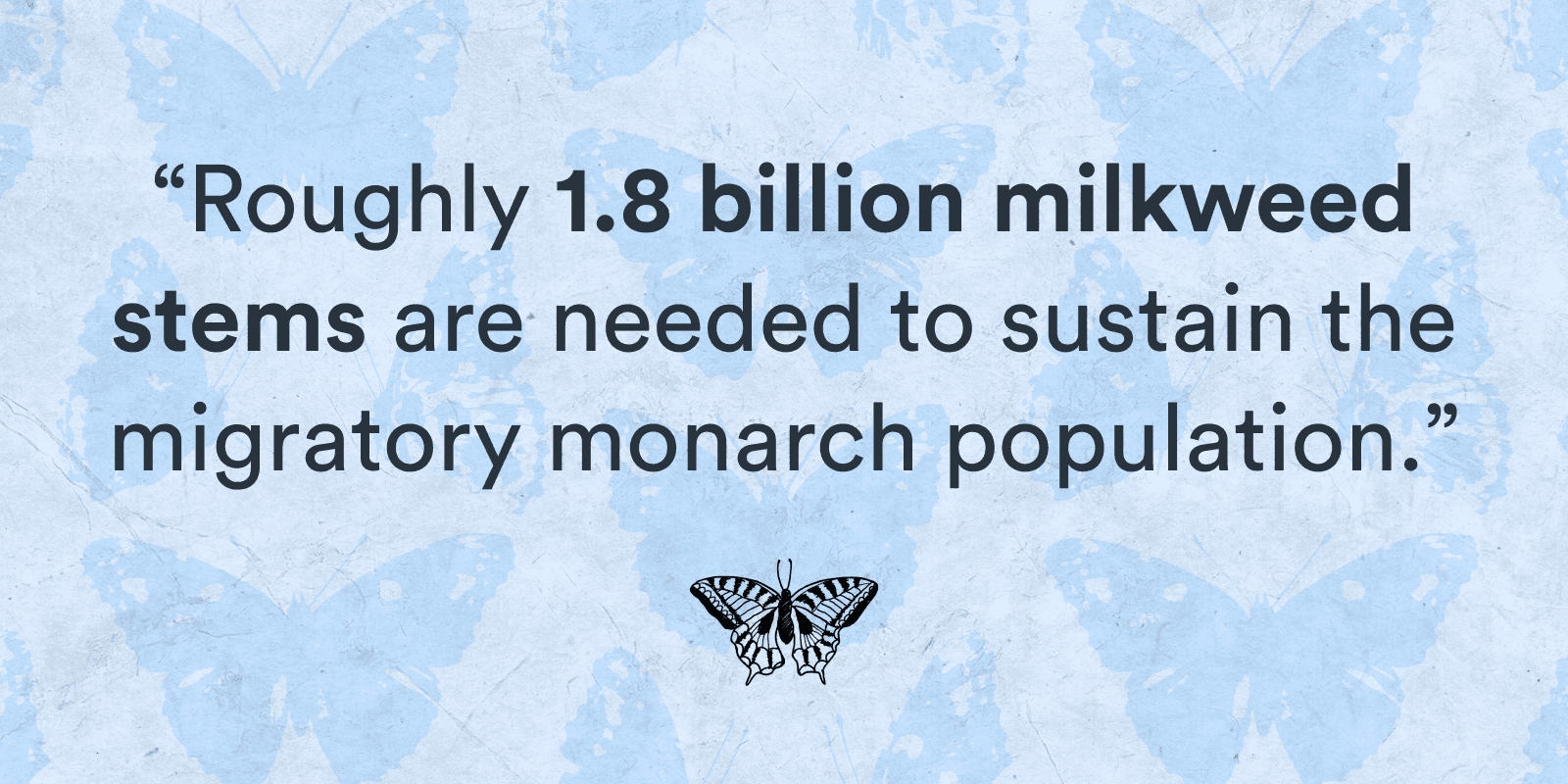
Even if this approach proves effective, it addresses only part of the problem. The larger challenge is scale. To sustain the migratory monarch population, researchers estimate that around 1.8 billion milkweed stems are needed across North America . That raises a more fundamental question about land use and habitat restoration. Crawford notes that while reducing pesticide harm is important, the bigger issue may be where all of those plants will grow. Roadsides, buffer strips, and private land could all play a role, but the scale of the need is difficult to ignore.
Like many PhD students working across disciplines, Crawford has had to quickly familiarize himself with new areas of research, from entomology to chemical formulation. To navigate the literature, he has used Consensus. Coming from one background into a new and unfamiliar landscape, he has found it especially useful to search by keywords and immediately see what has been published. Crawford believes Consensus is especially helpful for researchers entering adjacent fields, where the ability to quickly map the terrain can be invaluable.


Looking ahead, Crawford’s next steps include testing UV altering compounds on living plants, measuring egg laying behavior in relation to reflectance, and identifying compounds that are both effective and compatible with real world formulations. Each step moves the work closer to answering a complex question. Can we alter how insects perceive their environment in a way that protects them without disrupting the broader ecosystem?
Monarch conservation is often framed in terms of large scale interventions such as policy changes, agricultural reform, or climate action. Crawford’s work suggests a different kind of approach. It focuses on a small, precise intervention at the level of perception. Rather than eliminating harm entirely, it seeks to redirect behavior in a way that reduces it. In a world where ecological challenges are deeply intertwined with human systems, that kind of thinking may prove especially valuable.
Share Your Story
Tell us how Consensus accelerates your research. Email [email protected] or tag us on social media.