
Seeking Better Answers for Tougher Questions
Kie Lovell, Psychiatry Resident and Researcher
How Kie Uses Consensus to Work Smarter
For Kie Lovell, a psychiatry resident and researcher, Consensus is less about finding a quick answer and more about finding the right evidence faster. In a field where treatment decisions can be nuanced, high-stakes, and sometimes unsettled, he uses it as a decision-support layer that helps him think more clearly, come prepared to discuss his reasoning, and move from open questions to evidence-backed action.
In addiction medicine, many decisions are not straightforward. Questions often come up around off-label treatments, unfamiliar options, or patients with complex conditions.
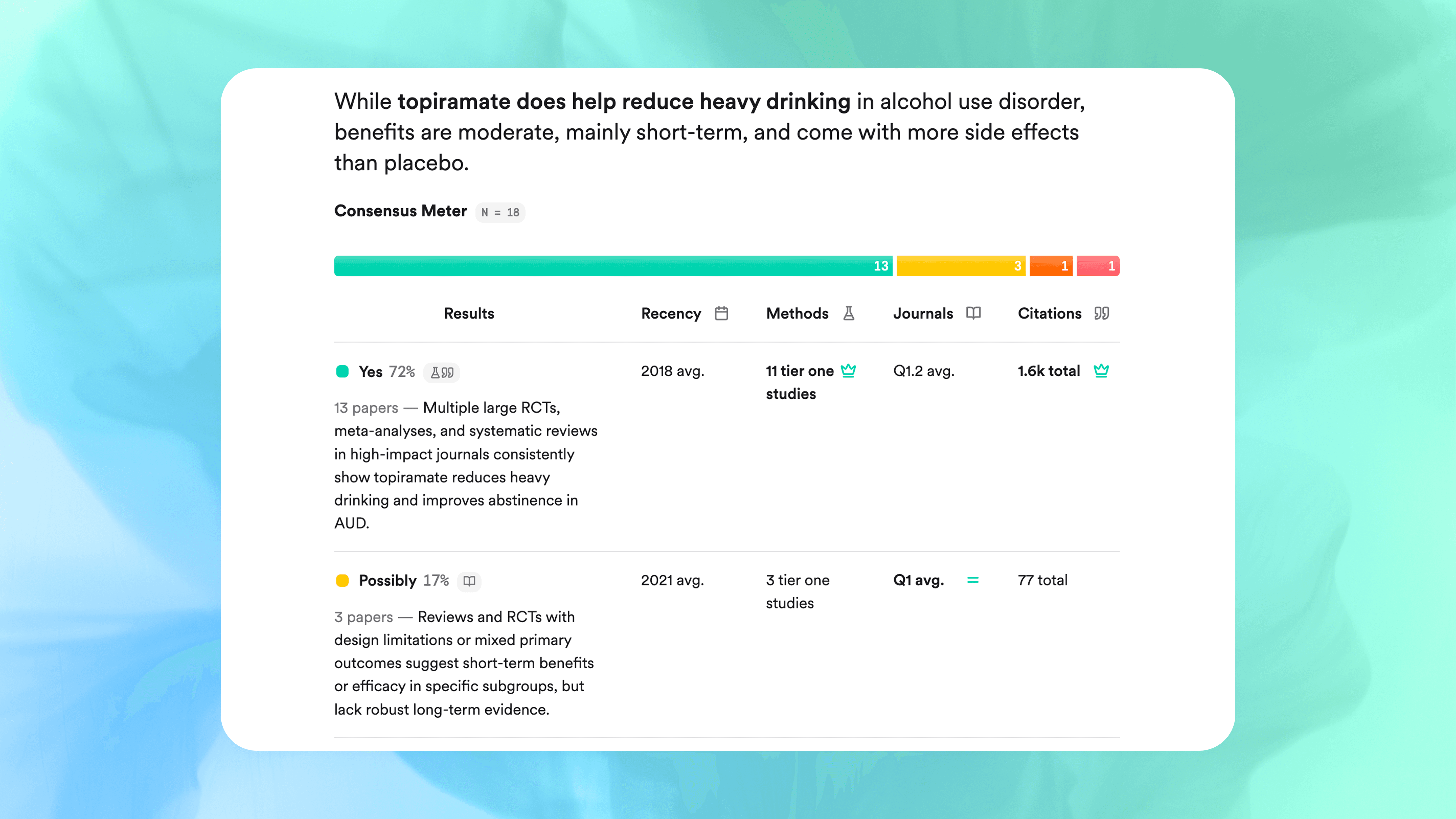
Instead of relying on memory or default approaches, Kie starts with a focused question. Within seconds, he can scan a set of relevant studies, compare how treatments stack up, and see where the evidence aligns or diverges. Rather than a single answer, he gets a structured view of the research, including both supportive and conflicting findings, along with a sense of where the field is leaning. This is especially valuable for questions that are not black and white.

As a resident, Kie is expected to justify his clinical reasoning to attending physicians, often in real time.
After reviewing the literature, he brings that evidence directly into team discussions. Instead of relying on intuition alone, he can point to specific studies, reference the strength of the evidence, and prioritize higher-quality research when explaining his thinking. This shifts the conversation. Rather than debating opinions, the team can focus on what current evidence supports and how it applies to the patient.
A real example: Kie had a patient he thought would benefit from topiramate for alcohol use disorder, but the standard go-to is naltrexone. He wanted to know if topiramate held up as well, and whether the potential added benefit of weight loss was actually supported by the evidence. Rather than manually combing through PubMed, he asked Consensus and had the most relevant studies surfaced instantly, ready to read and evaluate.
He used the same process for a harder call: whether a patient with cirrhosis could safely take naltrexone. Old clinical guidance said no, but the research had moved on. Consensus helped him quickly locate where the literature had landed and gave him the confidence to bring that updated evidence directly into a team discussion.
That's the workflow in practice. A focused question, a fast triage of the strongest studies, and a clear-eyed read of what actually holds up.
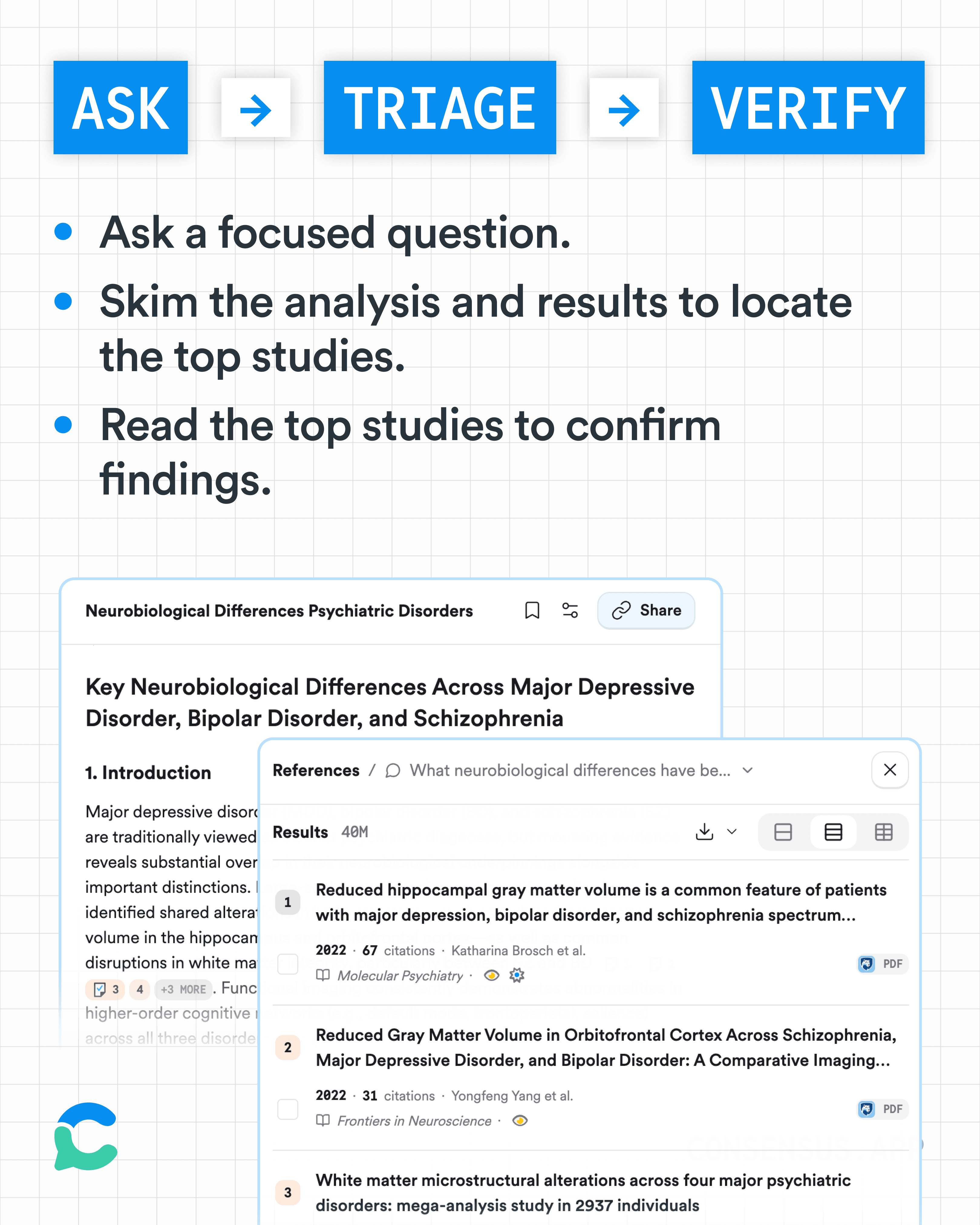
Residents regularly present cases and lead teaching sessions. Kie uses Consensus to anchor each key point in research and ensure what he presents reflects the current state of evidence.
He asks targeted clinical questions, gathers relevant citations, and distills findings into clear takeaways that are easy to communicate. This makes it easier to translate complex literature into something practical for his peers and team.
Beyond clinical work, Kie uses Consensus to guide his own research.
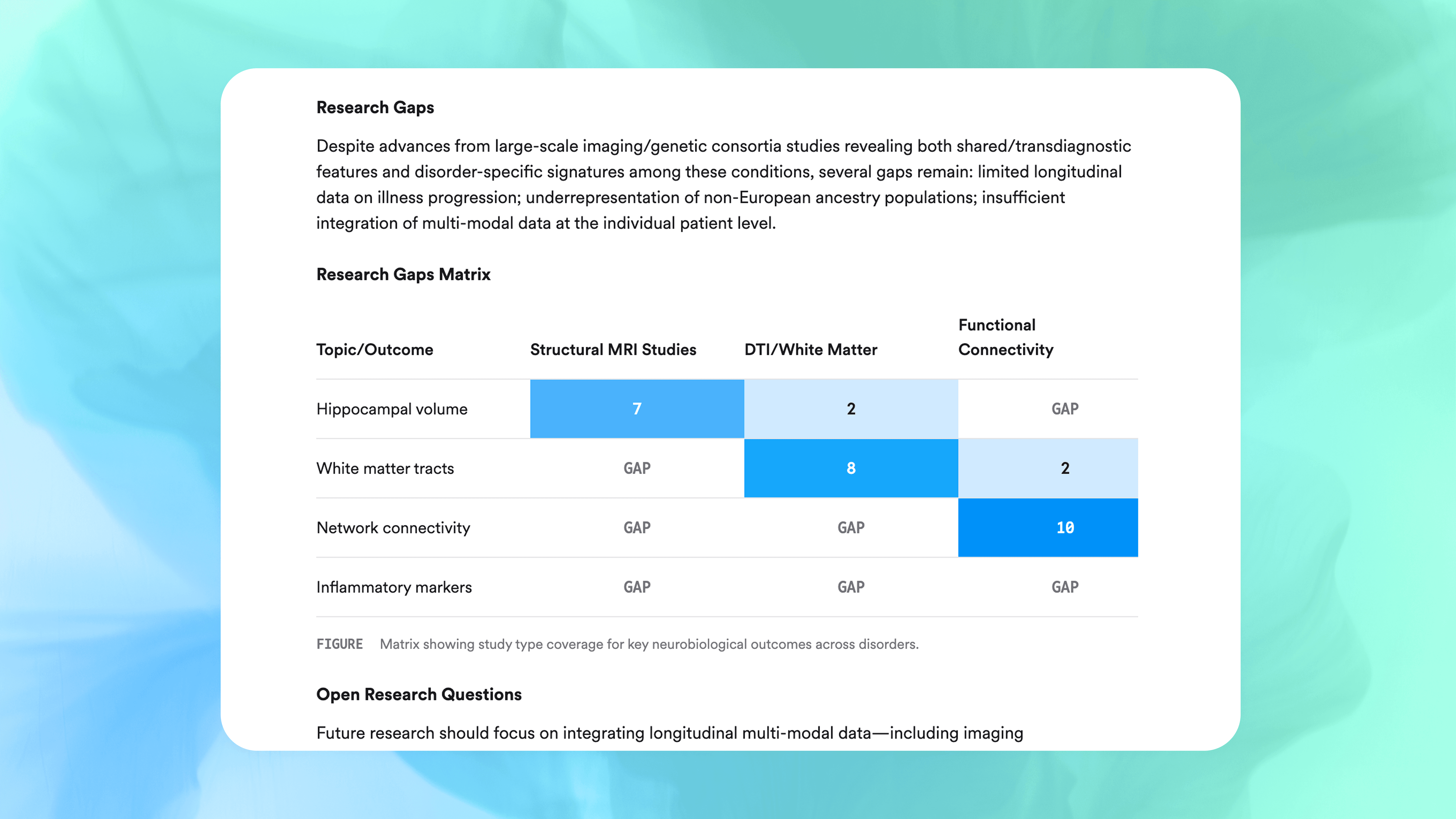
He is currently exploring potential biomarkers for psychiatric conditions, including early work looking at whether there are shared biological markers between antisocial personality disorder and autism spectrum disorder.
Instead of manually reviewing large volumes of literature, he quickly assesses how much work exists on a topic, whether findings are consistent or conflicting, and where meaningful gaps remain.
This helps him avoid spending time on questions that are already well understood and focus instead on areas where new research is needed.
A Shift in How Clinical Decisions Are Made
For Kie, the value of Consensus is not just speed. It is the ability to surface both sides of the literature, narrow in on the strongest studies, and make research feel more usable in day-to-day clinical work. Whether he is preparing for a presentation, defending a treatment decision, or exploring a new research question, Consensus helps him focus on what matters most: asking better questions, finding stronger evidence, and working smarter with the literature.