
(Copied V2) Consensus for Grant Writing
(Copied V2) Consensus for Grant Writing
Using Consensus to do the evidence work behind a stronger proposal

Dr. Benita Olivier
Professor of Rehabilitation Oxford Brookes University

01
Why this guide exists
Grant writing is one of the most demanding things researchers do. Months of effort, low success rates, and a proposal that has to compress a multi-year research vision into a few thousand carefully argued words.
It is also a place where the temptation to over-rely on AI runs especially high.
This guide is about how to use Consensus well during the research and evidence work that underpins a grant proposal. It is not about using AI to write the proposal itself. The strongest grants are written by researchers who know their evidence base deeply enough to make a convincing case in their own words. Consensus can help you get there faster.
02
Building the evidence base for your proposal
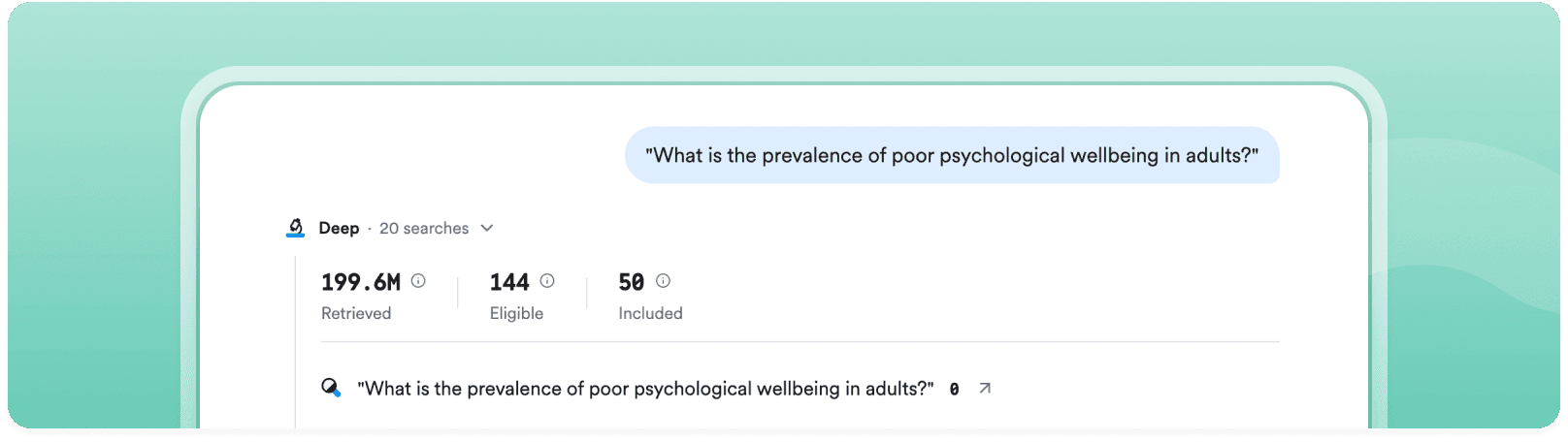
Strong grant proposals are built on evidence:
Understanding what is already known, where important gaps remain, and how your work advances the field. Consensus is an AI-powered academic search engine that searches more than 220 million peer-reviewed papers and research sources. Rather than relying on general web results, Consensus helps researchers quickly identify relevant studies, evaluate the state of the literature, and uncover evidence that can strengthen their proposal.
It surfaces relevant studies quickly, helps you orient yourself in a field, lets you ask follow-up questions of individual papers, and helps you see where the studies sit in the citation map. What Consensus cannot do is make the case for your grant. The argument, the framing, the story of why your research deserves funding, the judgment about what is truly novel, and the strategic fit with the funder: those are yours.
Consensus helps with the evidence work. The proposal is yours to write.
03
Where in the grant proposal can Consensus contribute
A grant proposal is built from a number of recognisable sections: a case for significance, a clear statement of the gap, a rationale for your specific approach, a defensible methods section, validated outcome measures, and a credible pathway to impact.
While the exact terminology varies across funders, these sections form the backbone of most academic research proposals. It is worth reading the funder's guidance documents carefully to understand how they name and weight each section before working through the guidance below.
3-1
Background and significance
Almost every grant opens by establishing the importance of the problem. Funders want to know that the topic is significant, that there is a recognised need, and that the proposal is grounded in current knowledge.
Consensus is well-suited to this scoping work. It allows you to map what is known in a field, identify the seminal papers that anchor it, and develop a feel for how the literature has evolved.

Pre-existing reviews and meta-analyses often give you the strongest starting point.
Use Consensus filters to narrow your results:

1
Study type lets you pull systematic reviews and meta-analyses to the top
2
Journal rank prioritises high-quality sources
3
Year of publication keeps your evidence current
4
Citation count helps you identify the most influential papers in the field
Using these together is faster and more precise than scrolling through unfiltered results.

Deep Search
For a thorough scoping of a field, the Deep Search function runs an extended search across up to 50 papers, identifies key themes and research gaps, and produces a structured report with a full citation list. This helps you understand the landscape quickly before narrowing your focus. As always, read the papers it points you to, not just the report itself.
3-2
The gap
A strong proposal makes a clear case for why your research is needed. Consensus can help you triangulate the gap by surfacing what has been done so that you can see, by contrast, what has not.

Absence of evidence is itself evidence. If Consensus returns few or methodologically weak studies on a sub-question, that is informative.


Citation Graph
Use the Citation Graph in Consensus to trace a seminal paper in both directions: backward to the studies that shaped it, and forward to the research it has since influenced. This is one of the most efficient routes to understanding how a field has developed, who the key researchers are, and where the gaps remain.
3-3
Rationale
This is where you justify your specific approach. Why this intervention, this population, this method, now? Consensus can support this by surfacing studies that have used similar approaches in adjacent populations, and by identifying recent developments that strengthen the case for your timing.

Strong rationale rests on multiple lines of converging evidence. Don’t base your assumptions on a single supportive study.
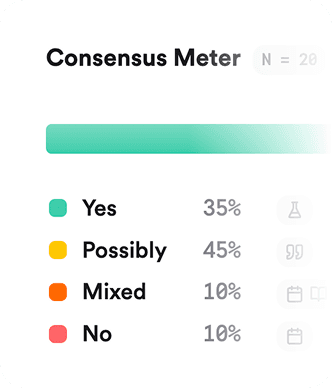
Consensus Meter
The Consensus Meter can also be useful here. For yes/no questions, it shows the proportion of studies that support, oppose, or remain inconclusive on a question. A field where the evidence is inconclusive is itself an argument for your research. A field where the evidence clearly points in one direction signals that you may need to refine your question rather than repeat what is already established.
3.4
Methods and design
Funders want methods that are appropriate, feasible, and informed by what has been done before. Consensus can help you find studies that have used similar designs and identify methodological norms in your field.

Be cautious about replicating methodological weaknesses simply because they are common. Consensus can show you what people do; your expertise tells you whether they should have done it differently.
3.5
Outcome measures
A grant proposal needs to specify how outcomes will be measured. Using validated, established outcome measures strengthens the proposal and supports comparability with the existing literature.
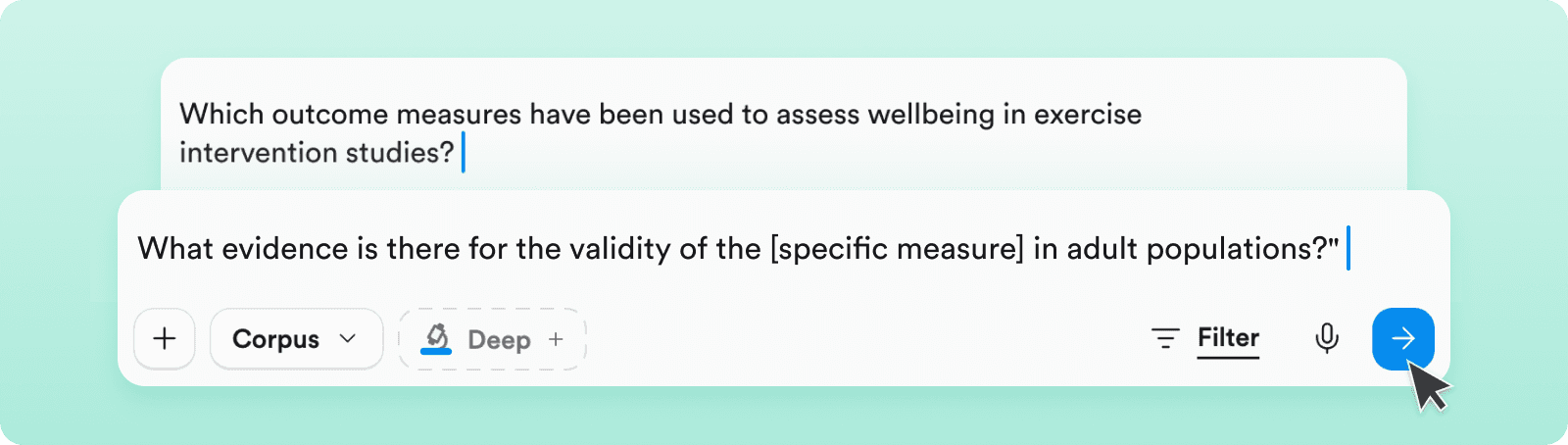
Common is not the same as best. Check whether a measure has been validated specifically in the population you intend to study.
3.6
Impact and translation
Funders increasingly want a credible pathway from research to real-world change. Consensus can help you understand how research in your area has been used to inform practice, policy, or further research.

Impact pathways are hard to find in single studies. Review articles and commentaries often map the translational landscape more clearly.

Medical Mode
If your grant sits in a clinical or health services area, switch on Medical Mode in Consensus. It narrows the search to a curated subset of around 8 million clinical sources, including the top medical journals and over 50,000 clinical guidelines. The baseline quality of the evidence rises, and the time you save on filtering can go into reading the papers properly.
04
A worked example: using Consensus to help you create a Significance section

A grant proposal is built from a number of recognisable sections: a case for significance, a clear statement of the gap, a rationale for your specific approach, a defensible methods section, validated outcome measures, and a credible pathway to impact.
Here is how Consensus can support the evidence work behind that section.
Step 1
Explore the landscape

Step 2
Scope the scale of the problem

Step 3
Map what has been tried

Step 4
Identify the gap

Step 5
Find the seminal papers

Step 6
Read everything you are planning to cite
Non-negotiable. Consensus summaries are an orientation tool. Citations are made on the basis of the original papers, read by you, in full.
Step 7
Synthesise in your own words
Close Consensus. Sit with the evidence. Form your own view of the field, the gap, and how your proposal fits. Then write the significance section in your own voice, drawing on the evidence you have gathered.
05
What Consensus cannot do for your grant
What Consensus can do | Consensus cannot… |
|---|---|
Find real, citable papers across a large database | Decide what is novel about your particular proposal |
Help you map a field, identify gaps, and surface seminal work | Replace careful reading of the funder’s call |
Summarise findings to help you orient | Judge whether your aims are feasible within your team’s capacity |
Let you ask questions of individual papers to clarify methods or findings | Write the proposal, draft the case, or make the argument |
Generate useful search terms for further database work | Replace internal review by colleagues, mentors, and collaborators |
06
Funder and institutional rules on AI
Always check the current rules of the funder you are applying to and your institution’s research office before using any AI tool in your grant preparation. Disclose your use where required.
A conservative position is the safest one. Use Consensus to support the evidence work that informs your grant. Write the proposal yourself.
Your pre- and post-search Checklist
I have read the funder’s call carefully and understood what it asks for.
I know what type of question I am asking and have chosen the right framework. (See From Framework to Prompt.)
My question is neutral and does not assume a direction of effect. (See Framing Unbiased Research Prompts.)
I have checked the funder’s and my institution’s current guidance on AI use.
I have read the original papers I plan to cite, not just the Consensus summaries.
I have appraised the quality and relevance of the evidence.
I have considered whether the populations and settings studied apply to my proposal.
I have noted where the gap lies and what is missing.
I have written the proposal in my own voice, with the evidence I have gathered as the foundation.
I have disclosed the use of AI according to the funders guidelines.
Strong grant proposals are written by researchers who know their evidence base inside out. Consensus can help you build that foundation faster, and free up your time for the work only you can do: shaping the argument, framing the case, and articulating the research vision that no AI can offer.
Become a Consensus MCP expert.
For courses and more information on how to use the MCP, check out our guide below.