How to Start a Literature Review in a New Field: A PhD Student’s Guide
How to Start a Literature Review in a New Field: A PhD Student’s Guide
A focused, paper-by-paper workflow for entering a new research field, understanding the literature, and identifying where your own work might contribute.

Researcher snapshot
Ann Mariya Sunil is a second-year PhD student in Industrial and Systems Engineering at Virginia Tech, where she works on stochastic and distributionally robust optimization for network interdiction problems.
When you enter a new field, it is easy to read paper after paper without feeling that you truly understand the literature. This guide offers a more focused approach: begin with a handful of papers, study them one at a time, ask questions as you read, and preserve what you learn in your own words.
The workflow comes from Ann Mariya Sunil, who developed it while learning her adviser’s area of stochastic optimization during the first year of her PhD at Virginia Tech. By following her method, you can move beyond collecting papers toward understanding how they relate, which ones are worth returning to, and where your own research might contribute.
1. Ask Someone in the Field for a Small Starting List
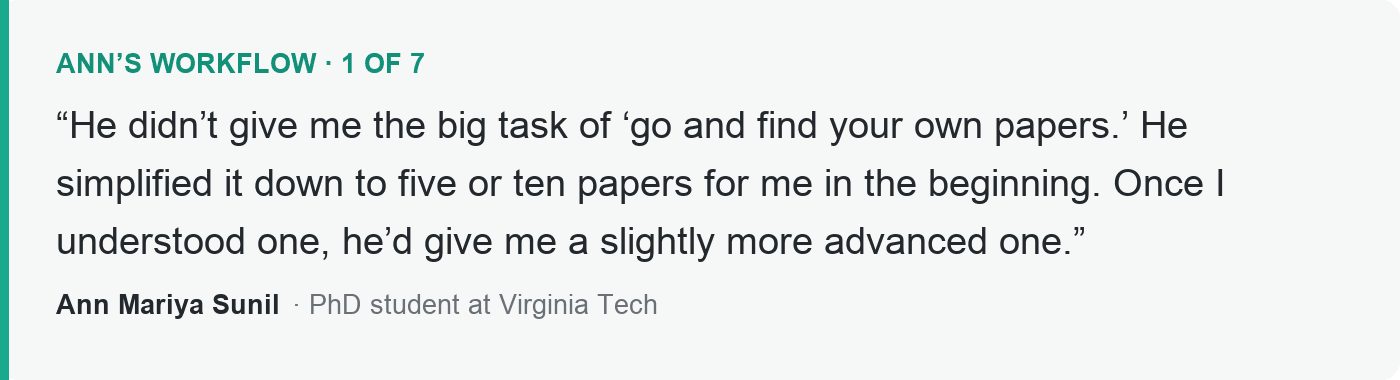
Before searching broadly, ask your adviser, a professor, a senior lab mate, or another researcher in the field to recommend five to ten foundational papers. Ann’s adviser created this starting point for her, then introduced more advanced work as her understanding grew.
If you do not have someone to ask, use Consensus to find a similarly concentrated set of foundational and highly influential papers in your subfield. The goal is not to identify every relevant paper immediately. It is to find a manageable entry point into the field. Save these starting papers as a Collection in My Library to keep your initial reading list focused and easy to return to as your understanding develops.

2. Keep One Paper in Each Thread
Once your starting papers are saved to a Collection, create a separate Thread (chat) for each paper you read.
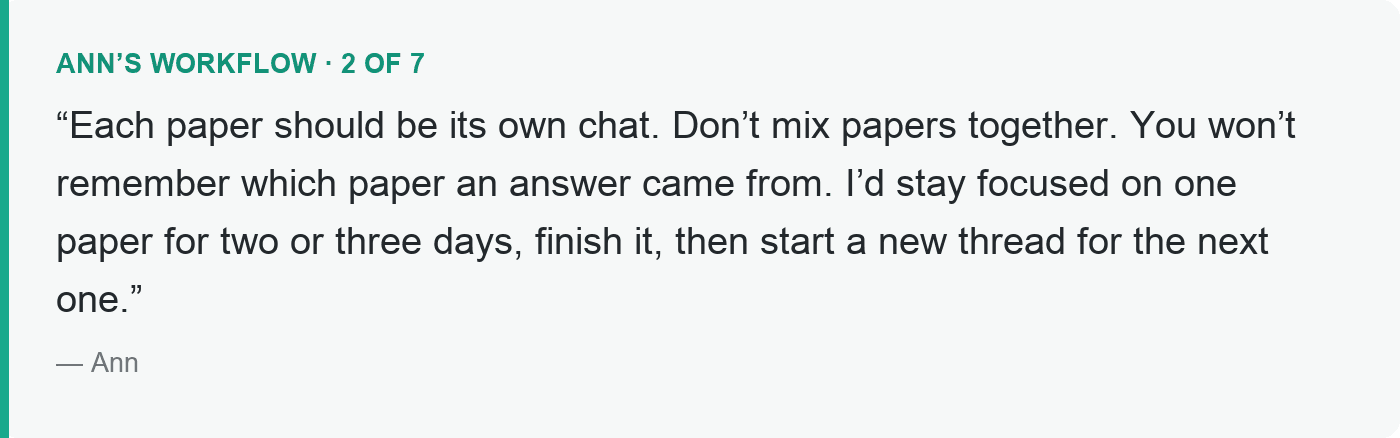
Treat every source as its own conversation. Keeping each paper in a separate thread makes it easier to remember which study an explanation came from. Once you understand the papers individually, you can compare them without mixing up their methods or findings.

3. Get the Summary Before You Start Reading
Before diving into a new paper, Ann asked for a summary so she knew what she was walking into.
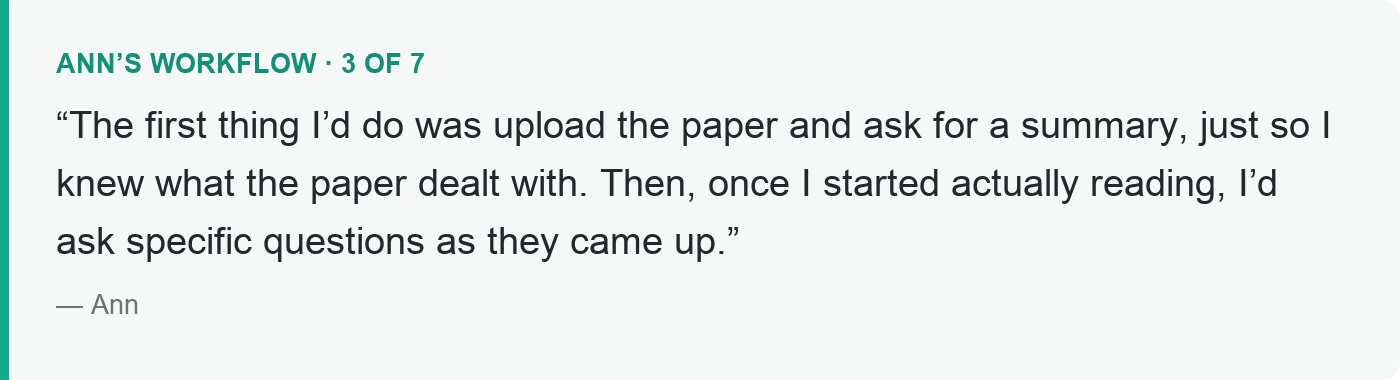
The summary is orientation, not a substitute for reading. It gives you a map of the paper’s central question, method, and findings before you work through the full argument. Ann then read the original paper section by section, keeping the thread open beside her and stopping whenever she reached something she did not understand.
4. Ask Questions as Soon as You Are Confused
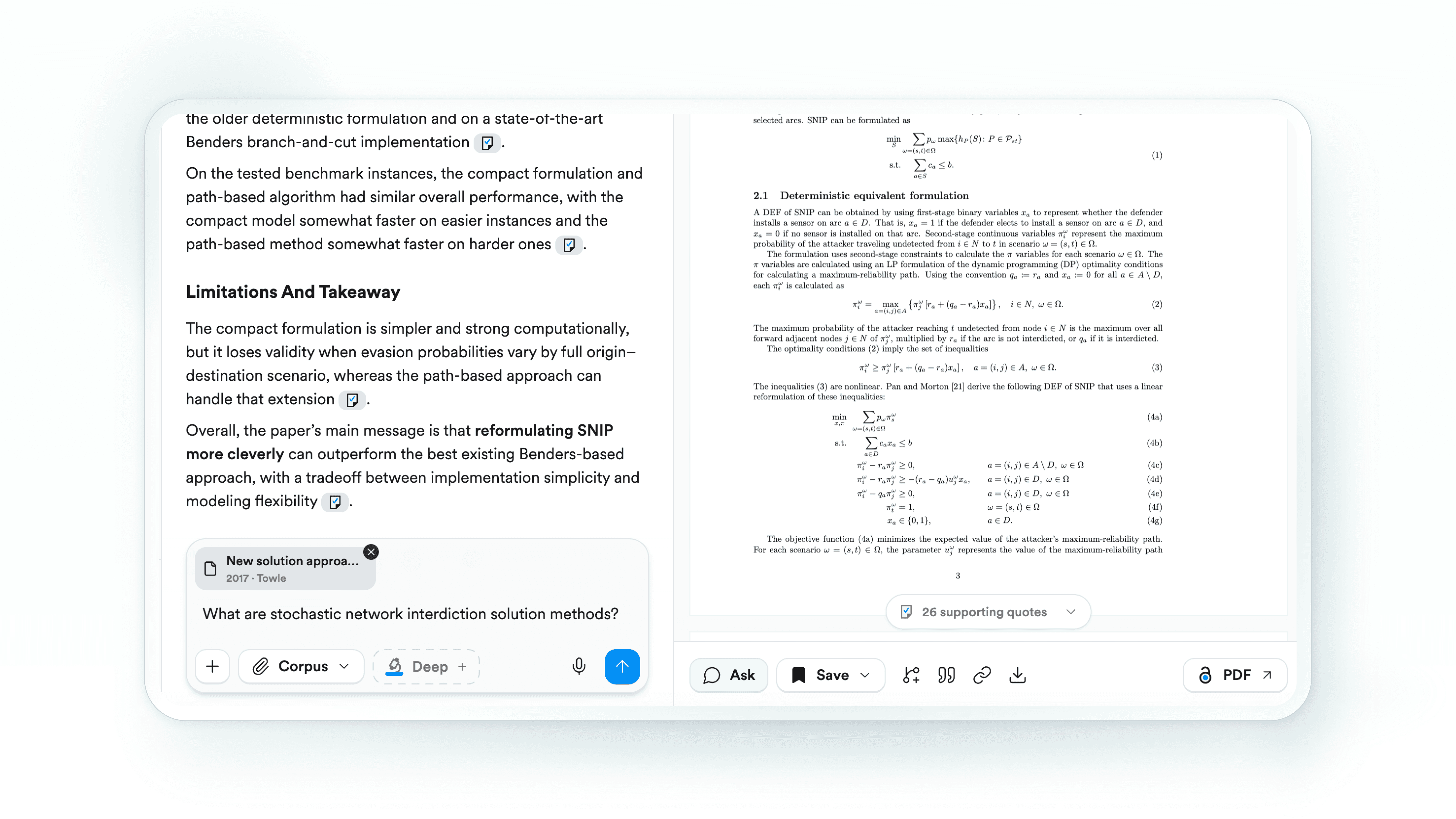
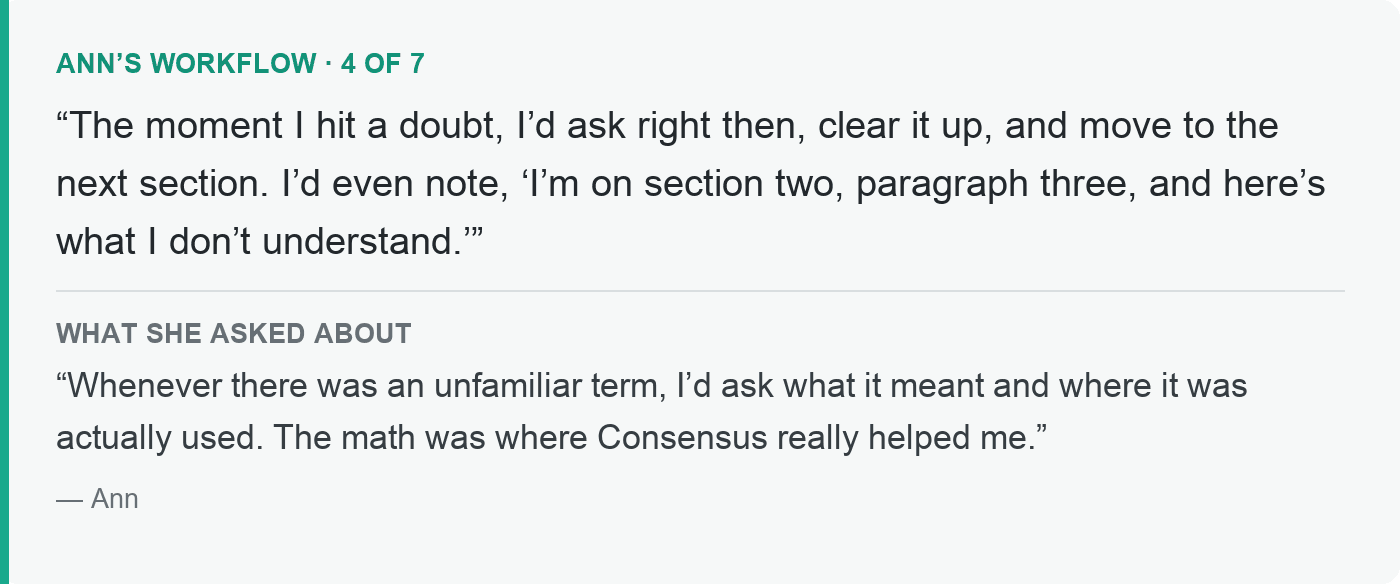
Ann never forced herself to finish a paper before clearing up confusion. She treated reading as a back-and-forth conversation. Her most common questions were about jargon, real-world applications, and especially the mathematics.
5. Record Answers and Insights in Your Own Words
As Ann worked through each paper, she wrote the answers and insights she wanted to retain in Goodnotes on her iPad. She organized the notes by paper within each project folder and rewrote each explanation in her own words rather than copying it verbatim.
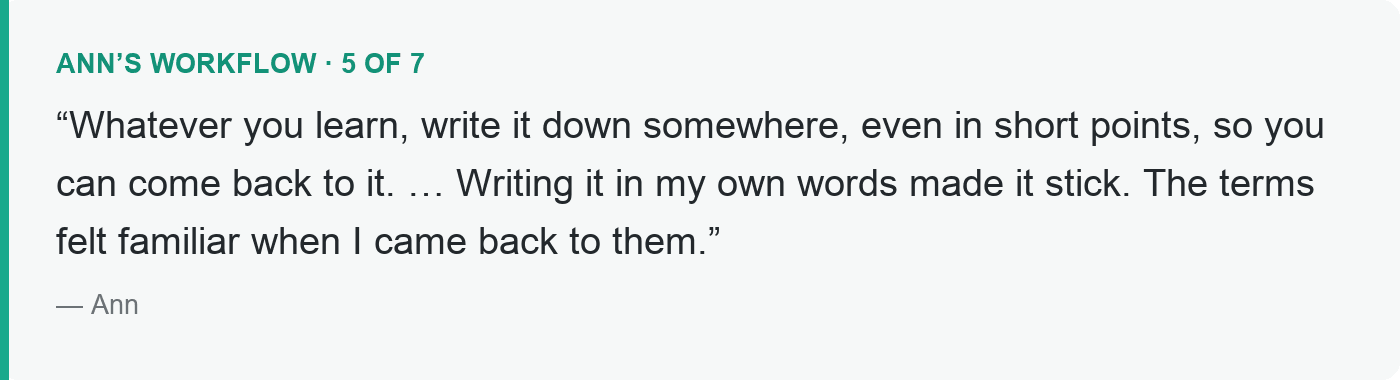
Writing in her own words made the notes faster to reread and easier to recall when she needed them, whether she was revisiting a paper weeks later or preparing to explain it to her adviser.
6. Reuse the Same Thread When New Questions Surface
When a follow-up question occurred to her later, Ann returned to the original thread instead of starting fresh. This allowed the context from her earlier questions and answers to carry into the new conversation.
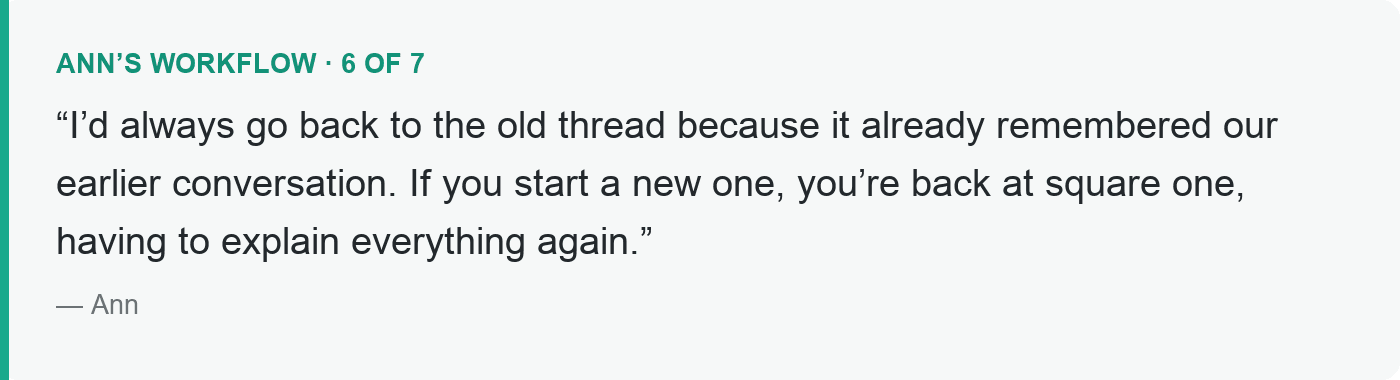
Returning to the original thread also allowed her questions to become more critical. An explanation that made sense during the first reading might raise a better question later: Why did the authors choose this method instead of another one? What assumption supports this conclusion? Why is the answer A rather than B?
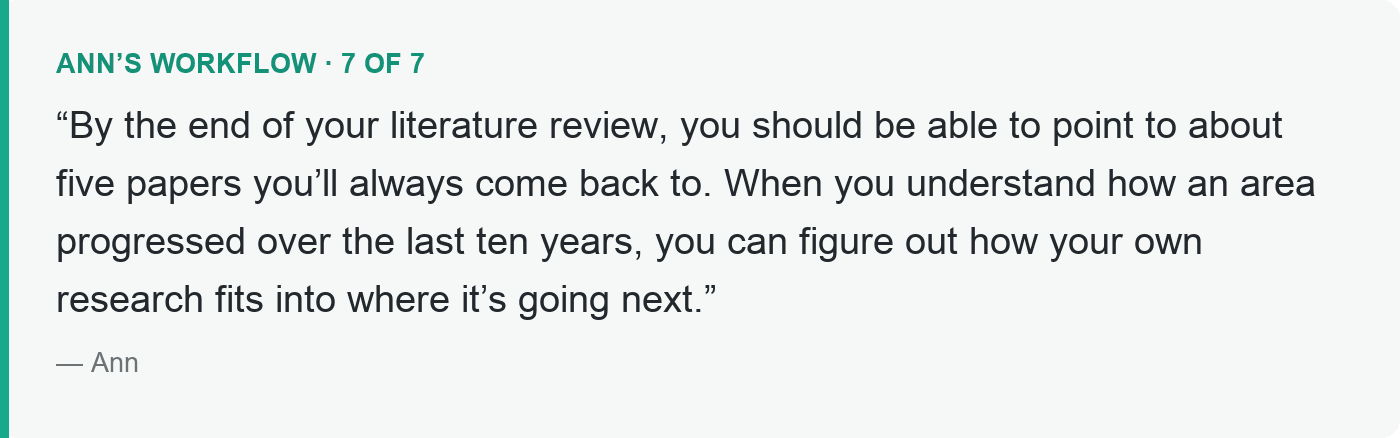
7. Know When to Stop Expanding and Start Converging
A literature review is not about reading everything. It is about understanding how your area developed and where your own research might fit.
Why Starting Narrow Leads to Deeper Understanding
Starting with five to ten papers limits the amount of new terminology, methods, and competing arguments a student has to hold at once. Reading one paper at a time then creates the space to understand how that study reached its conclusions, not just what those conclusions were.
That depth is what makes meaningful comparison possible later. If you skim many papers at once, you may recognize recurring terms without understanding how the studies actually differ. By first understanding each paper on its own, you have something solid to connect: methods you can compare, assumptions you can question, and findings you can place within the history of the field.
Ann’s workflow was not about moving through papers as quickly as possible. It was about building enough understanding, paper by paper, to see the relationships among them. For any student entering an unfamiliar field, the structure is simple: begin with five to ten papers, give each paper its own thread, read it section by section, and preserve what you learn in your own words.
Become a Consensus MCP expert.
For courses and more information on how to use the MCP, check out our guide below.