
From Framework to Prompt
From Framework to Prompt
Learn how to write clear, unbiased research questions for Consensus using evidence-based frameworks like PICO, SPIDER, PEO, ECLIPSE, and CoCoPop.

Dr. Benita Olivier
Professor of Rehabilitation Oxford Brookes University
Why your question is important
When you type a question into Consensus, you are instructing an AI system to search, filter, and synthesise evidence from over 200 million peer-reviewed papers on your behalf. What you put in shapes what you get out.
Consensus is not a chatbot. It searches real scientific literature and uses AI to summarise findings — with citations. It will not fabricate sources. But it can retrieve irrelevant results if your question is vague, and it can misinterpret a paper if your question misleads it. The quality of the evidence you find begins with you.
AI and bias: what you need to know
Every AI tool reflects the world it was trained on — and that world is imperfect. There are three types of bias you need to be aware of:
Bias in the published literature. Research has historically under-represented women, older people, ethnic minorities, and populations in low-income countries. AI searches what exists — it cannot correct for what was never published.
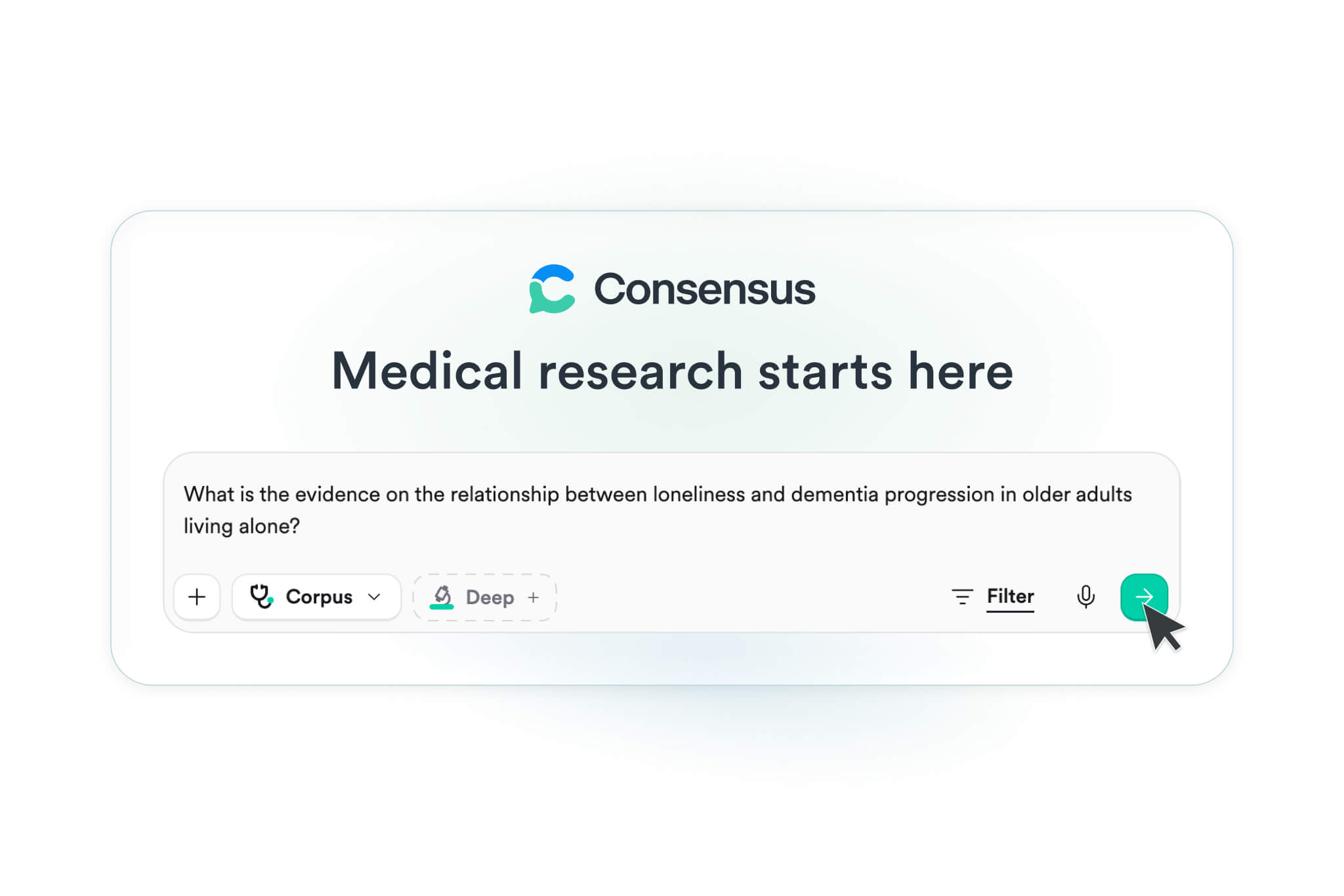
Bias in your question. A leading question (“Does exercise help anxiety?”) will surface confirmatory evidence. A neutral one (“What is the evidence on the relationship between exercise and anxiety?”) will surface the full picture.
Publication bias. Positive results are more likely to be published than neutral or negative ones. Strong-looking evidence may reflect a skewed literature rather than clinical truth. This is relevant whether you use AI or traditional databases to find research.

The principle to remember:
AI reflects the biases of the world it learned from. Your job is to ask questions that are neutral in language, specific in scope, and aware of whose evidence may be missing.
Choose the right framework for your question
Before you prompt, identify what type of question you are asking, then select the appropriate framework.
Effectiveness of a treatment or intervention — use PICO or PICOS
Patient or service user experiences, perceptions, or attitudes — use SPIDER
A naturally occurring exposure, risk factor, or association — use PEO
Health service evaluation, policy, or management — use ECLIPSE
Incidence or prevalence of a condition within a population — use CoCoPop
The frameworks
Hosseini, M-S., Jahanshahlou, F., Akbarzadeh, M.A., Zarei, M., & Vaez-Gharamaleki, Y. (2024). Formulating research questions for evidence-based studies. Journal of Medicine, Surgery, and Public Health, 2, 100046. https://doi.org/10.1016/j.glmedi.2023.100046
Use PICO when you want to evaluate the effectiveness of a treatment, intervention, or clinical approach.
P — Patient / Population: Who are you studying? Be specific — include age group, diagnosis, setting, and relevant characteristics, for example, "registered nurses in intensive care units", rather than just “healthcare workers”.
I — Intervention: What is the main intervention or treatment being considered? Use generic clinical terms, rather than brand names.
C — Comparison: What is it being compared to? This might be standard care, a placebo, or an alternative intervention. If there is no comparator, state this explicitly.
O — Outcome: What are you trying to measure or achieve? State this neutrally — "effect on wound healing rates" rather than "improvement in wound healing".
PICOS adds S — Study design: Specify the type of study you are looking for (e.g., randomised controlled trial, systematic review) when evidence level matters.

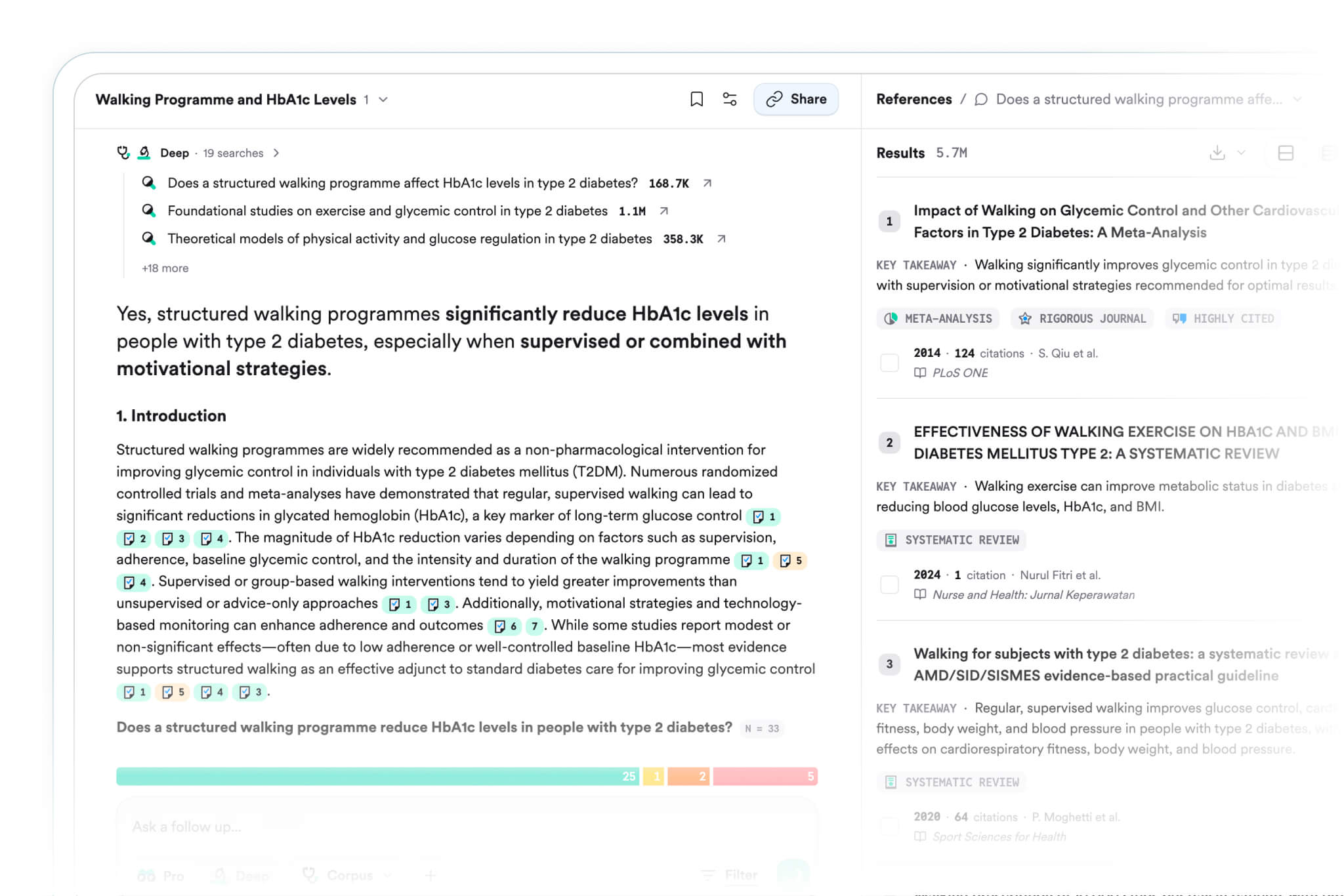
To note: Consensus may simplify the question above to: “Does a structured walking programme affect HbA1c levels in type 2 diabetes?” and show you the Consensus meter. The output will still be relevant to your search query, and the act of you specifying each component in the question means you know what to focus on when reviewing the output.
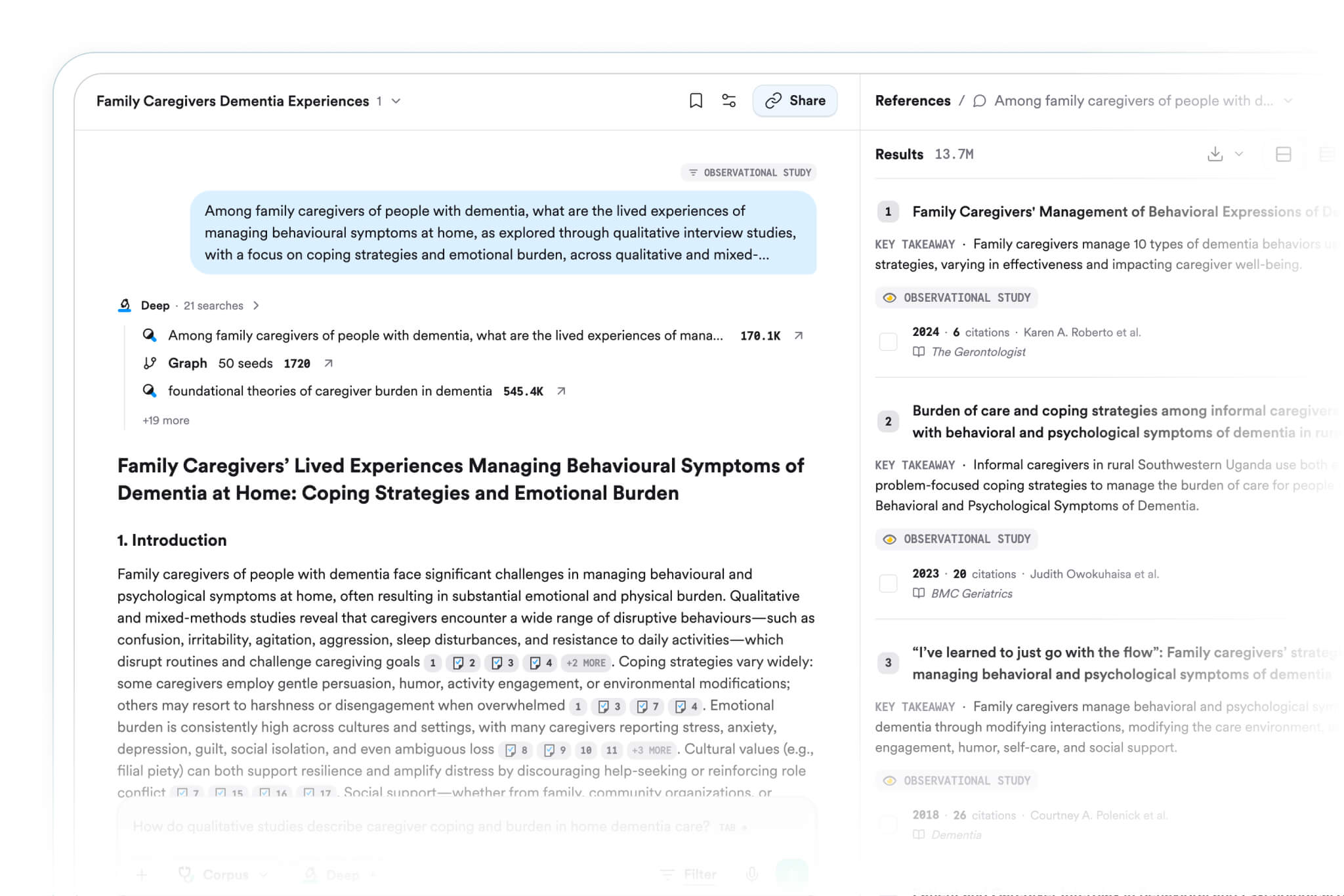
Use SPIDER when you are exploring experiences, perceptions, attitudes, or behaviours, and your evidence will come from qualitative or mixed-methods studies.
S — Sample: Who is being studied? In qualitative research, "sample" is preferred over "population", as participants are typically purposively selected rather than randomly sampled.
PI — Phenomenon of Interest: What experience, behaviour, or situation is being explored? Use neutral, descriptive language and avoid making assumptions about what the experience involves.
D — Design: What study design are you looking for? For example: phenomenology, grounded theory, ethnography, qualitative interview study.
E — Evaluation: What is being evaluated or measured? This might include experiences, perceptions, attitudes, behaviours, or processes.
R — Research type: Are you looking for qualitative, quantitative, or mixed-methods studies?
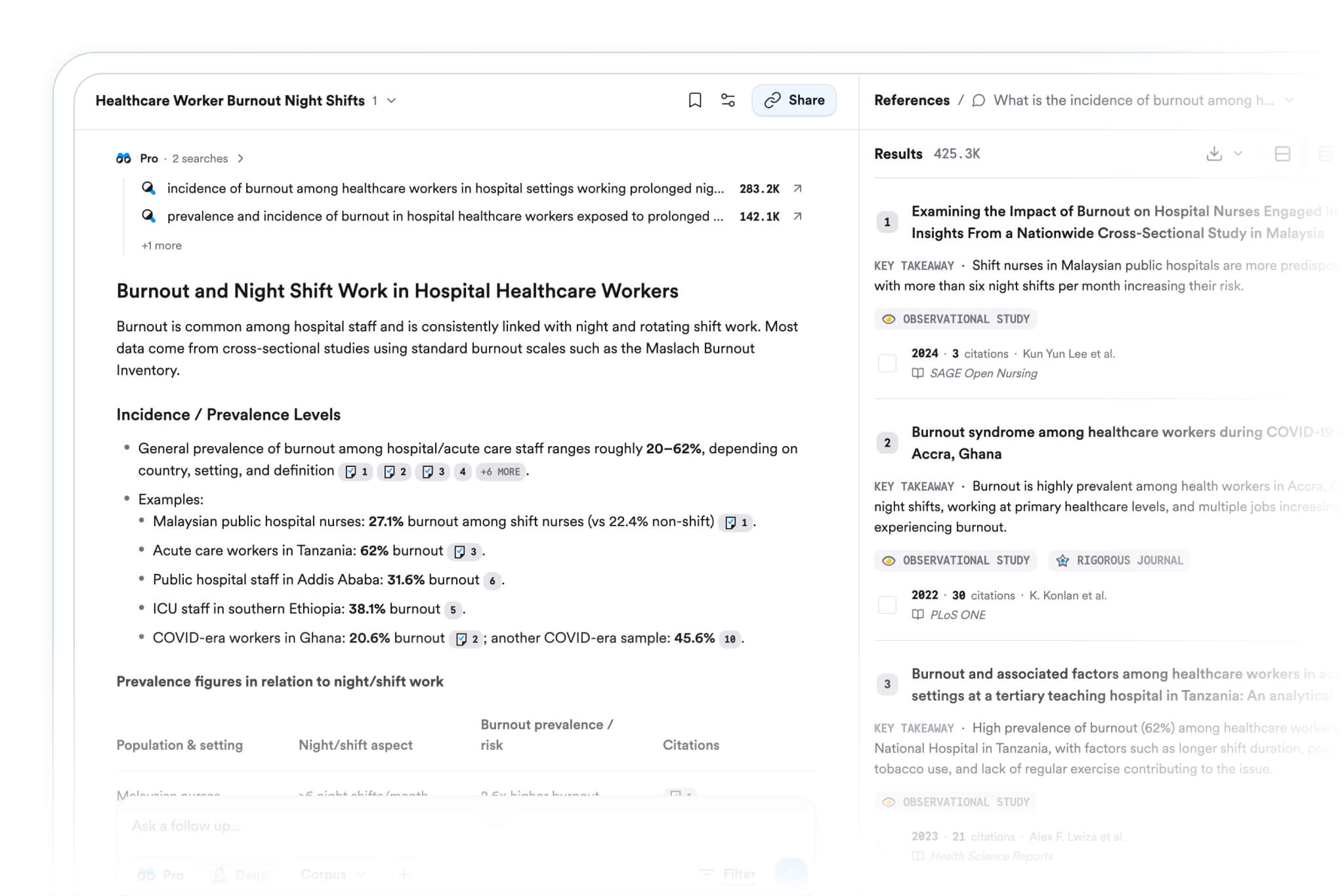
Use PEO when you are investigating the relationship between an exposure or environmental factor and a health outcome. The exposure is something participants experience naturally — not a deliberate intervention.
P — Population: What groups of population or patients with common characteristics are targeted?
E — Exposure / Environment: What is the primary exposure or environmental factor of interest? Examples include shift work, air pollution, socioeconomic deprivation, or occupational hazard.
O — Outcome: What outcomes are anticipated to be assessed, measured, or improved?
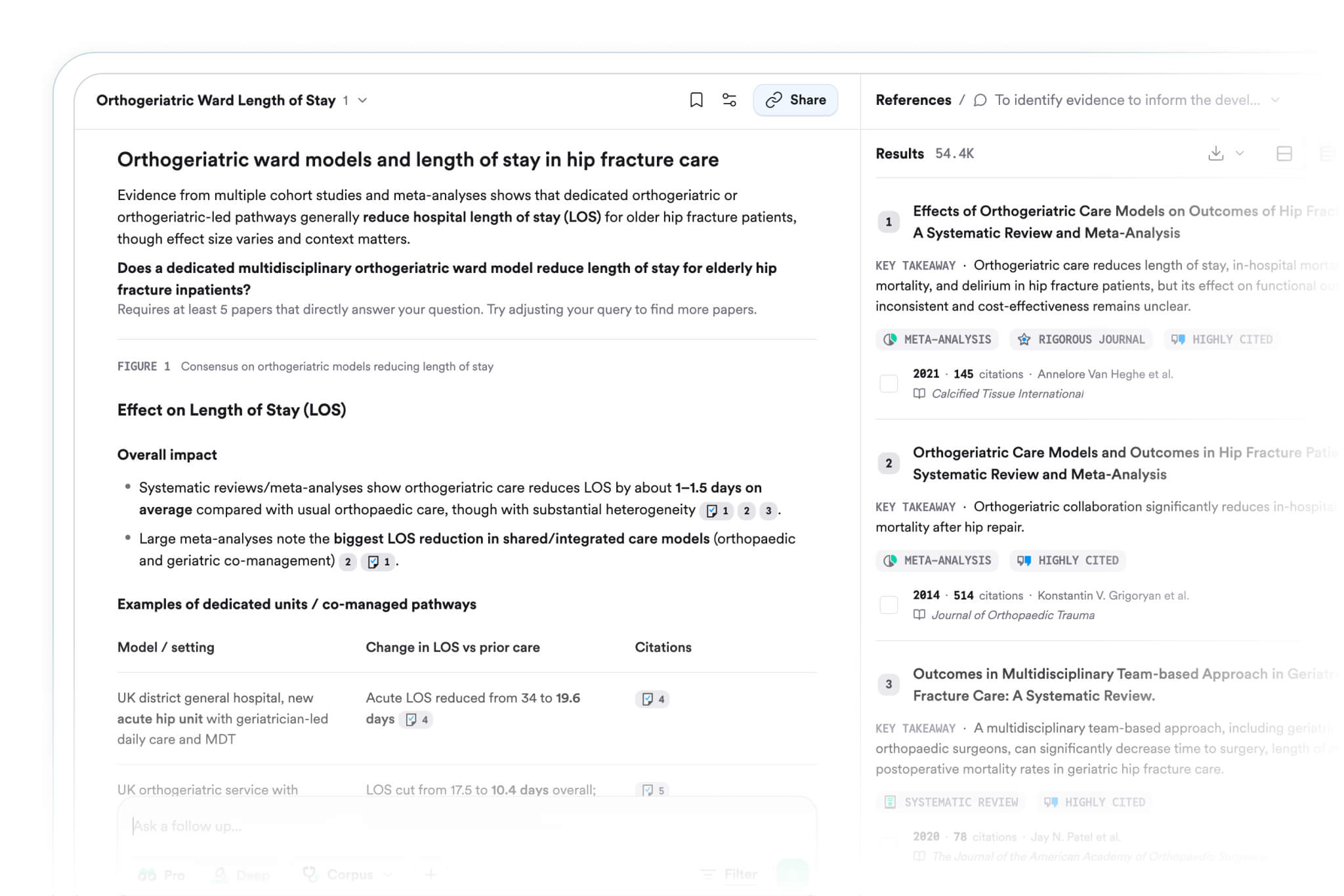
Use ECLIPSE when you are evaluating a service, informing a policy decision, or exploring how a health service is organised or delivered.
E — Expectation: What does the person or organisation want from the information? Are they seeking improvement, justification, or information?
C — Client group: Who is the service or intervention aimed at?
L — Location: Where is the service provided? Include setting, geographic context, or system level.
I — Impact: How is change or effectiveness being measured? What outcomes or impact indicators are of interest?
P — Professionals: Who delivers or is involved in the service?
S — Service: What type of service or programme is being examined?
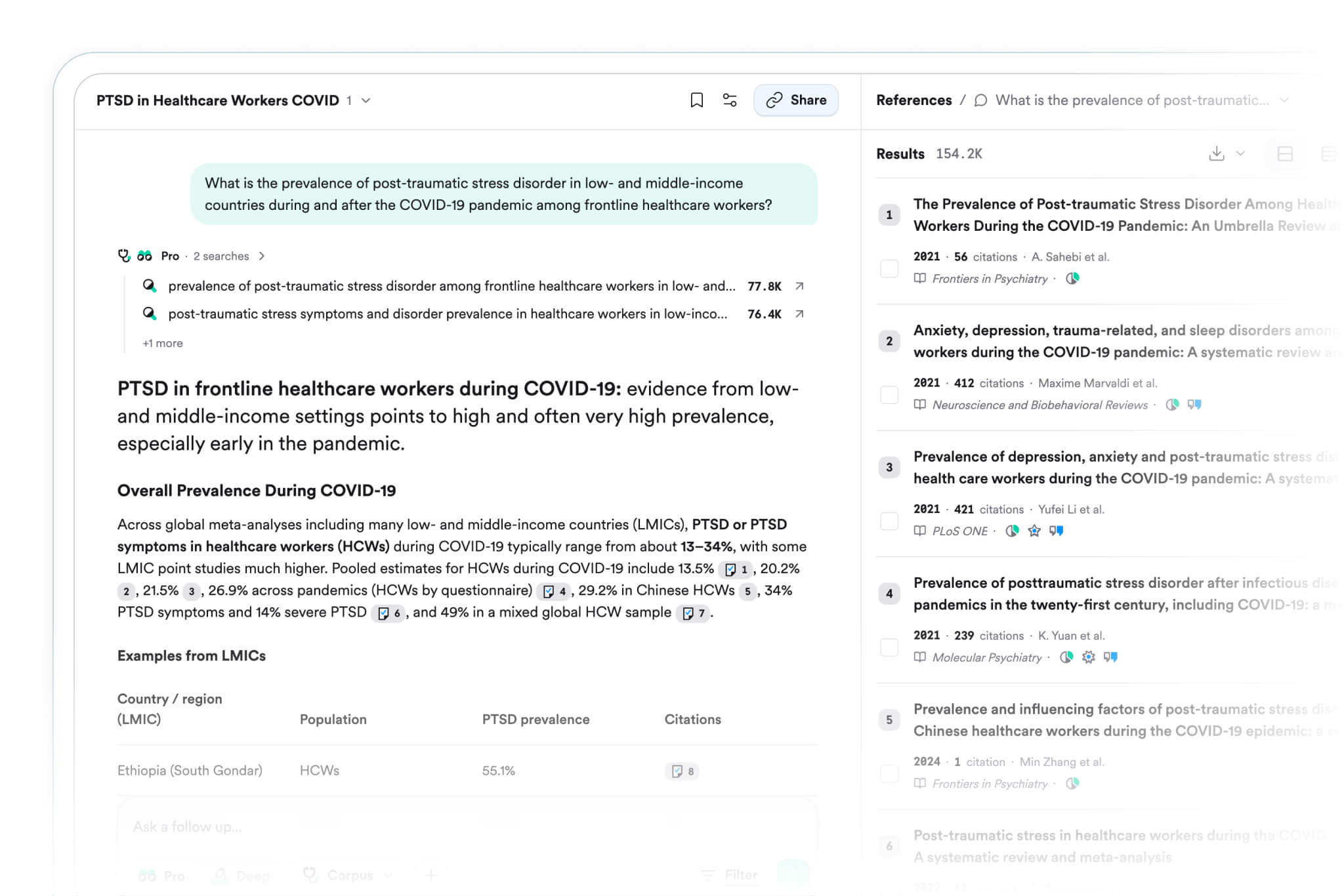
Use CoCoPop when you want to understand how common a condition or event is within a specific population and context. This framework is particularly suited to epidemiological and public health questions.
Co — Condition: What condition, disease, or event is the focus of the study?
Co — Context: In what setting, geographic region, or background circumstances should the condition be studied?
Pop — Population: What group of participants or patients is being studied?
These five frameworks cover the most common question types you are likely to encounter. If your question does not fit neatly into one, the Hosseini et al. (2024) paper provides a comprehensive overview of additional frameworks for diagnostic accuracy, prognostic, economic, and other specialist question types.
Your prompting checklist
Before you search
I know what type of question I am asking and have chosen the right framework.
My population is defined specifically — setting, condition, demographic context.
My language is neutral and does not assume a direction of effect.
I have included relevant context (country, setting, professional group).
After you search
I have read the original papers, not just the AI summaries.
I have appraised the quality and relevance of the evidence.
I have considered whether the populations studied match my clinical context.
I have noted evidence gaps — absence of evidence is itself a finding.
I have disclosed my use of Consensus in accordance with institutional guidelines.
The best researchers don’t just use AI tools, they use them wisely.
Consensus is a powerful research companion, but it is your question, your critical thinking, and your integrity that determine whether the evidence you find is genuinely useful.
Become a Consensus MCP expert.
For courses and more information on how to use the MCP, check out our guide below.