What is Consensus?
Consensus is an AI‑powered search engine for scientific and academic research. It searches only peer‑reviewed studies and scholarly publications; never blogs, news sites, or general‑knowledge pages. That makes it an ideal tool for researchers, students, and anyone conducting literature reviews or who needs evidence‑backed answers. Learn more about how Consensus works here.
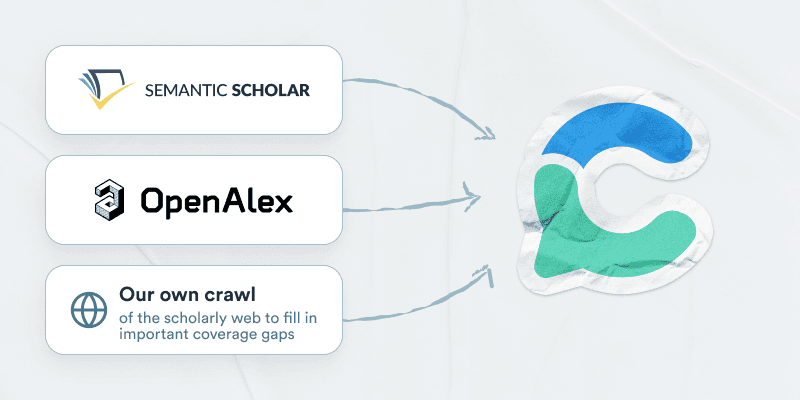
Consensus pulls from Semantic Scholar, OpenAlex, and its own web crawl to ensure broad, reliable coverage of peer-reviewed literature.
Consensus Searching Basics
To get the best results, understand two key things about how Consensus works:
Consensus is a search engine, not a chatbot.
Consensus only searches scientific and academic research papers.
That means Consensus works best when your requests are focused on topics found in peer-reviewed literature or scholarly studies. Unlike a chatbot, Consensus doesn’t just generate text, it finds and summarizes relevant scientific papers. Consensus is not built for general knowledge queries (e.g. “What’s the capital of Germany?”), it’s built to help you conduct real research, faster.
Getting Started Searching
There is no single “right” way to search in Consensus. Whether you’re hunting for a specific article or exploring a broad question, Consensus adapts to your needs.
Search styles that work well
Keywords
Open‑ended topics:
Exact paper / author search:
Simple research questions:
Yes/No questions (activates the Consensus Meter):
Advanced Techniques
Search filters – Narrow by publication date, study type, sample size, journal quartile, and more.
Complex queries – Combine multiple facets or comparisons.
Example: Compare the environmental and economic impacts of carbon taxes vs cap‑and‑trade in developing countries
Format‑specific requests – Ask for bullet‑point summaries, pros/cons lists, or side‑by‑side tables to shape the output.
[caption id="attachment_39332" align="alignnone" width="800"]
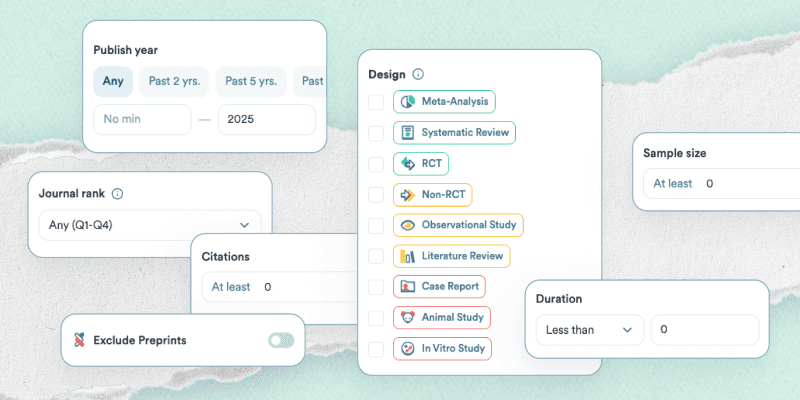
Use filters in Consensus to refine your search by study type, journal quality, publication year, and more—helping you surface high-quality, relevant evidence faster.
Consensus puts high‑quality evidence at your fingertips.
Start with a clear research question, leverage filters, and use yes/no formatting to instantly see where the science stands - then dive deeper into the studies surfaced.