
The Top 5 Ways Students Use Consensus
The Top 5 Ways Students Use Consensus
From exploring an unfamiliar topic to checking a final draft, discover five ways to use Consensus to find, evaluate, and work with academic research.

Research rarely begins with the perfect search query. More often, students begin with a broad topic, an unfamiliar term, a half-formed question, or the uneasy feeling that an important paper might be missing.
In conversations with graduate students across disciplines, we found that Consensus is most useful at precisely these uncertain moments. Students can turn to it when they need to understand the landscape of a field, find a useful starting set of papers, narrow an overwhelming search, decide which studies deserve closer attention, or verify that the evidence supports what they plan to write.
That does not mean handing over the research process. Students still need to read the full papers, interpret the findings, and write the final work themselves. Consensus serves as a research discovery and evaluation layer: it helps students reach relevant evidence faster and approach it with better context.
Here are five ways students can incorporate Consensus into their research workflow.
1. Get oriented in an unfamiliar research area
Entering a new field can be disorienting. Students may not know a field’s standard terminology, foundational papers, or even whether a topic has been studied extensively. A conventional database search often expects students to know the right keywords before they have learned the vocabulary.
Consensus can help students get past that initial barrier. They can begin with a broad question in natural language, often the same way they would ask an adviser or colleague, and use the response to develop a quick mental map of the topic.
Samuel Crawford experienced this challenge firsthand when his PhD took him from weed science into entomology and monarch-butterfly research:
“It is much harder to find relevant papers when I do not know the key people or terminology in a field. Moving from weed science into entomology, being able to search with natural-language keywords has been especially helpful for my preliminary literature review.” — Samuel, PhD student, Virginia Tech
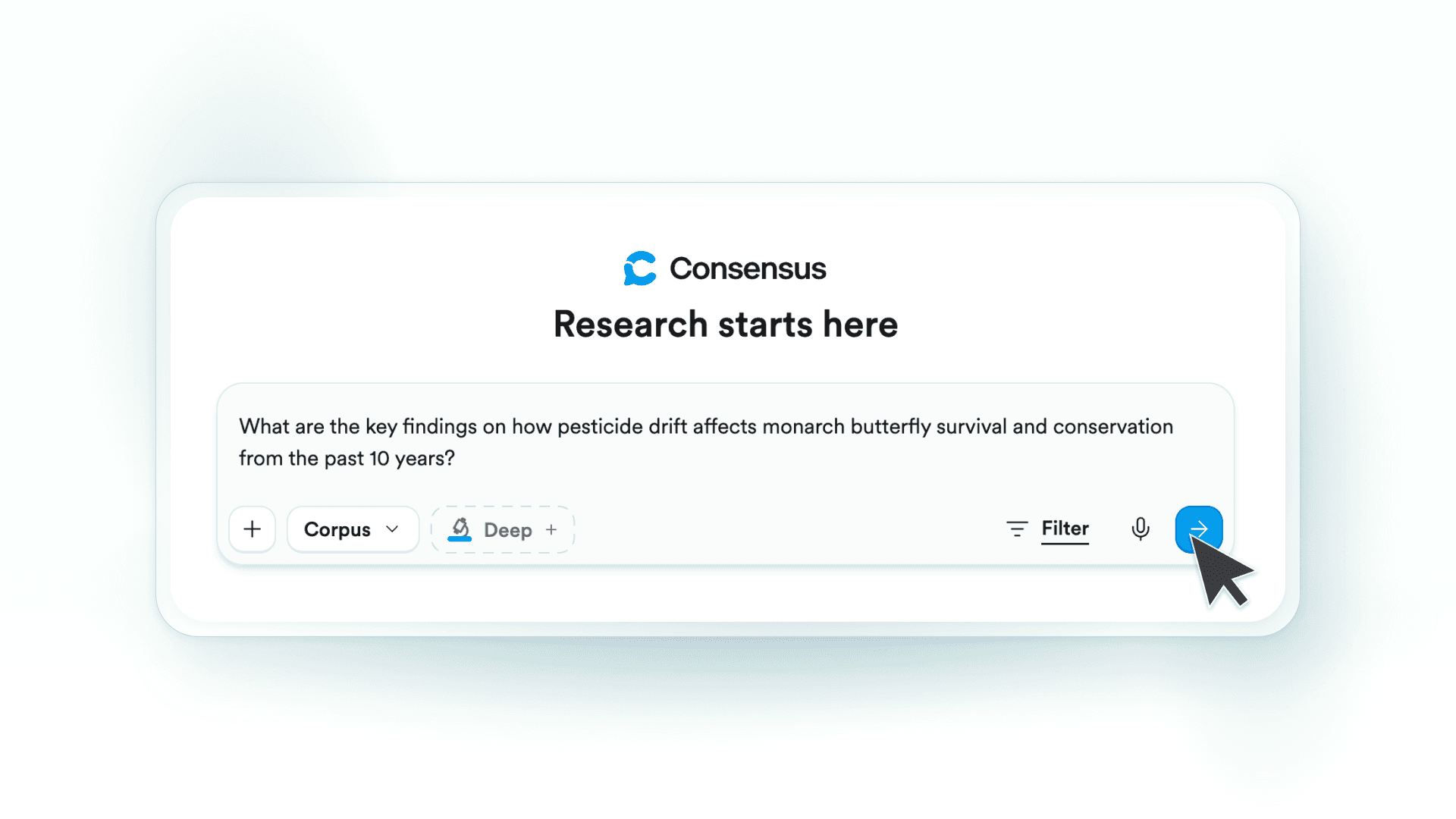
At this stage, students are not trying to reach a definitive conclusion. They are trying to understand the landscape: how much research exists, which ideas or methods recur, and where the evidence appears consistent or contested.
For a broad or complex question, Pro Search can plan and carry out a multi-step search, apply academic filters, and trace connections across papers, authors, and citation networks that a single search might miss. Deep Search is useful when students need a more comprehensive overview: it breaks a question into a structured search strategy, reviews a large body of research, and produces a report grounded in the most relevant papers.
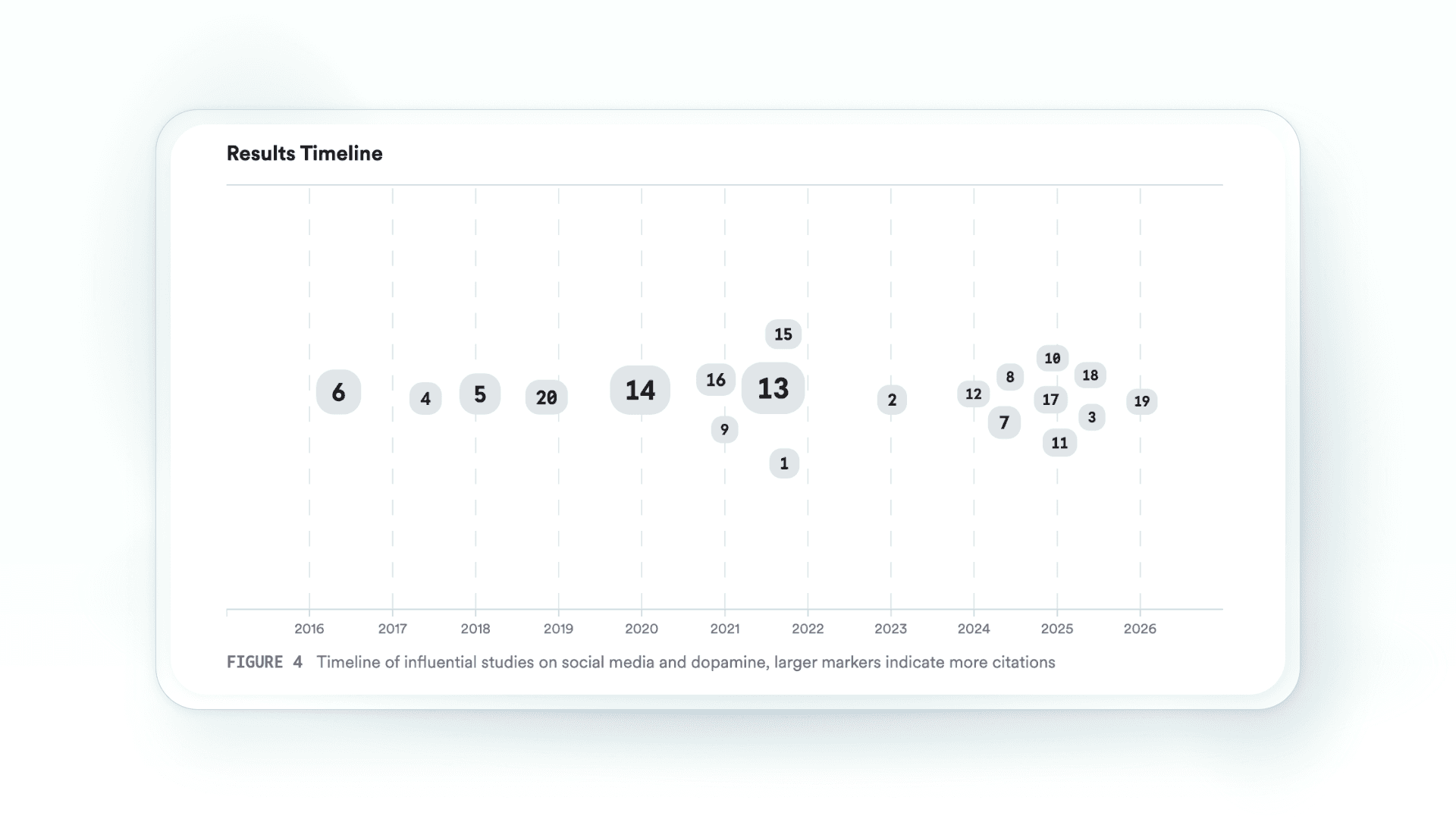
Visual tools such as the Results Timeline can show students when important studies were published, highlight major milestones, and help them understand how thinking within a field has developed over time. To trigger it, students can include a request in their Pro search, such as: “Show me a timeline of the most influential papers on [topic].”
Behind the scenes, Consensus can expand a broad question into multiple targeted searches, aggregate the results, and narrow a large pool of potentially relevant papers into a more focused shortlist. This is especially helpful for students who are new to a subject and do not yet know the field’s preferred terminology or most effective search terms.
Consensus Meter offers a quick field-level signal by showing how relevant studies lean. Students should use it as an orientation tool rather than a final verdict, helping them notice whether the literature appears consistent, mixed, or more nuanced than expected. To trigger it, they can phrase a search as a yes-or-no question, such as: “Does morning sunlight improve mood?”
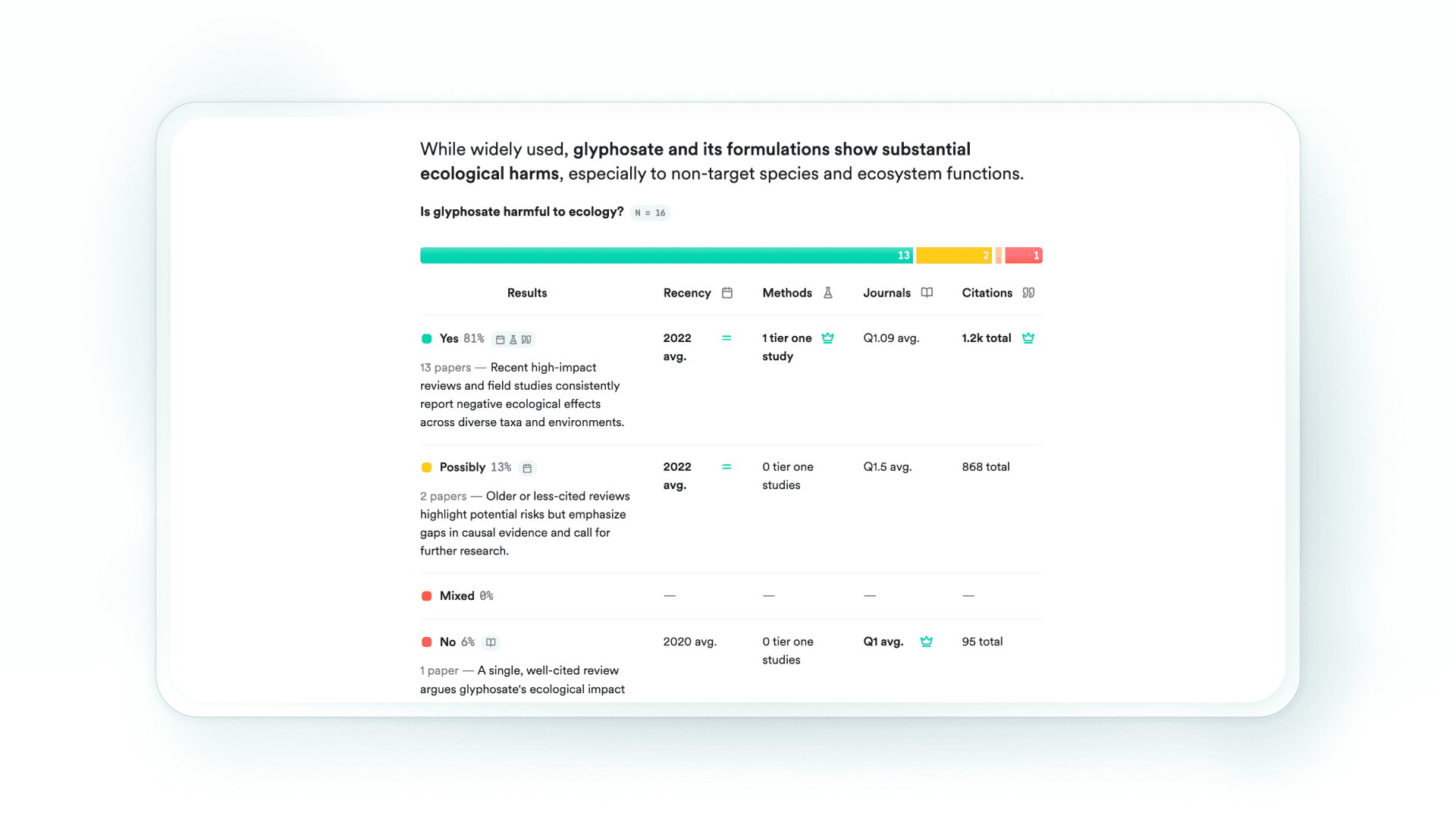
Luke described using disagreement in the literature as a reason to slow down and scrutinize individual studies more carefully:
“If the evidence is split 50–50, I know I need to look more closely at the individual studies. Finding one article that agrees with me is not enough. That is when I know to be more critical.” — Luke, doctoral student, Cedarville University
Students can then use the response to identify important terms, recurring findings, and narrower questions to investigate next.
2. Build a strong starting point for a literature review
A literature review requires more than collecting papers. But collecting the right papers is still one of its hardest first steps.
At the beginning of a thesis chapter, seminar paper, scoping review, or grant proposal, students can use Consensus to find an initial set of relevant studies. Instead of moving immediately between dozens of abstracts and browser tabs, they can see papers connected to their question alongside concise descriptions of their findings.
Jacob, a senior graduate student in hydrology at Rice University, described Consensus as “a very good tool for preliminary literature reviews, then digging more into individual papers.” He also uses it as a secondary screening tool when he already knows a field well, checking for recent citations or classic papers that his first search may have missed.
Students should treat this as a starting point, not an automated replacement for a rigorous literature review. Consensus can help them discover promising studies and understand how they relate to a question. They can then open the full text, evaluate the research directly, and expand the search in discipline-specific databases when their methodology requires it.
Students can also ask Consensus to identify the seminal papers in a field and explain why each is considered foundational. Consensus can combine author searches, citation signals, and information from the papers themselves to create a shortlist of key works, summarize their core contributions, and show how later research built on them.
Try asking: “What are the seminal papers on [topic], what did each contribute, and why are they considered foundational?”
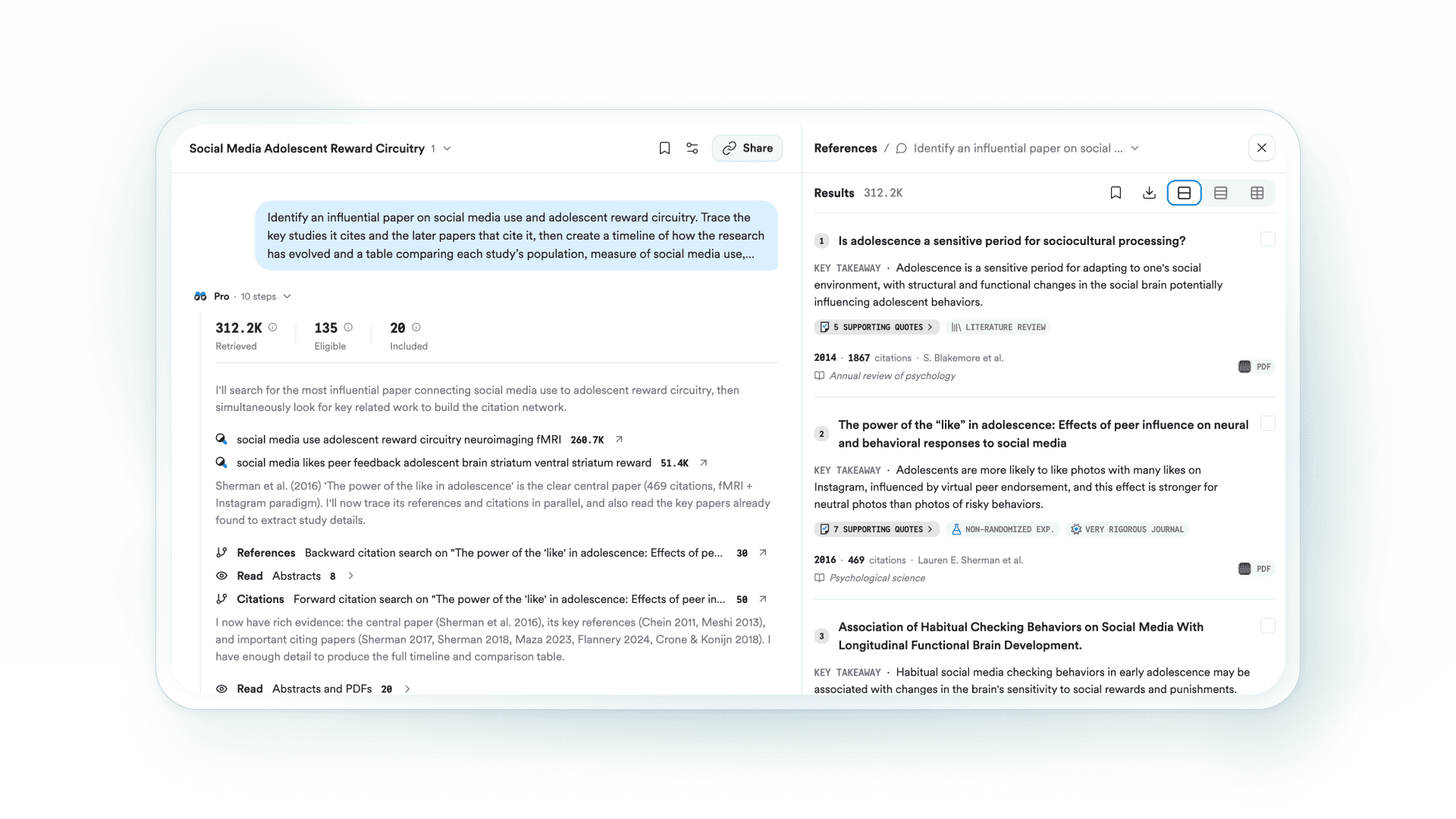
Several Consensus features can make this discovery stage more powerful:
Paper Search provides a fast, deterministic way to browse relevant papers without generating an AI synthesis.
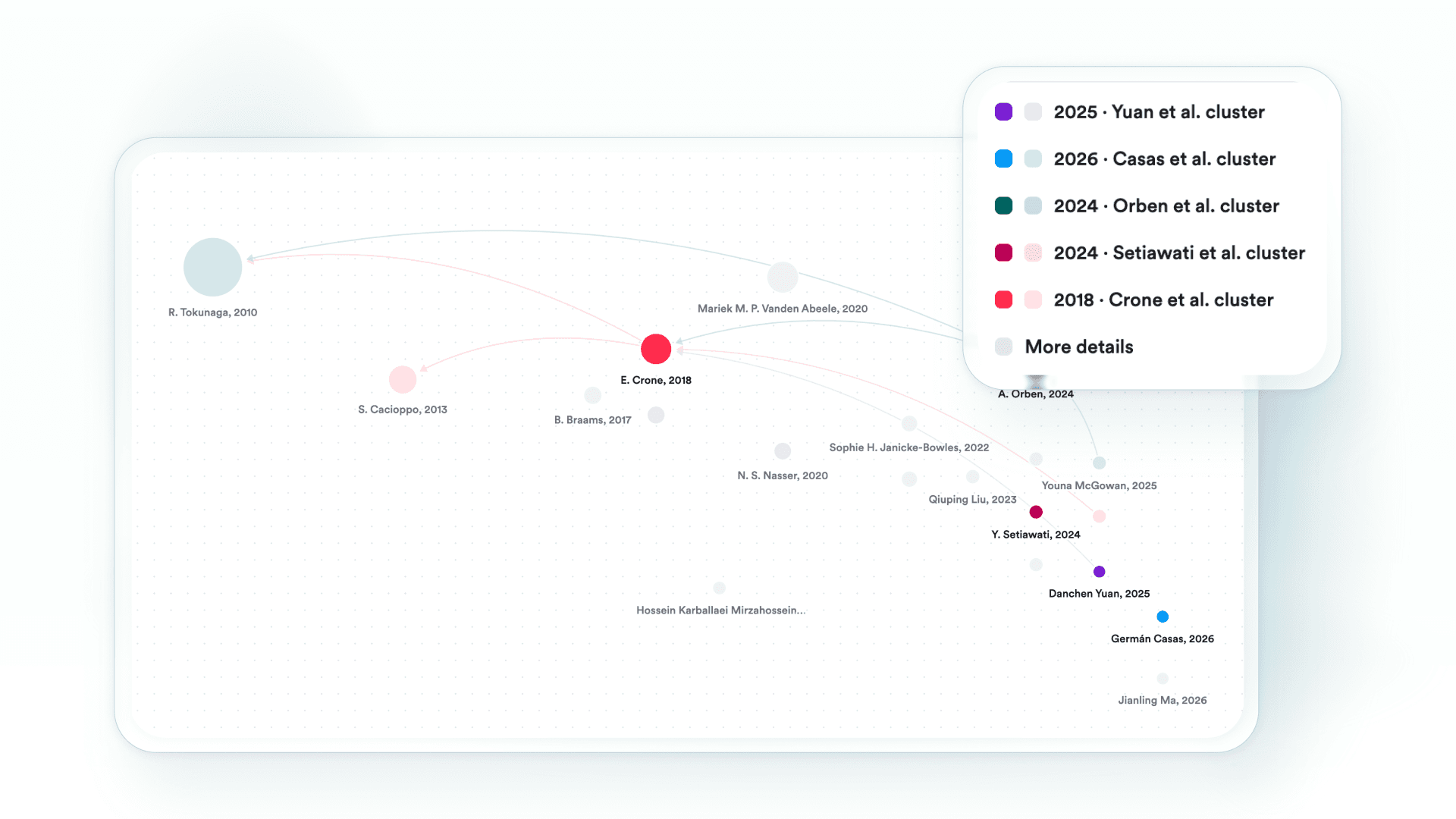
Citation Graph maps how papers are connected through citations, helping students move backward to foundational research and forward to the studies that developed, challenged, or applied it.
Deep Search citation traversal explores the citation networks around initial results to surface connected, high-value studies.
Expanded full-text access allows Consensus to analyze beyond the abstract when publisher or institutional access is available, producing more grounded and detailed results.
The growing collection of full-text research is especially relevant for students working beyond medicine and the natural sciences. Consensus’s publisher partnerships have expanded access to peer-reviewed material across disciplines, including more research in the humanities and social sciences.
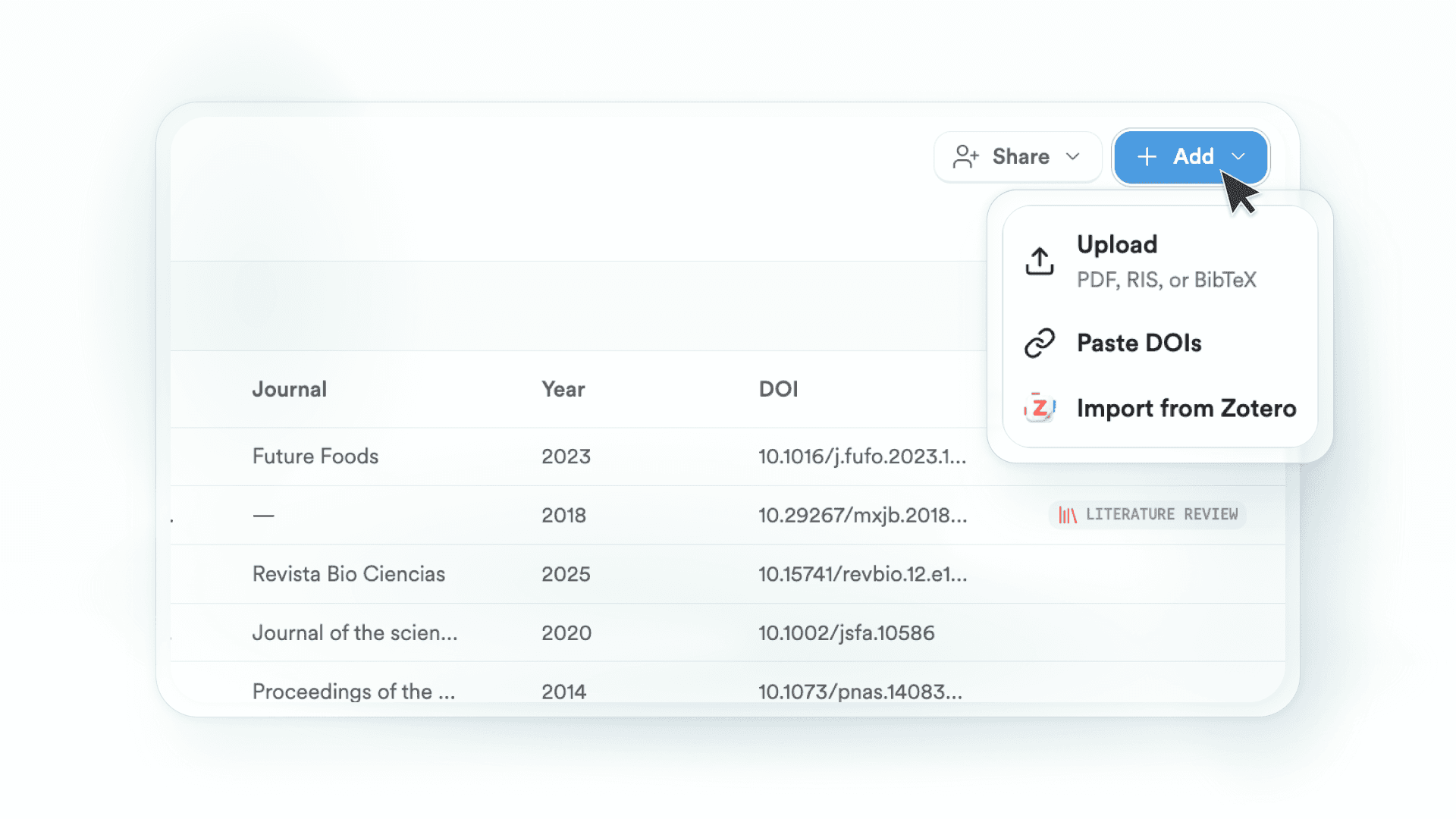
Generate individual citations, save useful papers to My Library, organize them into Collections, or move them into an established reference-management workflow. Consensus supports Zotero imports, including group collections, as well as DOI, RIS, and BibTeX imports. Students can also export saved papers as RIS or CSV files for tools such as Zotero, EndNote, Mendeley, and Paperpile. This makes it easier to build, organize, and manage their bibliography as a project develops.
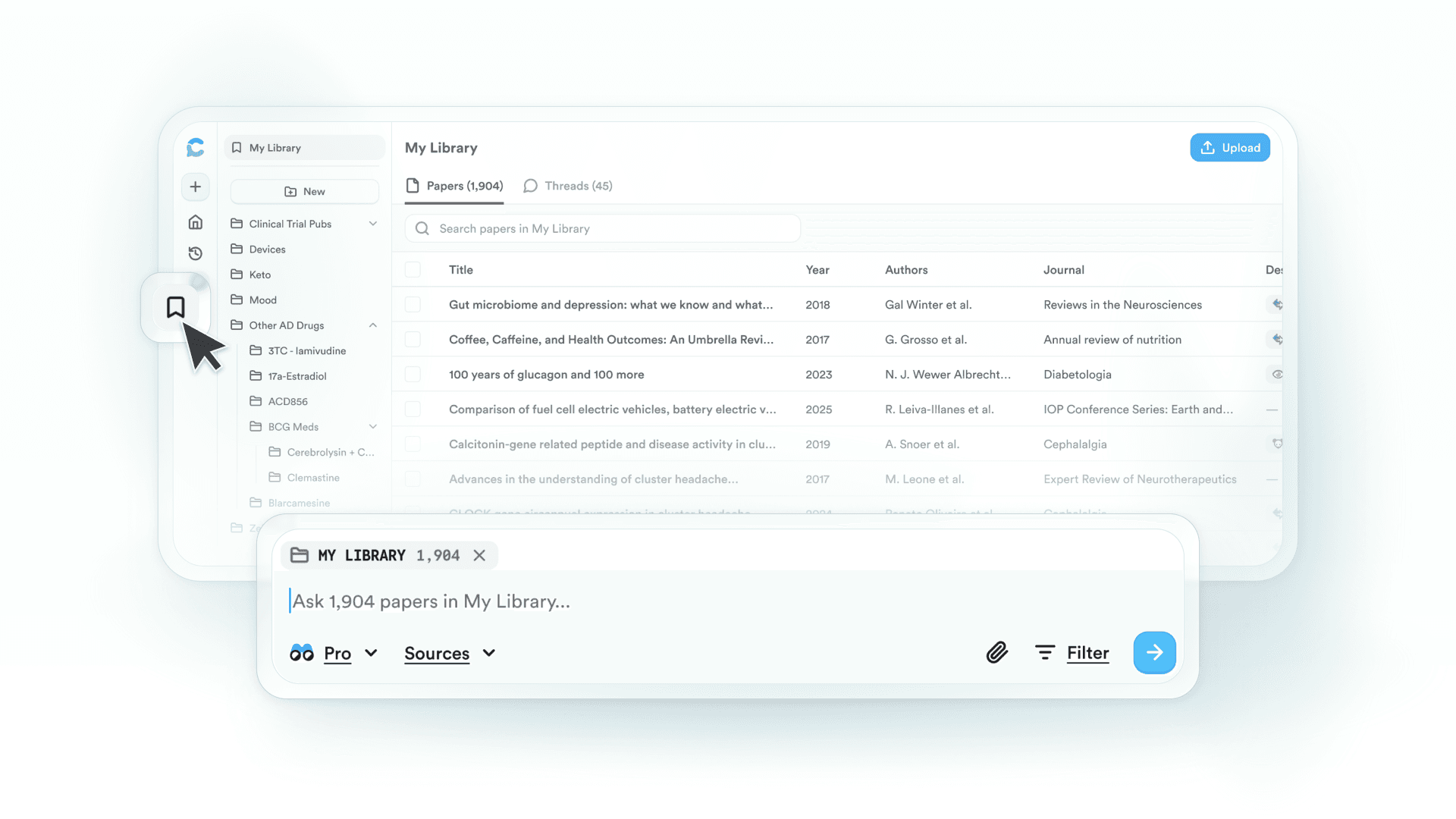
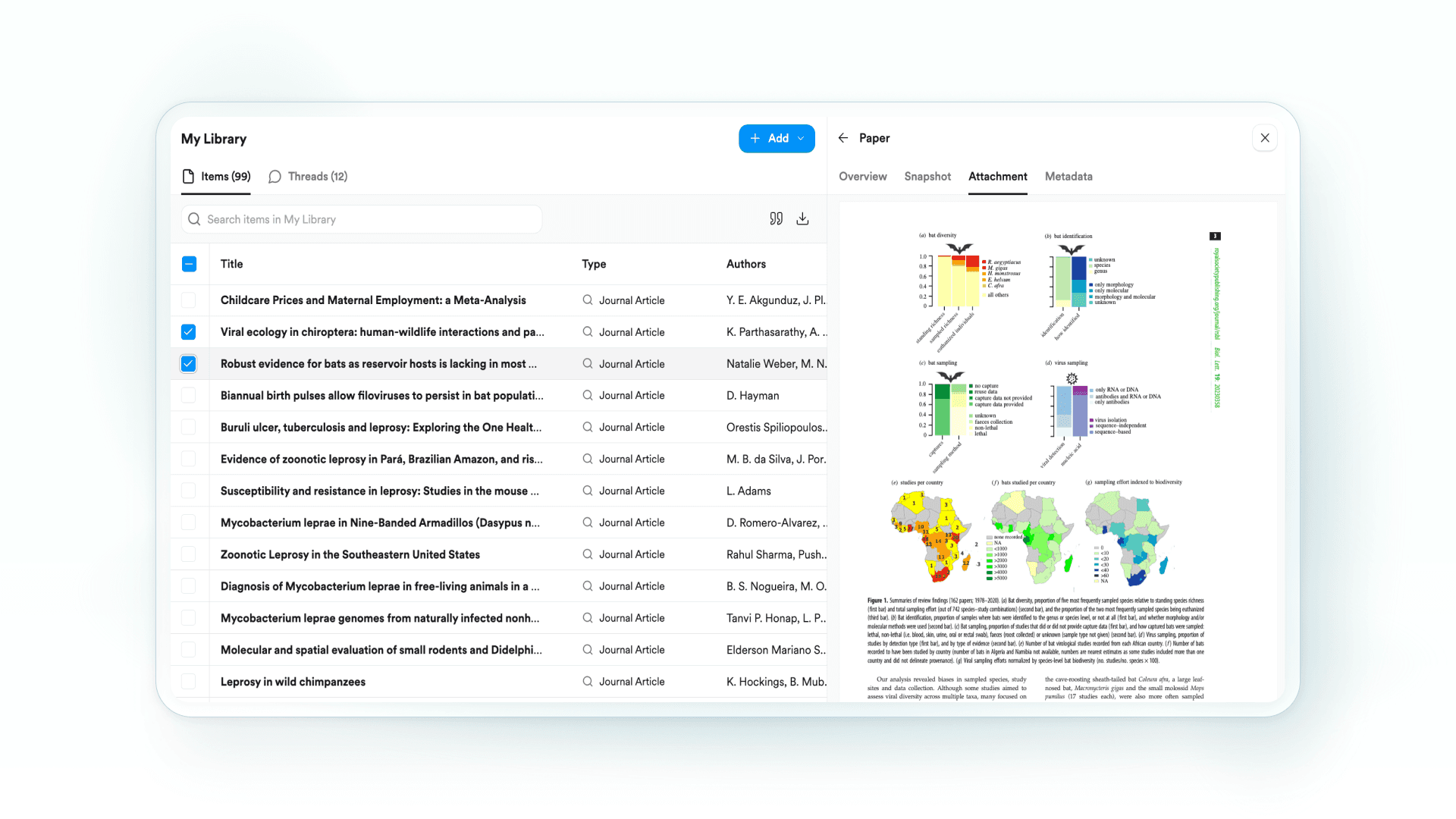
If the evidence relevant to a student’s field extends beyond journal articles, they can use custom document uploads to add reports, book chapters, gray literature, or their own research documents to My Library and analyze them alongside peer-reviewed papers. This allows them to build a research collection around the evidence a project actually requires, not only what appears in a conventional academic index.
The outcome is not a finished literature review. It is something more practical: a relevant, organized, and defensible foundation for reading, and for interrogating, comparing, and analyzing a curated library of papers.
3. Narrow a broad search to the evidence that matters
A student’s first question is rarely the final question. Students may begin broadly, inspect the results, and then realize that they need to focus on a particular population, method, setting, outcome, or period.
“I’ll start broad and get an idea of whether there are any landmark or recent papers in the area. Then, as I get a gist of what those papers are saying, I might start focusing the question on what specifically I’m looking for.” — Luke, doctoral student, Cedarville University
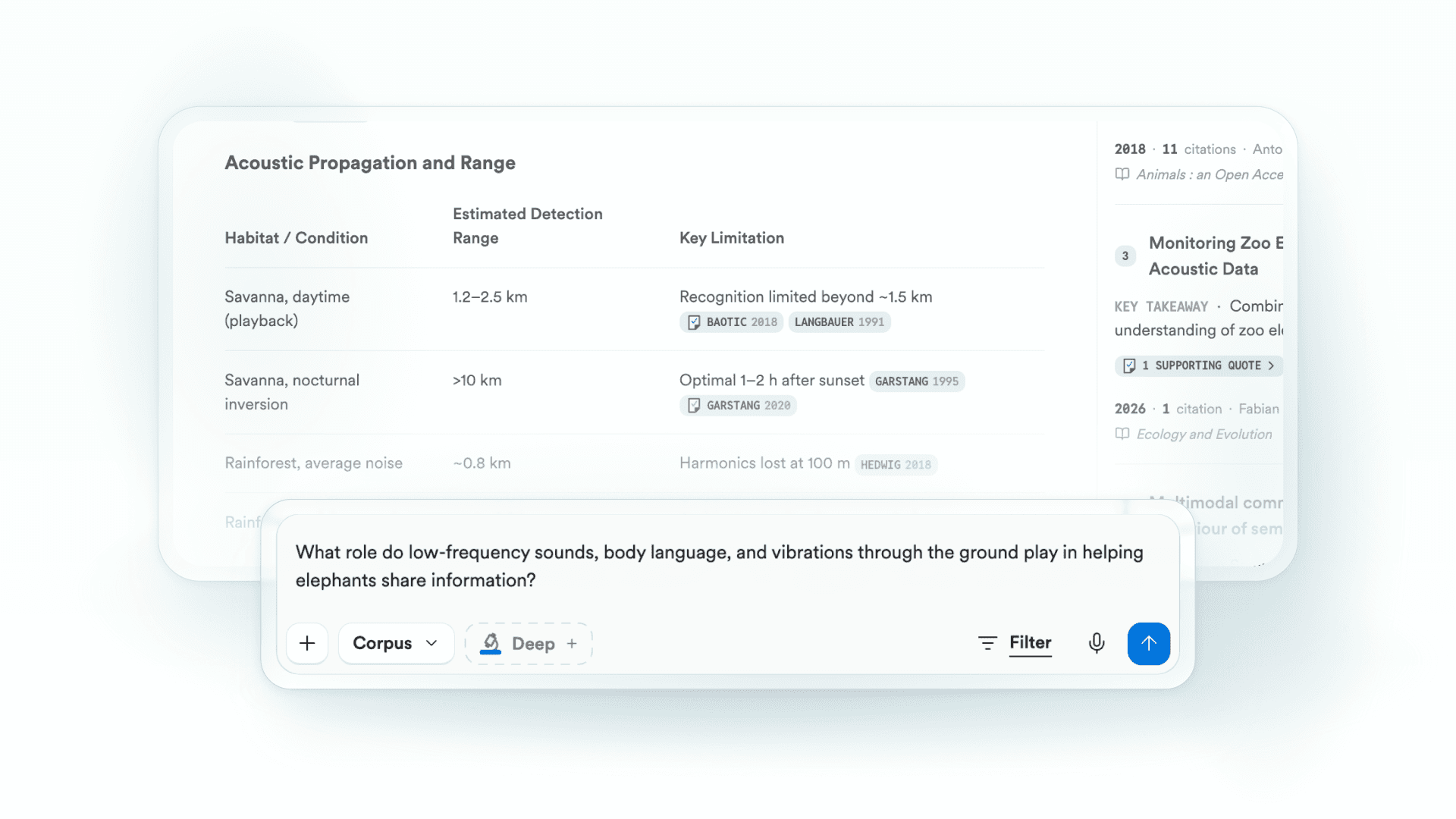
Threads allow students to ask follow-up questions without starting the search over. The conversation retains its context, so a broad exploration can become progressively more specific. A student might begin by asking about interventions for anxiety, then narrow the question to randomized controlled trials involving undergraduate students, and finally focus on studies conducted within the past five years.
Filters provide another layer of precision. Students can filter by publication date, journal quality, and study type. Consensus’s expanded advanced filters include 19 study-design options across experimental, observational, evidence-synthesis, and other categories. They can also filter by publisher and distinguish between human and animal research, alongside options such as sample size, population, study duration, country, open-access status, citation count, and journal rank.
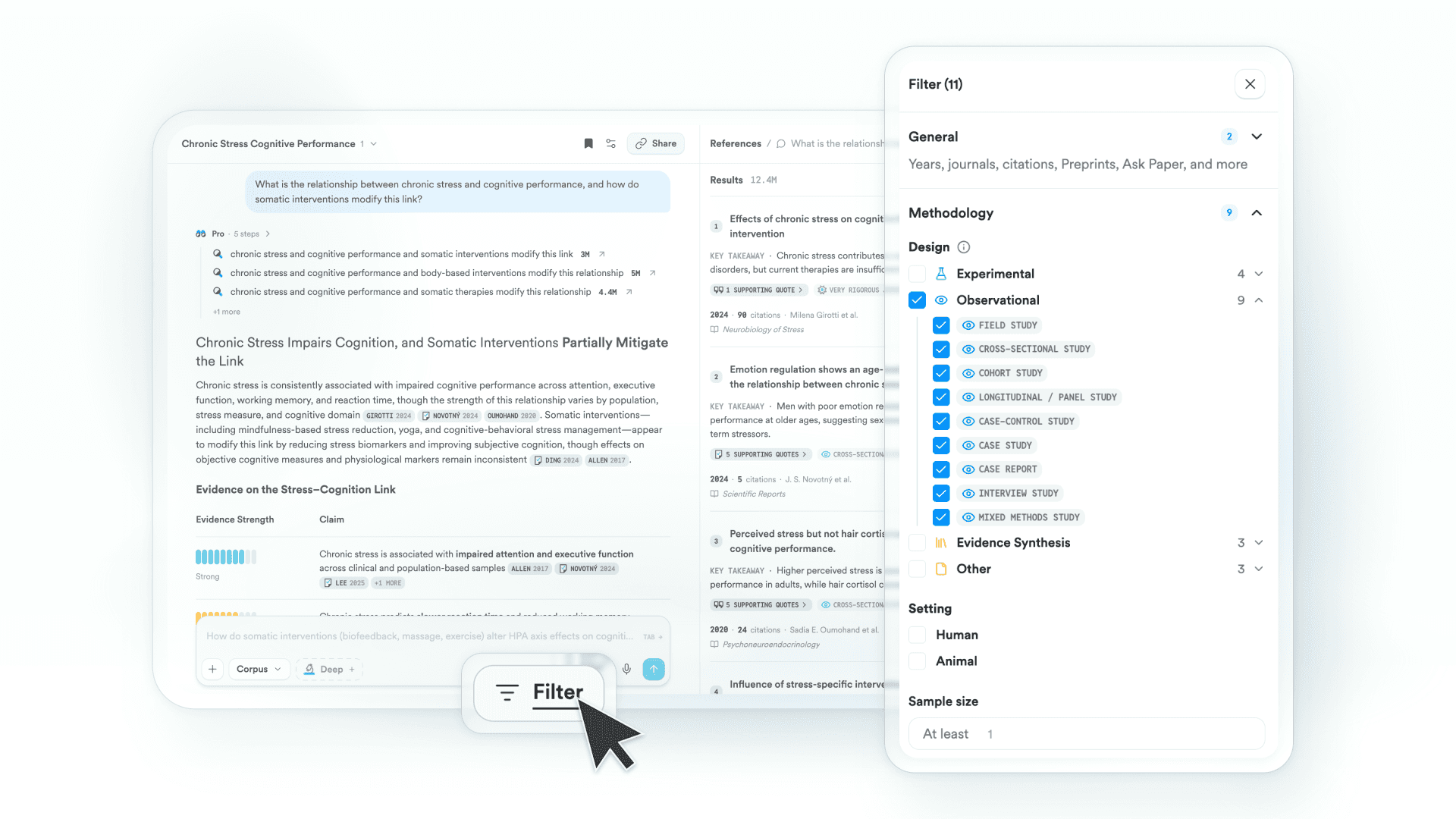
The goal is not to make a first search perfectly precise. Students should start broad enough to understand the field, then narrow deliberately as the distinctions that matter become clearer.
4. Compare studies and decide what is worth reading
Finding 30 potentially relevant studies does not mean a student has time to read all 30 immediately. Before opening the full text, students need to make quick triage decisions: Which studies match the question? Which methods are appropriate? Which findings deserve closer inspection?
The students we interviewed described looking first at the key takeaway for each paper. They also considered study-design labels, journal quality, citation counts, and other visible signals. For students who are newer to research, those signals can make an otherwise overwhelming results page more approachable:
“Google Scholar can feel intimidating because it gives you so many articles, but you need background knowledge to know what to look for and how to filter them. Consensus gives you more detail upfront, so you can more quickly understand what each paper is about and decide whether it is relevant.” — Maggie, PhD student, University of Missouri
The paper sidebar supports this quick evaluation by bringing the abstract, metadata, available PDF, and Study Snapshot into one place. Study Snapshot highlights attributes such as the population, study design, outcomes, results, and sample size, making it easier to determine whether a paper warrants deeper reading.
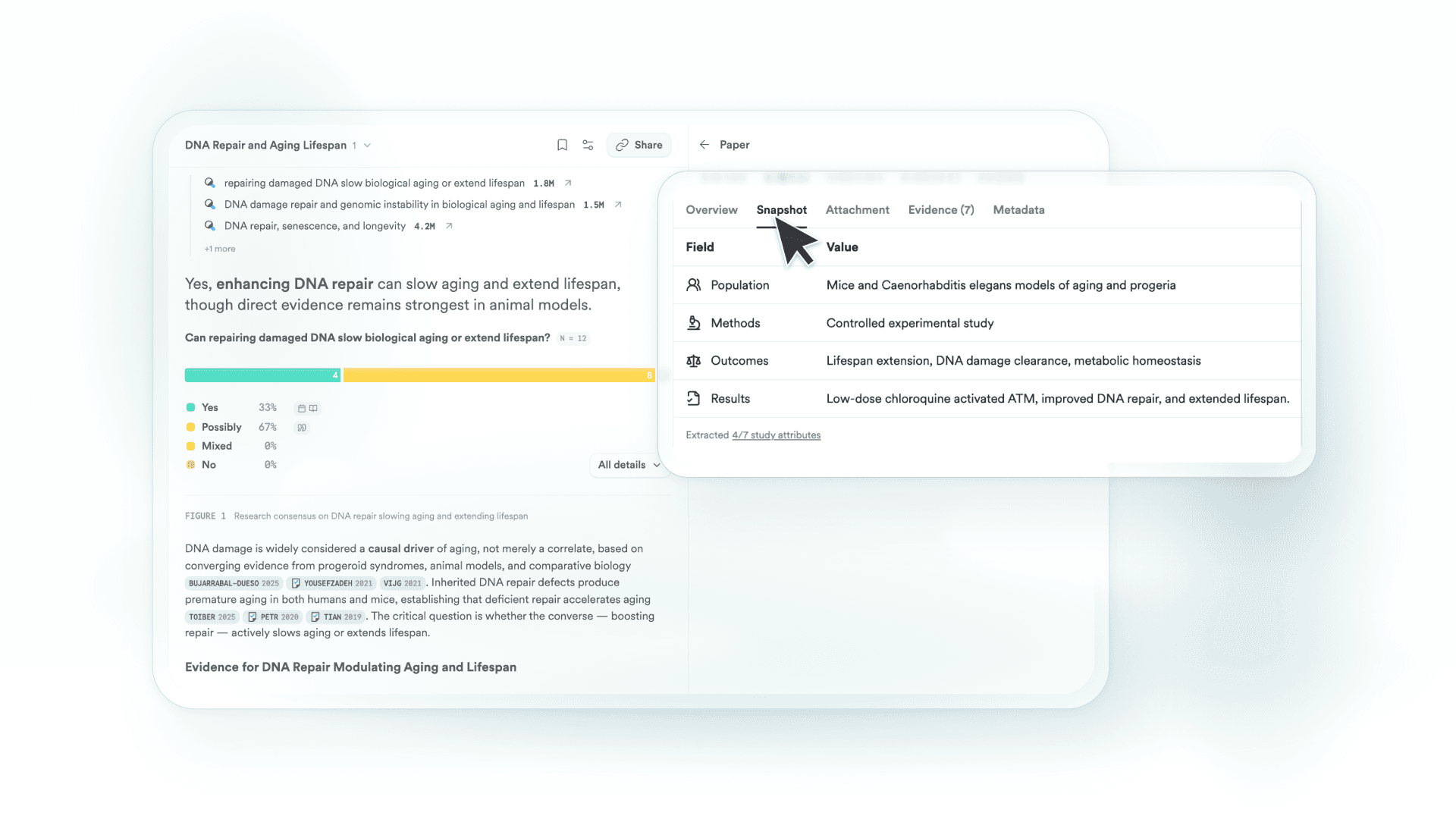
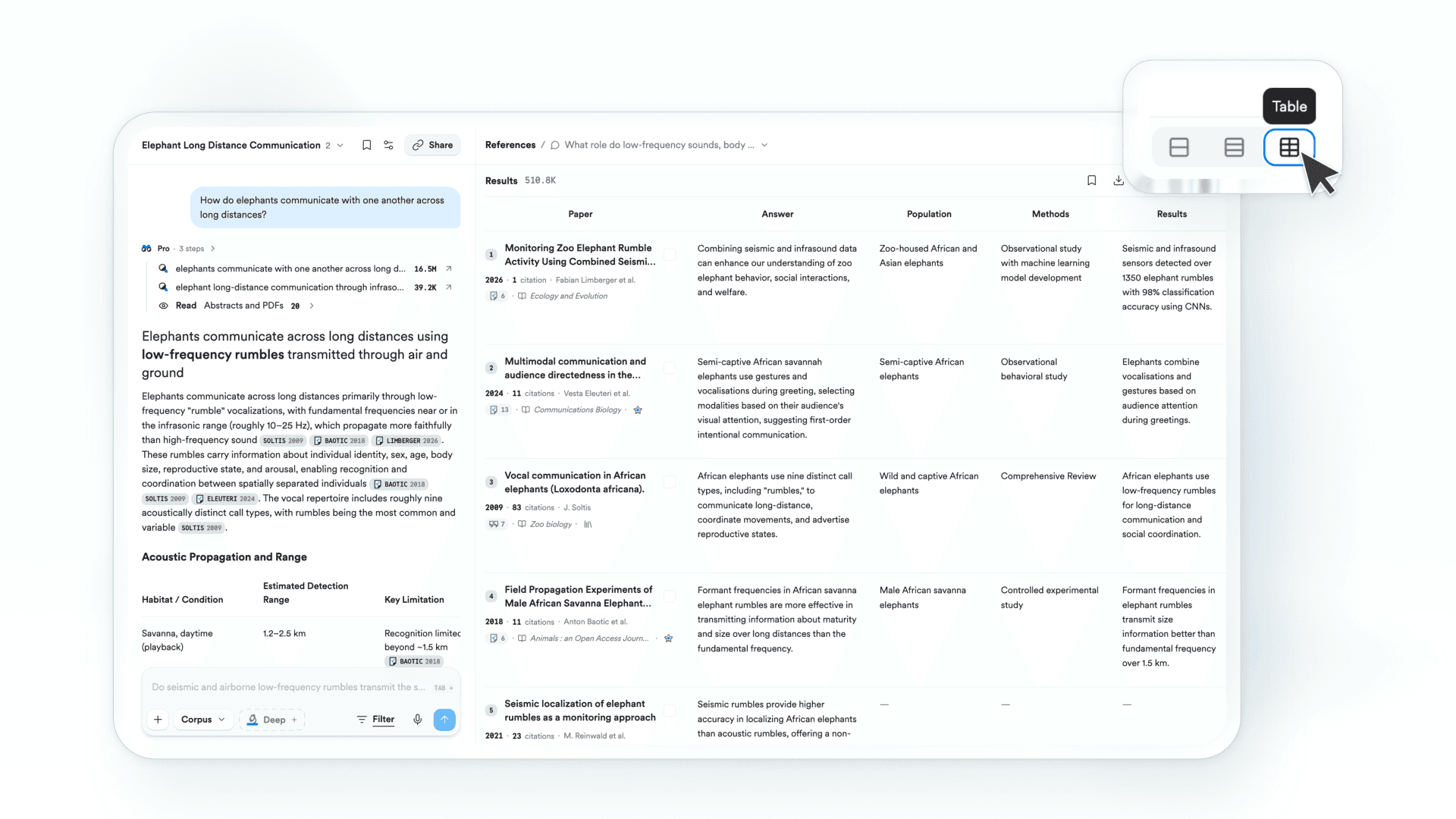
For direct comparison, Table View organizes paper attributes side by side. Students can compare populations, methods, sample sizes, durations, and results instead of trying to hold the details of multiple studies in their heads.
“I like the Table View because it gives me a quick, visual way to compare papers. It helps me see the important differences without having to hold all the details in my head.” — Jacob, graduate student, Rice University
5. Check a draft, validate a claim, and find what you missed
Consensus is not only an entry point. Students can also return to it near the end of their research process.
After reading and drafting, students can use it to test whether a statement is supported, locate a citation for a background claim, or check whether their search missed an important paper or adjacent body of work.
“Sometimes you want to check if you’ve not missed something or see if what you believe about a question is actually true.” — Malin, PhD candidate, University of Oxford
“Using it to check my current lit review to see if there’s any papers that I’ve excluded or have missed out on—either directly in the field or directly adjacent to the field.” — Jacob, graduate student, Rice University
This does not mean a tool can definitively identify every unanswered question in a discipline. The more grounded goal is to check for gaps in a student’s own search and reasoning.
At the sentence level, students can turn a factual claim into a question and inspect the cited evidence to determine whether their wording is supported or needs to be qualified.
At the collection level, students can run Deep Search across a curated Collection or imported Zotero library and request a research gaps matrix. The matrix maps which populations, interventions, outcomes, or topics are well represented, thinly covered, or missing from their current collection. They can use that analysis to refine a search strategy, making it an audit of an evidence base, not proof that the wider field has been exhausted.
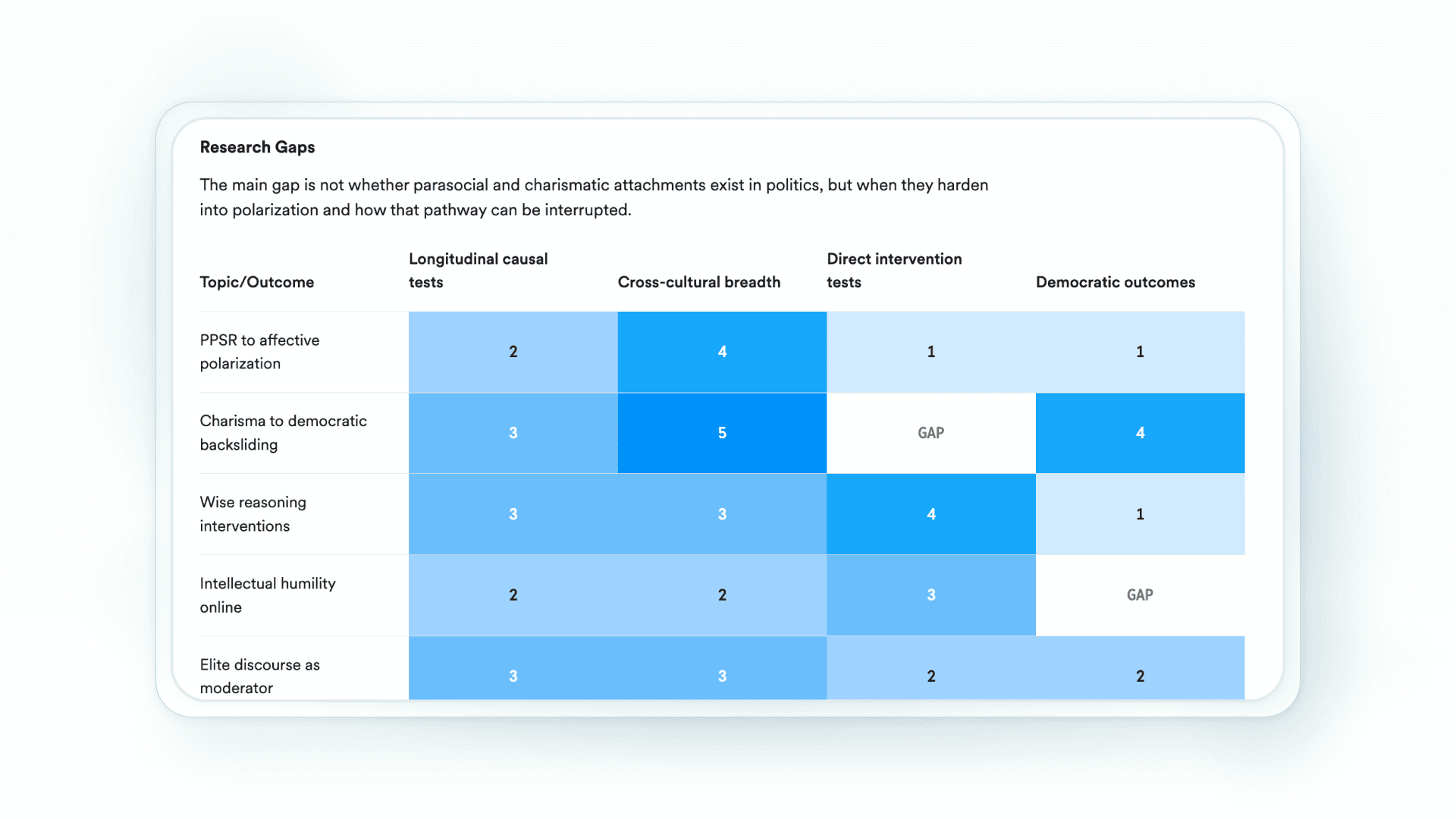
Try asking: “Analyze this Collection using PICO. Create a research gaps matrix showing what my current library covers and what appears to be missing, then develop a search strategy to fill those gaps.”
At the level of a complete project, students can upload an unpublished manuscript, dissertation, or grant proposal and use Deep Search to pressure-test it against the broader literature before submission.
For a manuscript, that might mean finding studies that support, challenge, or qualify the student’s conclusions and identifying important papers missing from the bibliography. For a proposal, students can compare their study design, population, and limitations with related research, then examine which gaps their proposed work genuinely addresses. Uploaded documents remain private unless a student chooses to share them, and Consensus does not use them to train models. That makes this workflow suitable for drafts and research in progress.
Example prompts include:
“Which studies support, challenge, or qualify the findings in this manuscript?”
“What important papers should this draft cite, and why?”
“Compare this proposal’s study design, population, and limitations with the closest previous studies.”
“Which gaps identified in the literature does this proposal actually address?”
This is not an automated verdict on whether a student’s work is “good.” It is a pre-submission stress test: a way to anticipate questions from supervisors, reviewers, or funding panels while there is still time to strengthen an argument.
The final decision remains with the student. If the evidence is mixed, their writing should reflect that uncertainty. If a claim rests on a single small or observational study, they should not present it as settled. Consensus can make those patterns easier to see, but responsible interpretation still depends on their judgment.
Consensus supports the student research process, it does not replace it
Across these workflows, students follow a consistent pattern:
Begin with a broad question to understand the field.
Find an initial group of relevant papers.
Narrow the search using follow-ups and filters.
Compare studies and choose what to read closely.
Return later to validate claims and check for missing evidence.
Students then do the essential work themselves: read full papers, evaluate methods, synthesize findings, and write.
“I still want to do the synthesis piece on my own.” — Anna, PhD student, McGill University
“I do all of the writing myself.” — Luke, doctoral student, Cedarville University
That distinction is what makes Consensus valuable in an academic workflow. It reduces the friction around finding and evaluating evidence without removing the intellectual work that research demands.
Whether students are approaching a new topic, beginning a literature review, or checking the evidence behind a nearly finished argument, Consensus can help them move from uncertainty to a better-informed next step.
Ready to try it? Search the research on Consensus.
Become a Consensus MCP expert.
For courses and more information on how to use the MCP, check out our guide below.