
Framing Unbiased Research Prompts
Framing Unbiased Research Prompts
Learn how the way you phrase a research question shapes the evidence you find, and how neutral questions help surface more balanced scientific results.

Dr. Benita Olivier
Professor of Rehabilitation Oxford Brookes University

The way you phrase a question shapes the evidence you find. Ask a leading question (one that assumes a direction of effect) and you will tend to surface confirmatory evidence. Ask a neutral question (one that opens the topic up rather than closing it down) and you will get a fuller, more balanced picture.
This is important because AI tools do not correct for the direction of your question. When you type a question into an AI research tool, you are not just searching — you are directing it. The words you choose, and the assumptions baked into them, shape what comes back.
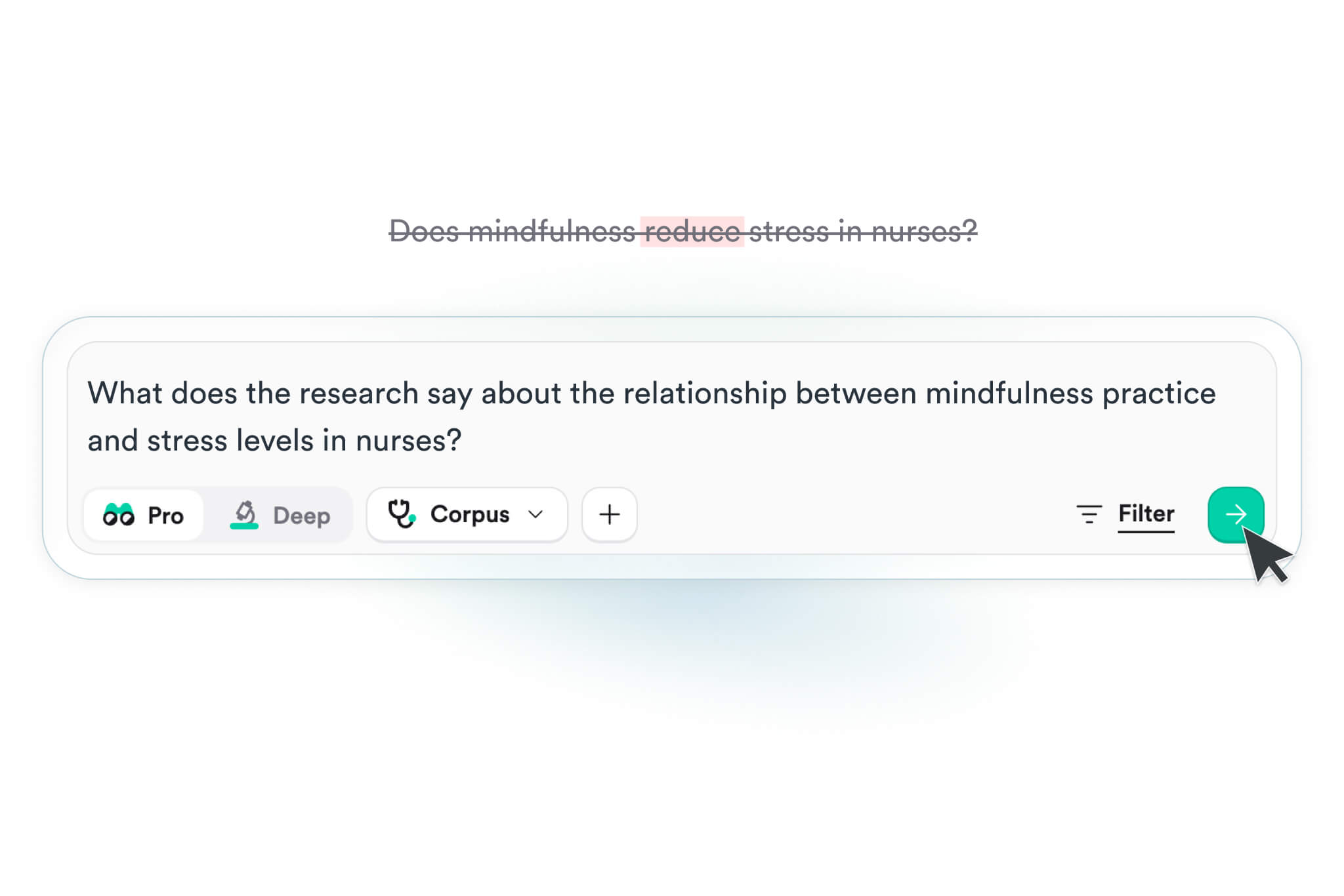
The examples below show the same topic asked two ways. Notice how the leading version assumes an outcome before any evidence has been reviewed.
Leading question | Neutral question |
|---|---|
Does social media cause depression in teenagers? | What is the relationship between social media use and depression in teenagers? |
Does mindfulness reduce stress in nurses? | What does the research say about the relationship between mindfulness practice and stress levels in nurses? |
Is online learning worse than face-to-face teaching? | How does online learning compare with face-to-face teaching in terms of student outcomes? |
Does poor sleep harm academic performance? | What is the evidence on the relationship between sleep duration and academic performance in students? |
Look at the word that gives the game away. “Cause”, “reduce”, “worse”, “harm” — each one assumes an answer before any evidence has been considered. The neutral version replaces that assumption with an open question: what does the evidence actually say?
Leading questions are the most common problem, but they are not the only one. Here are five pitfalls that can undermine your search before it begins.
Pitfall | What goes wrong | Quick fix |
|---|---|---|
Leading questions | Assumes the answer in the question itself | Does x help y? → What is the evidence on the relationship between x and y? |
Built-in assumptions | Treats an unproven claim as fact | Why does stress cause burnout? → What is the relationship between stress and burnout in healthcare workers? |
Vague phrasing | Too broad to surface useful evidence | Is technology bad for you? → What does the evidence say about the effects of screen time on sleep quality in adolescents? |
Double-barrelled questions | Two questions hiding in one | Does exercise improve mood and concentration? → What is the evidence on the relationship between exercise and mood in adults? — and separately — What is the evidence on the relationship between exercise and concentration in adults? |
Jargon and abbreviations | Misread by AI; limits results | Does CBT reduce GAD? → What is the effectiveness of cognitive behavioural therapy for generalised anxiety disorder symptoms in adults? |
If you are unsure whether your question is neutral, try this reframe:
Instead of: “Does X help Y?”
Try: “What is the evidence on the relationship between X and Y?”
You can make it more specific by adding context: who the population is, what the setting is, or what outcome you care about. That specificity is what takes a decent question and makes it a good one.

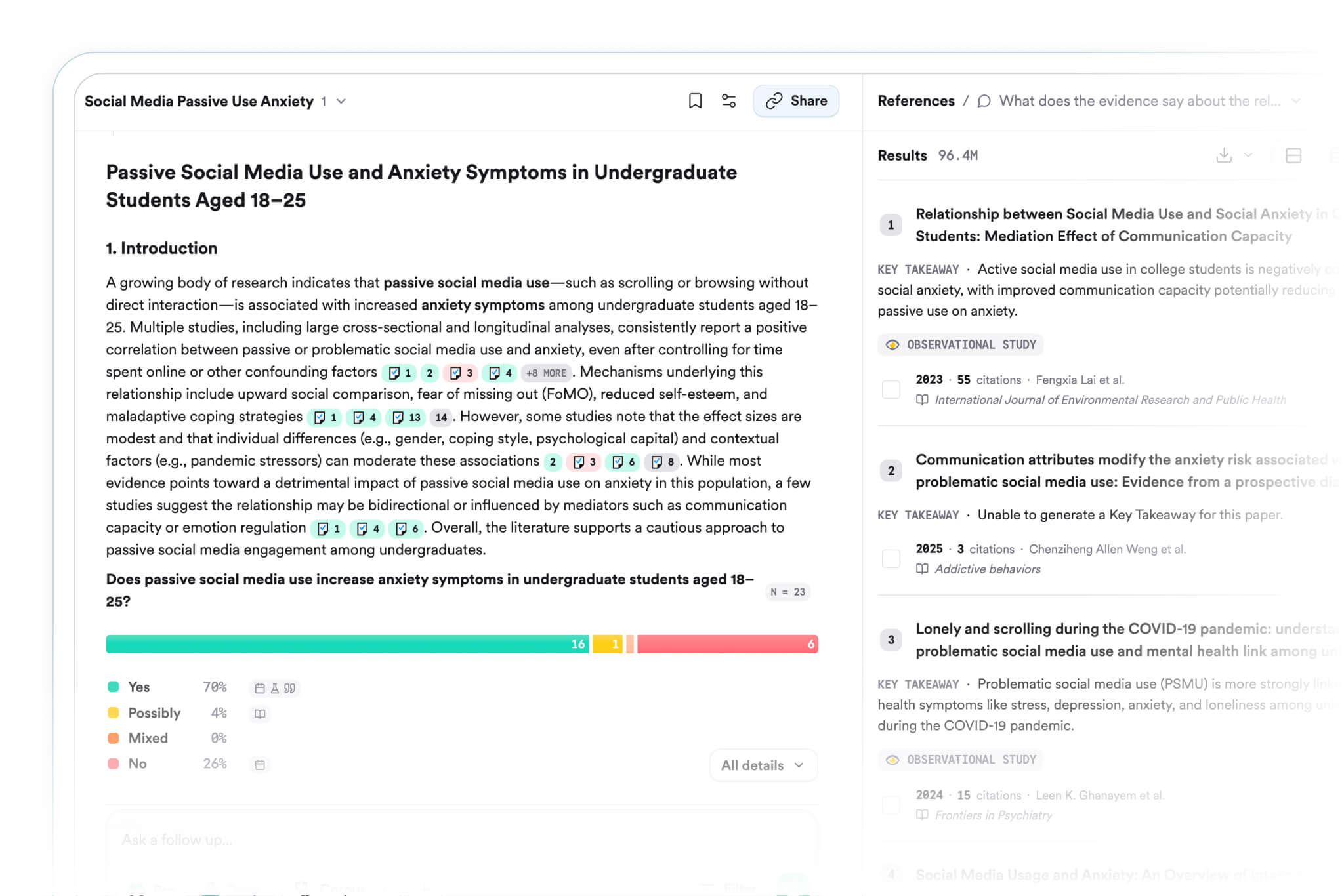
Before you search, ask yourself:
Does my question assume a direction of effect (help, harm, improve, worsen)?
Does it contain a hidden assumption I haven’t tested?
Is the population specific enough — age, setting, condition?
Is it one question, or two questions in disguise?
Have I used plain language rather than jargon or abbreviations?
Would a different phrasing of this question lead to a different answer?
Once you can ask a neutral, well-framed question, you are ready to go further. The companion guide From Framework to Prompt introduces structured frameworks — PICO, SPIDER, PEO, and others — that help you build on the skills practised here.
The ability to ask a good question is not a small thing. It is where all good research begins.
AI does not think for you — it starts where you point it. The quality of your question is the quality of your research.
Become a Consensus MCP expert.
For courses and more information on how to use the MCP, check out our guide below.